






Vestibular Toys for Home: Sensory Success Guide 2026
Your living room sofa wasn't designed to be a launchpad. Yet, there your child goes, scaling the bookshelves for the third time today. It's exhausting to manage that relentless energy when you're just trying to keep everyone safe. You aren't alone in this struggle. Many parents feel the same frustration when meltdowns stem from simple sensory under-stimulation. We understand the challenge of finding durable equipment that fits your modern home. You need solutions that work as hard as your kids do.
This guide will help you transform your space into a sensory powerhouse. You'll discover how the right vestibular input toys for home can turn chaotic jumping into regulated, purposeful play. We'll show you how to build a safe environment that supports balance, focus, and developmental milestones. Get ready to explore the best indoor gyms and sensory tools for 2026. We're covering everything from identifying specific sensory needs to choosing equipment that lasts for years. Let's turn your home into a place where your child finally finds their calm through movement.
Key Takeaways
- Understand how the vestibular system functions as your child's internal GPS to support balance and emotional regulation.
- Identify the most effective vestibular input toys for home, from swings that offer linear motion to climbing frames that challenge gravity.
- Compare structural gyms and portable equipment to find the right intensity level for your child's specific sensory seeking needs.
- Learn the "Safety Zone" rule and layout tips to maximize play potential in small apartments or bedrooms.
- Discover how to build a permanent sensory home base that grows with your child and helps eliminate daily meltdowns.
What is Vestibular Input and Why Does Your Child Crave It?
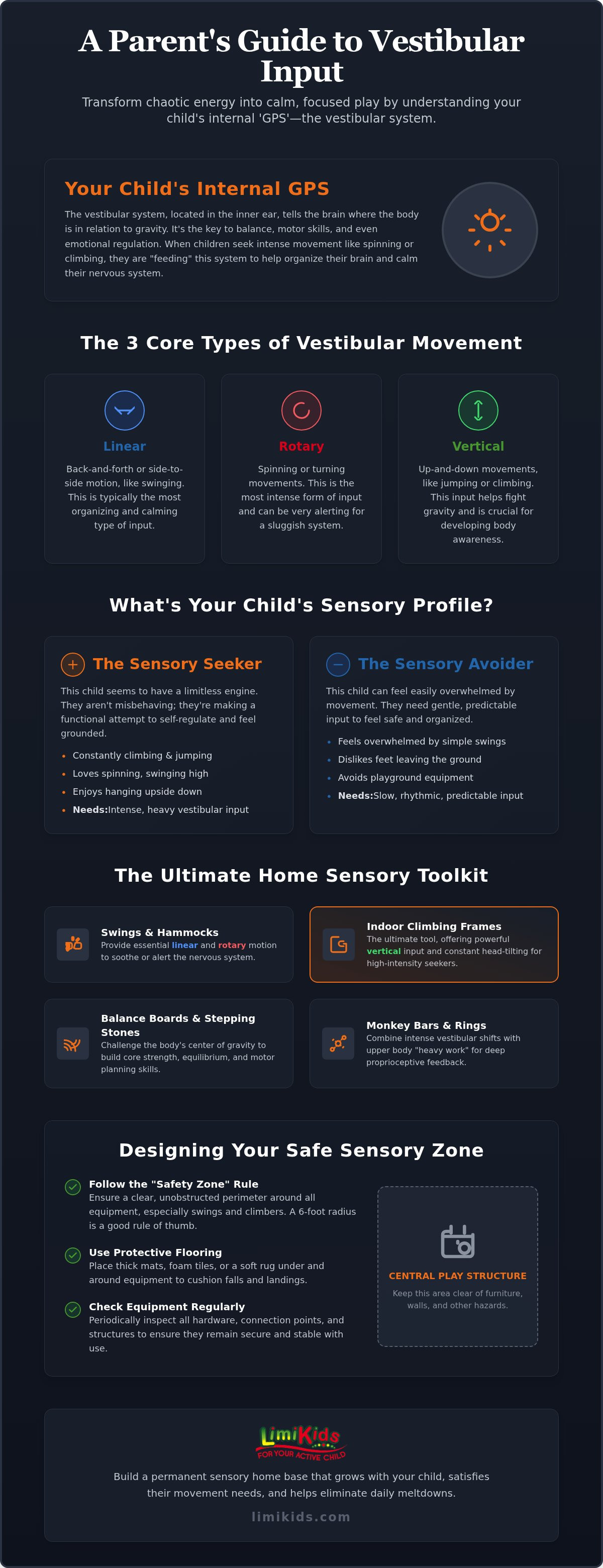
Think of the vestibular system as your child's internal GPS. It's the sensory system that tells the brain exactly where the body is in relation to gravity. Most people take this for granted, but for children with sensory processing differences, understanding what the vestibular system is becomes the key to unlocking their potential. When your child hangs upside down or spins until they're dizzy, they aren't just playing. They're feeding a hungry brain. These head position changes are the "secret sauce" of sensory integration, providing the high-intensity input needed to reset a stressed nervous system.
The Science of Movement and Balance
Inside the inner ear, tiny fluid-filled canals detect every tilt, turn, and jump. This system processes three main types of movement: linear (back and forth), rotary (spinning), and vertical (up and down). Not all movement is created equal. Slow, rhythmic rocking acts as a natural sedative for a wired nervous system. In contrast, fast, erratic movements act like a shot of adrenaline for a sluggish one. Vestibular processing is the brain’s ability to interpret movement and gravity signals from the inner ear to maintain balance and coordinate smooth motor actions throughout the day. Providing the right intensity through vestibular input toys for home ensures your child stays in that "just right" state of arousal.
Identifying Your Child's Sensory Profile
Every child has a unique sensory threshold. Some are "sensory avoiders" who feel overwhelmed by a simple swing. Others are "sensory seekers" who can't seem to get enough. If your child is constantly "climbing the walls" or jumping off the furniture, they're likely seeking heavy vestibular input to feel grounded. This isn't misbehavior; it's a functional attempt at self-regulation. By integrating a "sensory diet" into your daily routine, you can provide scheduled "movement snacks" that prevent meltdowns before they start.
High-quality vestibular input toys for home, like indoor climbing frames, offer the structural intensity these children crave. This physical foundation directly impacts their emotional regulation and academic focus. A child who has satisfied their movement needs can finally sit still enough to learn. It's about giving them the right tools to navigate their world with confidence and joy.
The Best Types of Vestibular Input Toys for Home Use
Choosing the right tools is about matching intensity to your child's appetite for movement. Not every child needs a high-speed spin. Some require the gentle, rhythmic sway of a hammock to find their center. When selecting vestibular input toys for home, you should aim for a variety of movement planes to ensure a well-rounded sensory diet. Diversifying your equipment allows your child to switch between calming and alerting activities as their needs change throughout the day.
- Swings and Hammocks: These provide essential linear and rotary motion, helping to soothe or wake up the nervous system.
- Indoor Climbing Frames: These offer powerful verticality, forcing head-tilting and spatial adjustments during every ascent.
- Balance Boards and Stepping Stones: These tools build equilibrium and core strength by challenging the body's center of gravity.
- Monkey Bars and Rings: These combine intense vestibular shifts with upper body "heavy work," providing deep proprioceptive feedback.
Climbing Equipment as a Sensory Tool
Most experts focus solely on swings for vestibular needs, but climbing is actually the ultimate multi-sensory activity. It forces the head to move through different angles as the child looks up to reach the next rung. This constant change in head position triggers the inner ear's fluid, providing the high-intensity input seekers crave. Movement isn't just about physical fitness; it's deeply tied to cognitive development in children, as the vestibular system acts as a foundation for higher-level learning. Using Montessori play equipment encourages this independent discovery, allowing kids to test their own limits in a safe, structured environment. You can explore our range of indoor climbing equipment to build your child's sensory home base today.
Dynamic Movement Tools
Dynamic tools allow for quick "movement snacks" that can prevent a midday meltdown. An indoor swing can provide rhythmic, calming input before bedtime, helping a child transition from high energy to a restful state. Conversely, spinning tools can be used to develop rotary vestibular tolerance, which is vital for overall balance. To keep things safe, always pair these activities with high-quality gymnastic mats. These mats encourage safe tumbling, rolling, and jumping, which are all excellent ways to get the head moving and the brain engaged. By providing these options, you empower your child to self-regulate through active play rather than passive screen time.
Structural vs. Portable: Choosing the Right Intensity Level
Many parents start their sensory journey with small, handheld gadgets or plastic rockers. These portable options are excellent for car rides or quick fidgeting sessions. However, they often lack the physical resistance required for deep sensory regulation. If your child is a true "seeker," they will likely outgrow small plastic tools within weeks as they habituate to the low level of input. True success comes from structural equipment that provides the high-intensity feedback needed to actually ground a restless nervous system.
Choosing the right vestibular input toys for home means looking at the long game. You want equipment that doesn't just distract but truly regulates. Structural gyms provide the permanence and intensity that portable toys cannot match. They offer a "home base" for movement that remains challenging as your child grows stronger and more coordinated.
The Case for a Permanent Indoor Home Gym
Investing in indoor home gyms for kids is a smart, cost-effective move for long-term development. Instead of managing a mountain of plastic clutter that ends up in a closet, one structural unit becomes the heart of your home’s "active zone." This dedicated space signals to your child’s brain exactly where it's safe to be bold. It creates a clear boundary that protects your furniture while satisfying their biological drive to climb and swing. A permanent gym is an investment in your child's daily calm and your own peace of mind.
Comparing Material and Build Quality
Quality is the foundation of safety. When you look at Wooden vs Metal Indoor Jungle Gyms, durability is the deciding factor. Metal offers incredible structural integrity for high-impact, multi-child play. Wood provides a natural, Montessori-inspired feel that blends seamlessly into modern decor. Both materials far outlast cheap plastic alternatives that can crack or warp under pressure. Pay close attention to weight capacities. High-quality vestibular input toys for home should support enough weight to challenge a toddler today and a pre-teen five years from now. Premium equipment requires minimal maintenance and offers the permanence your family needs for a truly sensory-rich environment.
Designing a Safe Sensory Space: Installation and Layout Tips
You don't need a massive basement to build a high-performance sensory haven. Transforming a corner of a bedroom or a narrow hallway into a dedicated "active zone" is entirely possible with the right layout. The goal is to maximize movement potential while respecting the architectural limits of your home. By prioritizing flow and safety, you can integrate vestibular input toys for home into your daily life without turning your living room into a cluttered obstacle course.
Every piece of structural equipment requires a "clearance buffer." For swings, you must calculate at least 1.5 to 2 meters of open space in front and behind the seat to prevent collisions with walls or furniture. For climbing frames, ensure there's enough room for a child to dismount or jump safely without hitting nearby obstacles. Forget the "padded cell" aesthetic. Modern sensory gear uses sleek metal or natural wood finishes that complement contemporary interiors. Choosing neutral tones and premium materials ensures the space feels like a deliberate, stylish part of your home.
Maximizing Vertical Space
Swedish walls are the ultimate space-saving solution for compact living. These units hug the wall, taking up mere inches of floor depth while offering several feet of vertical climbing potential. They're perfect for narrow rooms or apartments where floor space is at a premium. Wall-mounted monkey bars are another genius trick. They keep the floor clear for other activities while providing essential overhead "heavy work" for sensory regulation. Vertical play allows children in compact Canadian homes to reach, climb, and self-regulate without sacrificing valuable square footage.
Safety and Installation Basics
Structural integrity is the foundation of a safe play environment. Always mount your equipment directly into wall studs or solid ceiling joists to ensure it can handle dynamic loads. Use a high-quality stud finder and follow the manufacturer's torque specifications for every bolt. Once installed, commit to monthly "safety checks" to tighten fasteners and inspect for any signs of wear. Never skip the "Soft Landing" zone. High-density gymnastic mats are essential for cushioning jumps, tumbles, and accidental slips. Ready to build your child's dream gym? Explore our full range of indoor playground equipment to find the perfect fit for your space.
Transform Your Home with LIMIKIDS: The Ultimate Vestibular Gym
At LIMIKIDS, we believe that movement is the key to every child's potential. Our philosophy is simple: empower children through active, safe, and sensory-rich play. We don't just sell equipment; we provide the tools for your child to find their focus and calm. By choosing high-quality sensory motor equipment for home, you're creating a permanent resource for development. This isn't a temporary distraction. It's a foundational shift in how your family uses indoor space.
One of the biggest hurdles for parents is finding gear that lasts. Most plastic vestibular input toys for home end up in a landfill within a year. Our systems are built to grow with your child, adapting to their changing needs from the toddler years through the pre-teen era. Whether they're testing their balance for the first time or performing advanced pull-ups, the structural integrity remains rock solid. You get a piece of equipment that evolves alongside your child's physical milestones.
Premium Engineering for Peace of Mind
Safety isn't an afterthought for us; it's the core of everything we build. Since 2008, thousands of Canadian families have trusted LIMIKIDS to bring the playground indoors safely. We use professional-grade materials that meet rigorous safety standards, ensuring every swing and climb is secure. Our space-saving designs are specifically engineered for residential use. You don't need a commercial warehouse to give your child a top-tier sensory experience. We've optimized every inch to fit into modern apartments and bedrooms perfectly.
The LIMIKIDS Advantage
Getting your child moving shouldn't be a logistical nightmare. We offer fast, reliable shipping across Canada to ensure your equipment arrives exactly when you need it. Our team acts as your personal consultant, helping you choose the right configuration for your specific room dimensions and sensory goals. Because we ship direct-to-consumer, you receive premium value without the middleman markups. Start by selecting a single climbing frame or a Swedish wall. You can always expand your gym as your child's confidence and skills grow. Let's turn your home into a place of active discovery today.
Build Your Sensory Success Story Today
You've discovered that movement is the fuel your child's brain needs to find its center. True regulation happens when you swap "climbing the walls" chaos for a structured, high-intensity environment. By choosing structural equipment over temporary plastic gadgets, you're giving your child a permanent home base for balance and focus. Even the smallest apartment can support a full sensory gym with our premium, space-saving designs.
Since 2008, LIMIKIDS has empowered thousands of Canadian families to reclaim their living spaces while supporting their children's development. Investing in high-quality vestibular input toys for home is a proactive step toward a calmer, more regulated household. Our gear is built for longevity and safety, ensuring your investment grows alongside your child's physical milestones. Take the first step toward transforming your home into a powerhouse of discovery and growth today.
Shop the Full LIMIKIDS Collection of Indoor Sensory Gyms and enjoy fast shipping across Canada!
Frequently Asked Questions
What is the best vestibular toy for a child with ADHD?
Indoor jungle gyms are the top choice for children with ADHD because they provide intense, structural movement. These kids often crave heavy work and significant head position changes to reach a state of calm. A climbing frame allows them to push physical limits safely within the home. This high-level input helps organize their nervous system, leading to better emotional regulation and reduced impulsivity during daily tasks. It is a proactive tool for success.
Can vestibular toys help with my child's focus at school?
Yes, using vestibular input toys for home before school starts can significantly improve classroom focus. Movement snacks on a Swedish wall or indoor swing help wake up the brain's attention centers. When a child's sensory needs are met at home, they don't have to seek stimulation by fidgeting or leaving their seat at school. It creates a neurological foundation that allows them to sit still and process new information more effectively throughout the day.
How much space do I really need for an indoor jungle gym?
You don't need a dedicated playroom to enjoy a high-quality indoor jungle gym. Many of our Swedish walls and climbing frames feature space-saving footprints that fit perfectly in a bedroom corner or a narrow hallway. A standard wall-mounted unit might only extend a few inches from the wall surface. Just ensure you have a clear safety zone of about 1.5 to 2 meters around the equipment for jumping and dismounting safely onto high-density mats.
Are indoor climbing frames safe for toddlers?
Indoor climbing frames are safe for toddlers when they're built with safety-first engineering and used under adult supervision. Our Montessori-inspired equipment encourages independent discovery at a height that's manageable for little ones. Start with low-profile frames and always use thick gymnastic mats to cushion any slips. These tools actually help toddlers develop better balance and coordination earlier, which reduces their risk of injury during everyday play as they grow and become more active.
What is the difference between vestibular and proprioceptive input?
Vestibular input relates to the inner ear and tells the brain about balance, gravity, and head position. It's triggered by actions like swinging, spinning, or tilting. Proprioceptive input comes from the muscles and joints, providing feedback about body position through heavy work like pushing, pulling, or jumping. While they are different systems, the best vestibular input toys for home often combine both to provide a comprehensive sensory experience that grounds and regulates the child's entire nervous system.
How often should my child use vestibular toys for the best results?
Consistency is the key to sensory success. Most experts recommend integrating movement snacks into a daily sensory diet for the best results. Aim for short, high-intensity sessions on an indoor home gym three to four times a day, especially during transitions or before focused tasks. Regular use helps maintain a regulated nervous system and prevents the sensory seeking behaviors that lead to meltdowns. Watch your child's cues to determine if they need calming or alerting movements.
Do I need a professional to install a Swedish wall gym?
You don't need a professional installer, but you must be comfortable finding wall studs or ceiling joists. Our equipment is designed for straightforward residential installation with basic tools like a drill and a stud finder. The most critical step is ensuring the unit is securely anchored into the structural frame of your home to handle dynamic loads. Always follow the included safety specifications and perform monthly checks on bolts to maintain the structural integrity of your equipment.
What are the best sensory toys for a small apartment?
Swedish walls are the ultimate solution for small apartments because they utilize vertical space rather than floor area. These wall-mounted units provide intense sensory input without cluttering your living room. You can also add removable accessories like rings or a trapeze bar that can be tucked away when not in use. Combining a compact wall gym with a folding gymnastic mat gives your child a full sensory experience that respects your home's limited square footage and modern aesthetic.