






Wooden vs Metal Indoor Jungle Gym: The Ultimate Parent’s Guide to Choosing Right (2026)
Your living room is about to become the most important training ground your child ever enters. You need a safe, high-energy zone where they can climb, swing, and build confidence without you worrying about equipment tipping or breaking. It's a common struggle. You're balancing limited square footage with the need for a durable play space that actually lasts. Choosing between a wooden vs metal indoor jungle gym isn't just about looks. It's about matching the right structural integrity to your child's developmental milestones.
You deserve total peace of mind when the climbing starts. We agree that equipment should empower your child, not create more stress for you. This guide reveals the critical differences in weight limits, assembly difficulty, and long-term durability between wood and metal systems. You'll discover exactly which material supports your child's growth from toddlerhood through their most active years. We're diving into everything from sensory-friendly Montessori wood to the high-capacity versatility of metal Swedish walls. Let's find the perfect fit to keep your kids active, strong, and safe all year round.
Key Takeaways
- Match your child's developmental stage by understanding the sensory benefits of natural wood versus the high-performance strength of metal.
- Make an informed decision on a wooden vs metal indoor jungle gym by comparing weight limits and structural versatility for your specific home layout.
- Master indoor space constraints with space-saving designs like Swedish walls that offer massive play value without cluttering your floor.
- Prioritize safety and hygiene with maintenance tips for keeping natural grain and powder-coated surfaces clean and secure.
- Build a play zone that grows with your family by choosing equipment designed for long-term durability and evolving physical challenges.
The Great Debate: Why Material Choice Matters for Indoor Play
Stop thinking of a jungle gym as a simple toy. It's a high-performance developmental tool. It builds grip strength, spatial awareness, and problem-solving skills right in your living room. When deciding between a wooden vs metal indoor jungle gym, the "math" changes because your home isn't a park. Outdoors, you worry about rain. Indoors, you worry about ceiling clearance and floor friction. You need a solution that fits your floor plan as well as it fits your child's energy levels.
Your choice defines the "energy" of your home environment. Natural wood offers a warm, Montessori-inspired feel that blends into modern interiors. High-grade powder-coated metal brings a sleek, athletic vibe that encourages high-intensity movement. Both are top-tier contenders, but they solve different household puzzles. The history of the jungle gym shows us that while the materials evolve, the goal remains the same: safe, vertical discovery that empowers kids to push their limits.
Indoor vs. Outdoor: A Different Set of Rules
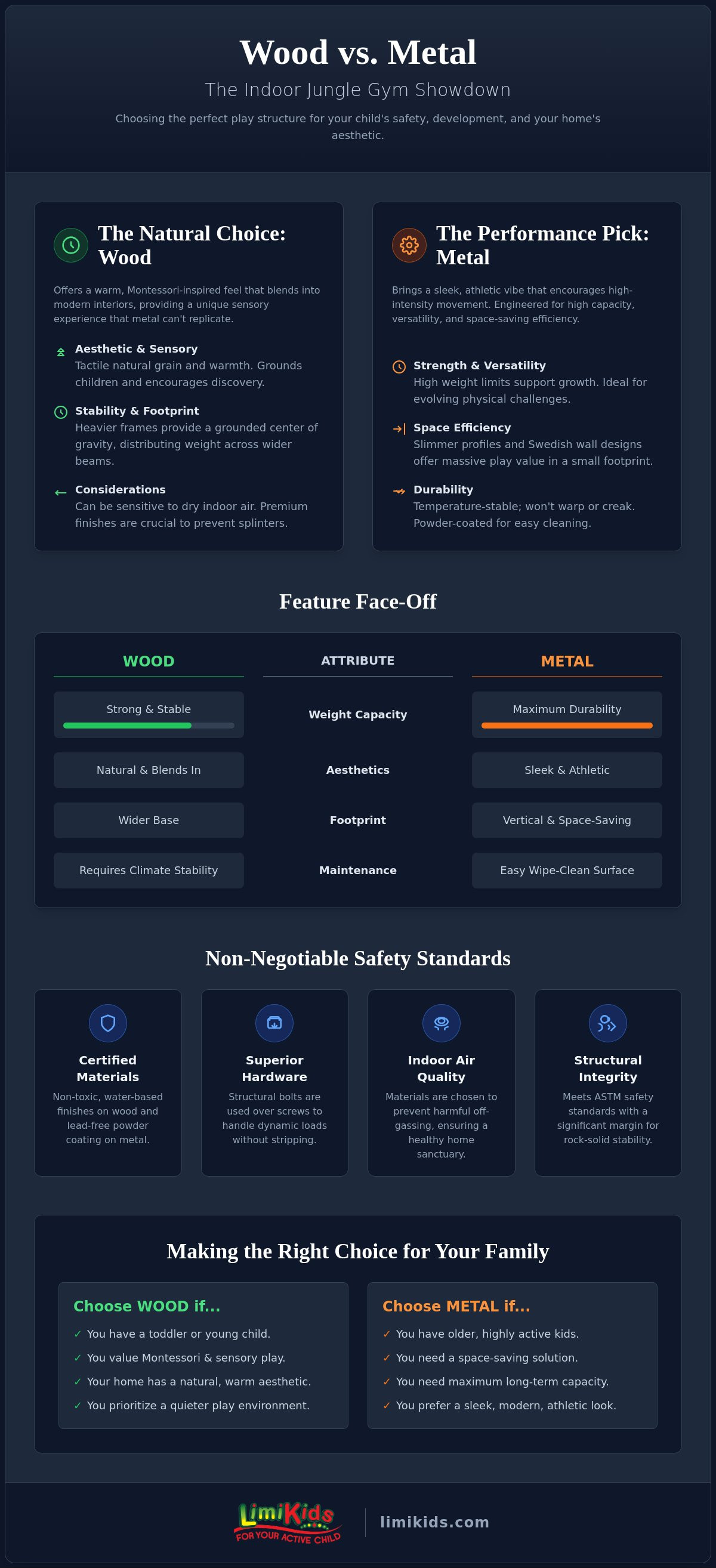
Forget about rust and rot. Those are backyard problems. Inside your climate-controlled home, your focus shifts to stability and scuffs. Wood is heavy and grounded. It sits firmly on safety mats but can be sensitive to indoor heating. Dry winter air may cause slight expansion or contraction in wooden joints. Metal is temperature-stable. It won't warp or creak when the furnace kicks on. You don't need to worry about weatherproofing; you need to worry about how the equipment interacts with your floors.
While the focus here is on indoor safety, if you are also looking for high-resistance modular structures or heavy-duty outdoor shelters, you can explore Carpas 4x4 for professional-grade durability.
Material weight also impacts your flooring. Metal units are often slimmer and exert more concentrated pressure on floor points. Wood distributes weight across wider beams. Consider these practical indoor factors:
- Floor friction: Metal feet need high-grip rubber to prevent sliding on hardwood or laminate.
- Ceiling height: Metal Swedish walls often use tension-mount systems that require precise vertical clearance.
- Maintenance: You're cleaning dust and fingerprints, not moss or bird droppings.
- Stability: Heavier wooden frames provide a different center of gravity compared to wall-anchored metal systems.
Safety Standards for Home Play Equipment
Indoor air quality is non-negotiable. Your kids are breathing hard while they climb and swing. Look for non-toxic, water-based finishes on wood and lead-free powder coating on metal. These prevent harmful chemicals from off-gassing in enclosed spaces. Your home should be a sanctuary of health as well as activity.
Check the hardware before you buy. Bolts are superior to screws for structural joints because they handle dynamic loads without stripping the material over time. In the context of ASTM safety standards, structural integrity is defined as the equipment's ability to support its rated weight limit plus a significant safety margin without permanent deformation or failure. Choose equipment that prioritizes these invisible details. It's the difference between a shaky structure and a rock-solid foundation for your child's growth.
Wooden Indoor Jungle Gyms: Montessori Warmth and Sensory Benefits
Transform your living room into a serene yet active sanctuary. Wooden equipment isn't just a toy; it's a piece of high-quality furniture that complements modern Canadian home interiors. While metal units often scream "gym," wood whispers "growth." It offers a natural aesthetic that softens the room, making the transition from playtime to downtime seamless for both you and your child. You get the benefit of a high-energy play zone without sacrificing your home’s design language.
To further enhance your home's entertainment space with matching high-quality equipment, you might visit The Family Game Room for premium game room furniture.
The core of the wooden vs metal indoor jungle gym debate often centers on tactile feedback. Wood provides a unique sensory experience that plastic or metal simply can't replicate. It's about the connection to nature. Montessori philosophy champions natural materials because they encourage independent discovery. When a child touches wood, they feel a subtle grain and a natural warmth. This tactile input helps developing brains map out their physical environment more effectively during early climbing stages. It grounds them, turning every movement into a lesson in texture and grip.
Don't let the "splinter myth" hold you back. Premium manufacturers use advanced sanding and multi-layer lacquering techniques to ensure every surface is silky smooth. Modern finishes are water-based and non-toxic, keeping the air in your home clean while protecting the wood from wear. If you’re looking for a gentle start for your little one, our Montessori play equipment provides the perfect balance of safety and sensory engagement.
The Sensory Experience of Natural Materials
Wood is a "warm" material. It doesn't get cold to the touch like metal can in a drafty room. This consistent temperature encourages longer, more comfortable play sessions. It's predictable. For children with sensory processing needs, the organic texture of natural wood rungs offers a sense of security. Toddlers and early climbers often prefer this grip. It feels more forgiving on small, soft hands as they master their first pull-ups and hangs.
Durability and Home Integration
Not all wood is created equal. Most high-end indoor gyms utilize Birch or Beech for their superior strength-to-weight ratios and tight grain patterns. Pine is a softer option, often used in budget-friendly sets, but it may show "character" marks more easily. Birch and Beech are the workhorses of the industry. They offer the structural integrity needed for years of active use without losing their refined look.
- Birch: Incredibly strong and flexible, perfect for weight-bearing rungs and side rails.
- Beech: Dense and heavy, providing a rock-solid foundation for climbing frames that won't shift.
- Maintenance: Keep it simple. Wipe down surfaces with a damp microfiber cloth. Avoid harsh chemicals that can strip the protective lacquer or dry out the wood.
Metal Indoor Gyms: Strength, Versatility, and the Swedish Wall Legacy
If you're looking for a high-performance powerhouse that survives the teenage years, metal is your answer. While wood offers a soft entry point for toddlers, metal systems like the legendary Swedish Wall, often called a Stalinka, provide the ultimate athletic challenge. These aren't just toys. They are professional-grade tools designed for serious movement. When weighing a wooden vs metal indoor jungle gym, consider the ceiling of potential. Metal allows for a level of dynamic play, like vigorous swinging and pull-ups, that requires absolute structural rigidity. It's the choice for parents who want equipment that keeps up with a child's growing strength.
The secret to metal's longevity lies in its finish. High-quality metal frames utilize powder-coating. This isn't just paint; it's a baked-on protective layer that provides a superior grip while shielding the frame from scratches and sweat. It stays cool, looks sleek, and maintains its "new" feel even after years of heavy use by multiple siblings. For families in small apartments or homes with narrow hallways, the slim profile of metal is a game-changer. You get maximum activity with a minimal footprint. LIMIKIDS stands as the expert in these high-weight-capacity metal Swedish walls, ensuring every bolt and bar meets the highest home safety standards.
Unmatched Weight Limits for Growing Kids
Metal is the undisputed king of weight capacity. It's the smarter choice for families with a wide age gap between siblings. A toddler can safely climb the lower rungs while a teenager uses the top bar for chin-ups. This "grow-with-me" factor ensures your investment doesn't end when your child hits middle school. It supports advanced gymnastics and high-intensity fitness routines that would stress a standard wooden frame. Tensile strength is the maximum amount of stress a metal rung can handle while being weighted before it permanently deforms or snaps. Because of this high tensile strength, metal bars can remain thin and easy for small hands to grip without sacrificing the ability to hold an adult's weight.
Space-Saving Designs and Low-Ceiling Solutions
Strength doesn't have to be bulky. Metal's inherent durability allows for a much thinner structural footprint than wood. This makes it the preferred choice for monkey bars for kids in tight spaces. You can easily add attachments like rings, ropes, and trapeze bars without the unit feeling cluttered. Because metal frames are often wall-mounted or tension-mounted, they offer incredible versatility for low-ceiling basements or compact playrooms. You're not just buying a frame; you're building a customizable vertical playground that adapts to your home's unique geometry. It's about maximizing every square inch of your child's developmental space.
Head-to-Head: Performance, Monkey Bars, and Practicality
It's time for the final showdown. You've seen the sensory warmth of wood and the high-performance power of metal. Now, let's look at how they perform when your child is mid-air. Choosing between a wooden vs metal indoor jungle gym often comes down to the small details of daily use. It's about the grip on a Tuesday afternoon and the assembly on a Saturday morning. Both materials offer distinct advantages that transform your home into a high-energy developmental zone. Focus on the physical outcomes you want to achieve.
Mastering the Monkey Bars: Grip and Texture
Build confidence with consistent grip. Brachiation, the technical term for swinging bar to bar, requires specific physical conditions. For monkey bars for kids, metal offers a distinct advantage in consistency. Every bar features the exact same engineered diameter. This allows your child to develop a rhythmic, predictable swing. Wood has a natural texture that absorbs minor hand moisture. This prevents slipping during long, intense play sessions. Metal relies on specialized powder-coating for friction. Both materials excel, but they offer different tactile feedback for developing hand strength.
Assembly, Maintenance, and Longevity
Get your playground ready for action fast. Wooden sets often arrive with more individual components and require more patience with a screwdriver. Metal Swedish walls usually feature pre-assembled ladder sections that bolt together quickly. You'll only need a basic toolkit: a hex key, a wrench, and a level. For cleaning, metal is the clear winner. Sticky spills wipe off powder-coated steel in seconds. Wood requires a gentler touch to protect the grain. Wood might develop a slight creak as humidity shifts; metal stays silent if bolts are tight.
In the Canadian used market, a wooden vs metal indoor jungle gym comparison reveals that both hold incredible value. Premium equipment is seen as a long-term asset, not a disposable toy. High-quality wood sets are sought after by Montessori families who prioritize natural aesthetics. Metal Swedish walls are hot items for parents of older, active kids who need high-weight-capacity gear. You aren't just buying a toy; you're securing a durable asset with a high resale ceiling. Engineered for excellence. Built for safety. Your investment remains secure even as your children grow.
Transform your home into a zone of discovery today. Explore our full range of indoor jungle gyms to find the perfect match for your family's needs and space.
Making the Right Choice: The LIMIKIDS Standard for Your Home
Your search for the perfect play space ends with your child's specific needs. Choosing between a wooden vs metal indoor jungle gym isn't about finding a "winner." It's about finding the right tool for your current space and your child's future growth. You've seen the sensory warmth of wood and the high-capacity power of metal. Now, look at your floor plan. Look at your child's energy levels. The best choice is the one that gets them moving every single day.
Before you order, grab a tape measure. Accuracy is your best friend here. For wall-mounted metal units, identify your wall studs and check your ceiling height twice. For wooden A-frames, map out a clear "fall zone" around the equipment to accommodate safety mats. You need a perfect fit to ensure total stability. We've been helping families transform their homes since 2008. We know that a well-measured space leads to a safer, more confident climber. Trust the process and prioritize the footprint that allows for unhindered movement.
Assessing Your Child’s Developmental Needs
Match the material to the milestone. If you have a toddler just starting their physical journey, wood is often the superior choice. It offers a gentle, tactile introduction to climbing. The natural grain provides intuitive grip for small hands. For older kids and aspiring athletes, metal is the ultimate long-term investment. It handles the high-intensity swinging and pull-ups that come with age. Consider these sensory factors:
- Best for Toddlers: Wood provides a grounding, organic feel that aligns with Montessori principles of independent discovery.
- Best for Big Kids: Metal supports advanced gymnastics and higher weight limits as children grow into their teens.
- Sensory Considerations: Choose wood for tactile, calming input; choose metal for high-speed, high-impact physical challenges.
The LIMIKIDS Advantage
You don't have to settle for second best. We curate a premium selection of both high-grade wood and professional-strength metal gyms to meet every family's unique requirements. Every piece of equipment we sell meets strict safety standards. We focus on structural integrity so you can focus on the joy of play. Whether you need a space-saving Swedish wall or a sensory-rich climbing frame, we deliver quality that lasts. We provide fast, nationwide shipping across Canada to get your kids moving sooner. Don't let another rainy day go by without a dedicated space for growth.
Ready to build your child's dream play zone? Explore our full range of indoor jungle gyms and monkey bars and bring the playground home today.
Start Your Child's Vertical Adventure Today
Your child's potential is limitless. You now have the tools to decide between a wooden vs metal indoor jungle gym based on your family's specific developmental goals and home layout. Wood delivers that natural, sensory-rich foundation for early climbers. Metal provides the high-performance structural integrity required for growing athletes and space-saving Swedish walls. Both materials empower your child to build strength and coordination right in the living room. It's about creating a secure space where "I can't" quickly turns into "watch me!"
LIMIKIDS has been a trusted partner for parents since 2008. Our equipment is expertly designed for Canadian homes using safe, non-toxic, and ultra-durable materials. You don't have to settle for less than total peace of mind. Turn your home into a sanctuary of growth and active discovery today. Your child is ready for the challenge. Build your child's dream indoor gym today with LIMIKIDS. Let's start the adventure!
Frequently Asked Questions
Is a wooden or metal indoor jungle gym safer for a toddler?
Both materials are incredibly safe if they meet ASTM safety standards. For the early years, a wooden vs metal indoor jungle gym comparison often favors wood because of its natural grip and warmer touch. Toddlers benefit from the tactile feedback of natural grain as they develop motor skills. Always ensure you have a thick safety mat underneath regardless of the material you choose.
Can metal monkey bars be installed in a room with low ceilings?
Yes, you can absolutely install metal monkey bars in rooms with lower clearance. Metal's superior strength allows for thinner, more compact frames that don't overwhelm a basement or small playroom. Many wall-mounted Swedish walls are designed specifically for standard 8 foot ceilings or even lower. Measure your vertical space carefully to choose a model that leaves enough room for your child to swing safely.
Do wooden indoor gyms require regular sanding or staining?
No, your indoor wooden gym doesn't need the same maintenance as a backyard set. Since it stays in a climate controlled environment, it won't rot or face UV damage. High-quality sets arrive pre-sanded and lacquered with non-toxic finishes. You only need to check the joints occasionally for tightness. Wiping it with a damp cloth is enough to keep it in peak condition.
What is the average weight limit for a metal Swedish wall gym?
Most metal Swedish wall systems support between 220 and 300 pounds. This high capacity makes them a "grow-with-me" investment that lasts from toddlerhood through the teenage years. Because of this structural integrity, even adults can often use the top bars for pull-ups. Always verify the specific weight rating for your model to ensure it meets your family's needs.
Which material is easier to clean and disinfect?
Metal is the clear winner for quick cleaning and disinfecting. Its powder-coated surface is non-porous and resists moisture, making it easy to wipe down with standard household cleaners. Wood is also easy to clean but requires a gentler touch. Use a damp microfiber cloth for wood to avoid saturating the grain or stripping the protective finish.
Will an indoor jungle gym damage my hardwood or carpet floors?
Your floors are safe if you use the right protection. Most indoor gyms feature rubberized feet or caps to prevent sliding and scratches on hardwood. Always place a high-density safety mat, at least 2 inches thick, under the equipment. This protects your child from falls and spreads the weight of the frame across a larger surface area to prevent carpet indentations.
How long does it typically take to assemble an indoor home gym?
Expect to spend between one and three hours on your assembly project. Metal Swedish walls often go up faster because they have fewer individual parts and use simple bolt-together systems. Wooden Montessori sets might take a bit longer due to the number of rungs and screws. Grab a helper and follow the directive instructions to get your kids climbing before dinner.
Is it worth buying a jungle gym for a small apartment?
Yes, a jungle gym is one of the best investments for small-space living. Wall-mounted metal systems have a tiny footprint but offer massive developmental value. They turn vertical space into an active zone without cluttering your floor. It's a proactive solution for burning energy year-round when you don't have a backyard to run in.