






Sensory Motor Equipment for Home: Parent's Guide
Most of the "sensory toys" cluttering your living room floor are doing exactly zero for your child’s actual developmental milestones. It’s a bold claim, but for parents drowning in clinical jargon and plastic gadgets, it’s a necessary reality check. You want your child to thrive. You don't want another expensive dust-collector. We know the frustration of trying to turn a small indoor area into a functional play zone without it feeling like a chaotic warehouse.
The right sensory motor equipment for home transforms your living space into a powerhouse for your child’s physical and cognitive growth. High-impact movement is the goal. By focusing on "heavy work" and structural reliability, you can move past simple play and start seeing real results in focus and coordination. This guide clears away the confusion. We’ll show you how to choose gear that meets the latest 2026 safety standards, explain the science of proprioceptive input, and provide actionable ideas for a high-impact home setup that builds confidence and strength.
Key Takeaways
- Build stronger neural pathways for focus and coordination. Integrate physical movement with sensory processing to see real developmental results.
- Satisfy the need for "heavy work" through proprioceptive and vestibular input. Target the muscles and joints for total sensory regulation.
- Choose structural sensory motor equipment for home over small, reactive toys. Establish a permanent foundation for growth and active play.
- Design a high-impact circuit starting with a space-saving anchor. Pick a Swedish wall or climbing frame to lead the way in your home gym.
- Transform your indoor space into a developmental powerhouse. Rely on expert-backed gear built for safety and long-term physical success.
What is Sensory Motor Equipment for Home and Why Does it Matter?
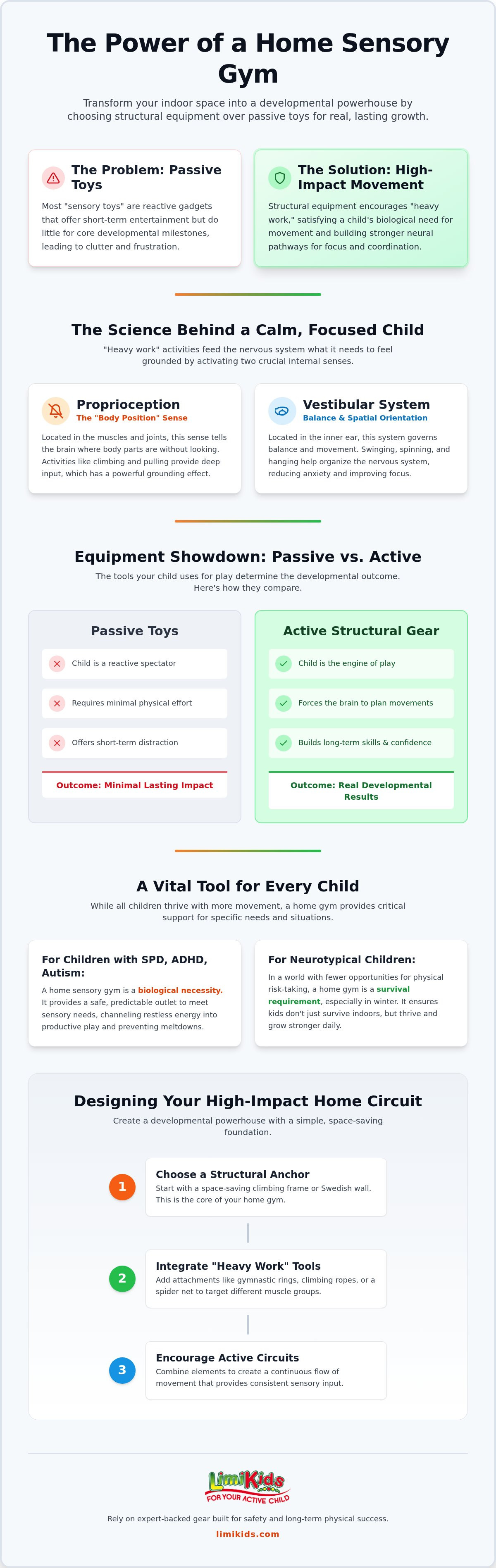
Sensory motor equipment for home isn't just a collection of toys. It is a specialized toolkit designed to integrate physical movement with sensory processing. While a standard toy might entertain a child for ten minutes, sensory motor gear challenges their body and brain to work in unison. It transforms passive screen time into active, developmental play. This equipment bridges the gap between what a child feels and how they move, creating a foundation for every other skill they will learn in life.
The home is the most important environment for this work. Therapy sessions are great, but they only happen once or twice a week. Consistent growth requires daily access to movement. By installing sensory motor equipment for home, you provide your child with a reliable outlet for "heavy work" whenever they need it. This consistency builds neural pathways faster than occasional clinic visits ever could. It turns your living space into a proactive zone for focus, coordination, and emotional regulation.
There is a massive difference between active and passive play tools:
- Passive Toys: These are reactive. Think of a battery-operated car or a light-up gadget. The child watches or pushes a button, but their body stays still.
- Active Motor Equipment: These require the child to be the engine. Climbing a Swedish wall, hanging from monkey bars, or navigating a spider net forces the brain to plan complex movements.
The Crucial Link Between Senses and Movement
Your child's brain uses sensory input like a GPS to plan motor actions. This process is called praxis. When a child climbs, their brain receives constant data about where their limbs are and how much force to use. If this system is sluggish, the child might seem clumsy or "spacey." High-intensity movement actually sharpens this internal GPS. It might sound backwards, but moving more is often the secret to sitting still. Sitting at a desk requires significant sensory-motor maturity. Without enough "movement fuel" during the day, a child's nervous system can't find the calm needed for quiet tasks.
Who Benefits from a Home Sensory-Motor Space?
Every child needs to move, but for some, it is a biological necessity. Children diagnosed with Sensory Processing Disorder (SPD), ADHD, or Autism often have nervous systems that crave specific types of physical input to feel organized. Without a safe place to crash, climb, and pull, that energy often turns into meltdowns or restless behavior. A dedicated home gym provides a safe, predictable environment to meet those needs.
Neurotypical children also benefit immensely. In our modern world, natural opportunities for risky, physical play are shrinking. Canadian parents know this struggle well. When winter hits and the local park is buried under three feet of snow, indoor energy burn is a survival requirement. Providing a structural climbing frame ensures your kids aren't just surviving the winter, but thriving and growing stronger every single day.
The Science of 'Heavy Work': Proprioception and Vestibular Input
"Heavy work" is the scientific secret to a calm, focused child. It isn't just about burning calories. It's about feeding the nervous system exactly what it needs to feel grounded. When kids engage in intense physical activities like pushing, pulling, or lifting their own body weight, they trigger two vital internal systems: proprioception and the vestibular sense. These aren't just clinical terms; they are the gears that drive your child's ability to navigate the world.
Proprioception is your child's "body position" sense. It lives in the muscles and joints. It tells them where their limbs are without them having to look. The vestibular system, located in the inner ear, handles balance and spatial orientation. Together, these systems form the foundation of sensory regulation. Using specialized Vestibular and Proprioceptive Activities through high-quality sensory motor equipment for home allows children to "reset" their internal state. This input has a profound calming effect. It organizes a disorganized nervous system, often reducing anxiety and improving a child's ability to transition between tasks.
By providing the right sensory motor equipment for home, you give your child a safe way to seek this input. Instead of crashing into furniture or jumping off the sofa, they can channel that need into productive, structural play. This isn't just about physical fitness. It's about neurological stability.
Climbing: The Ultimate Multi-Sensory Activity
Climbing a Swedish wall is one of the most efficient ways to deliver heavy work. It demands total body engagement. As your child reaches for the next rung, their brain must calculate distance, grip strength, and foot placement simultaneously. This is high-level motor planning in action. It builds confidence alongside muscle. Many parents worry about the risks of indoor heights, but indoor climbing for kids development is remarkably safe when using structurally sound gear. It provides the "big" movement kids crave in a controlled, predictable environment.
Hanging and Swinging: Mastering Spatial Awareness
Mastering the monkey bars is a major developmental milestone. This action, known as brachiation, does more than build impressive upper body strength. It forces the child to understand their body in 3D space as they swing from one point to another. This spatial awareness is a precursor to academic success. Believe it or not, the shoulder stability gained from hanging is essential for developing fine motor skills later. A child needs a strong, stable core and shoulder to eventually hold a pencil and write with ease. Investing in a robust indoor home gym for kids ensures your child has 24/7 access to these brain-boosting movements.
Comparing Sensory Motor Equipment: Toys vs. Structural Gear
Stop filling your home with plastic clutter that promises "sensory engagement" but delivers very little actual growth. To build a truly effective developmental space, you need to understand the hierarchy of tools. Think of your home gym like a house. Structural gear is the foundation. Small sensory toys are the interior decor. You can't have a stable home with only wallpaper. You need the beams and the frame first.
The primary difference lies in the play style. Reactive toys respond to the child. A button makes a sound; a light flashes. This is "low-demand" play. Active sensory motor equipment for home requires the child to respond to the equipment. The equipment doesn't move unless the child makes it move. This creates the resistance necessary for true motor development. When a child pulls themselves up a ladder, their muscles are working against gravity. This resistance is exactly what builds the "heavy work" feedback your child's nervous system craves. It forces the brain to engage with the body in a way that a handheld toy never will.
Durability is another major factor for parents to consider. Most plastic toys are designed for a single season and quickly lose their novelty. Structural gear is a long-term investment. It grows with your child. It handles the intensity of daily "crashes" and climbs without breaking. This reliability builds trust. A child needs to know that the rung they are grabbing won't flex or snap. When the equipment is permanent and sturdy, the child feels safe enough to push their physical limits.
When to Use Small Sensory Tools
Small tools have a specific, supportive purpose. Use tactile bins, fidget spinners, or textured balls for "desk focus" or environmental regulation. These are excellent for calming down after a high-energy session or helping a child stay seated during a meal. However, they have significant limitations. You can't build grip strength, shoulder stability, or bilateral coordination with a fidget cube. They are accessories; they are not the main event. Use them to supplement the big movements, not replace them.
The Power of Structural Equipment
Indoor gyms are the "anchor" of your developmental play space. They provide the big, bold movements that reset the nervous system. The choice of material matters here for both safety and tactile feedback. Metal frames often offer higher weight limits and more configuration options, while wood offers a specific aesthetic and natural feel. For a deep dive into which is right for your family, check out our guide on wooden vs metal indoor jungle gym options. Choosing the right anchor piece ensures your child has the structural resistance they need to reach their full potential.
Designing Your Home Sensory-Motor Circuit
Building a developmental space is more than just placing a frame in a room. It is about creating a mission. A well-designed circuit guides your child through a sequence of movements that challenge their brain and body in equal measure. Stop guessing and start strategizing. Follow these steps to turn your floor plan into a high-performance growth zone using the right sensory motor equipment for home.
- Step 1: Identify the Need. Observe your child. Do they crave "crashing" and heavy pressure, or do they get overwhelmed by fast movement? Your circuit should either provide the intensity seekers crave or the controlled, rhythmic input avoiders need to feel safe.
- Step 2: Select Your Anchor. Every circuit needs a powerhouse. A Swedish wall or a climbing frame serves as the central hub. This is where the heaviest work happens.
- Step 3: Add Flow Elements. Connect your anchor to the rest of the room. Use floor mats or balance beams to create a path. This prevents "dead zones" where the child loses focus.
- Step 4: Incorporate End-Goals. Give the movement a purpose. Place a ring toss at the top of a ladder or a puzzle piece that needs to be carried across a beam. This builds "praxis" or motor planning.
- Step 5: Safety Check. Ensure there is a clear zone around your equipment. Use high-impact mats to protect joints and give your child the confidence to take risks.
Small Space Solutions for Canadian Homes
You don't need a massive basement to make this work. Many Canadian homes require creative thinking to maximize limited square footage. Vertical space is your best friend. Wall-mounted gyms take up virtually zero floor space while providing a full range of movement. Look for multi-functional gear that can be tucked away or integrated into a bedroom corner. A dedicated sensory corner can be as simple as a wall ladder and a single crash mat. This provides a massive developmental return on investment in a tiny footprint.
Integrating Balance and Coordination
Climbing is vital, but what happens between the rungs and the floor? Balance beams bridge this gap. They force the brain to slow down and focus on precise foot placement. Integrating kids balance and coordination equipment into your circuit ensures a well-rounded sensory diet. To keep the challenge fresh, change the layout every few weeks. Move the beam, tilt the ladder, or add new goal-oriented tasks to keep your child engaged as they grow stronger. Ready to build your own powerhouse? Shop our premium indoor playground equipment today and start your child's transformation.
Why LIMIKIDS is the Foundation for Your Home Sensory Gym
Choosing the right sensory motor equipment for home is a long-term investment in your child's future. Since 2008, LIMIKIDS has served as an empowering guide for Canadian families, helping them navigate the challenges of limited indoor space and high developmental needs. We don't just provide gear. We provide a reliable platform for achievement. Our 15 plus years of expertise in the Canadian market means we understand exactly what it takes to turn a standard room into a high-performance sensory zone.
Structural integrity is the heartbeat of our design philosophy. As we discussed earlier, "heavy work" requires resistance and stability. If a climbing frame wobbles, the child's nervous system stays in a state of alert rather than regulation. LIMIKIDS gear is built to handle high-intensity movement without compromise. Our space-saving Swedish wall systems allow you to bring professional-grade developmental tools into your home without sacrificing your living space. It is the perfect marriage of clinical-level utility and home-friendly design.
By choosing LIMIKIDS, you are selecting a foundation that supports your child's physical and cognitive milestones. Our equipment is designed to grow alongside your child, ensuring that the investment you make today continues to pay off for years to come. We believe that every home has the potential to be a powerhouse for growth, and we are here to provide the tools to make that a reality.
Safety and Durability You Can Trust
When it comes to sensory-motor "heavy work," structural integrity is non-negotiable. We use only high-quality materials designed for safe, active play. Our climbing gyms are crafted to withstand the rigorous demands of daily use, from the first tentative steps of a toddler to the high-energy acrobatics of an older child. This "Grow-with-Me" design ensures that your sensory motor equipment for home remains a relevant and challenging part of your child's environment as they hit new milestones. You can trust that every rung, rope, and net is built for permanence and reliability.
Start Your Journey to Active Discovery
Your home is the ultimate launchpad for your child’s potential. Every climb, hang, and balance session builds the confidence they need to tackle the world outside. Don't wait for a weekly therapy session to see progress. You can start creating those vital neural pathways today. For parents looking to foster even more independence, explore our guide on Montessori play equipment to see how active discovery transforms daily play. You’ve got this, and we’re here to help every step of the way. Let’s get moving!
Transform Your Home Into a Developmental Powerhouse
You now have the roadmap to move beyond plastic toys and start building real progress. Effective sensory-motor development depends on the "heavy work" that only structural equipment provides. By prioritizing proprioceptive input and designing a high-impact circuit, you're giving your child the tools they need for better focus, coordination, and confidence. Your living space doesn't have to be a source of chaos; it can be the foundation for your child's physical success.
Integrating the right sensory motor equipment for home is a long-term investment in your child's potential. We’ve been trusted by Canadian families since 2008 to provide premium, space-saving designs that fit modern lives. With fast shipping across Canada, your home transformation can start right now. You have the power to challenge indoor limitations and inspire your child to reach new heights.
Build your child’s dream sensory gym with LIMIKIDS today!
Take that first step toward active discovery. Your child is ready to climb, and we’re here to make sure they do it safely and successfully. You've got this!
Frequently Asked Questions
What is the best sensory motor equipment for a child who is a sensory seeker?
Structural climbing frames and monkey bars are the gold standard for sensory seekers. These children crave "heavy work" to organize their nervous systems and find calm. Equipment that allows for intense pulling, hanging, and climbing provides the deep muscle and joint feedback they need to feel grounded. This type of high-impact activity is far more effective for seekers than small, handheld fidgets or light-up toys.
Can I fit sensory motor equipment in a small apartment?
Absolutely, vertical space is your secret weapon in smaller homes or Canadian condos. Space-saving Swedish wall designs are specifically engineered for modern apartments. These units mount securely to the wall or ceiling, providing a full range of movement while occupying less floor space than a standard armchair. You can transform a narrow hallway or a bedroom corner into a complete developmental gym without cluttering your living area.
Is indoor climbing equipment safe for children with developmental delays?
Yes, indoor climbing equipment is a powerful tool for building confidence and motor planning in children with developmental delays. It provides a predictable, controlled environment to practice risky play and physical achievement. Always use high-impact safety mats and ensure active supervision to match the equipment's challenge to your child's current ability level. This gear helps bridge the gap between therapy sessions and daily home life.
How do I know if my child needs proprioceptive or vestibular input?
Watch your child's natural seeking behaviors to identify their specific sensory needs. If they constantly crash into furniture, jump on beds, or love tight hugs, they are likely seeking proprioceptive input to find their body in space. If they are constantly spinning, rocking, or hanging upside down, they are craving vestibular input for balance. Providing a variety of sensory motor equipment for home lets them self-regulate naturally.
What is the difference between a sensory toy and sensory motor equipment?
The main difference is active versus passive engagement. A sensory toy is often a small, handheld tool used for environmental regulation, tactile stimulation, or desk focus. In contrast, sensory motor equipment for home provides structural resistance and requires whole-body movement. It forces the child to use their muscles and brain together to navigate the space, which is essential for true gross motor development and long-term coordination.
How often should my child use their home sensory gym for the best results?
Daily access provides the best results for sensory regulation and long-term skill building. Think of it as a "sensory diet" rather than a scheduled workout or a physical education class. Letting your child use the equipment for short, ten to fifteen minute bursts several times throughout the day helps maintain focus and prevents the emotional meltdowns that often come from pent-up energy.
Do I need a professional to install indoor monkey bars or Swedish walls?
Most premium home systems are designed for straightforward DIY installation by parents with basic home tools. The critical factor is ensuring the equipment is anchored into solid wood studs or concrete for maximum safety. While we don't provide on-site assembly, the process is well-documented and manageable. If you aren't comfortable locating studs or working with wall anchors, hiring a local handyman is a great way to ensure peace of mind.
What age is appropriate to start using sensory-motor climbing gear?
Children can begin using modified climbing gear and mats as soon as they are pulling themselves up and walking independently. Many systems feature a "grow with me" design that supports your child from toddlerhood through their pre-teen years. Starting early helps develop a strong foundation for coordination, grip strength, and spatial awareness. Always ensure the setup is age-appropriate and that you are there to cheer them on.