






Proprioceptive Toys for Home: Parent's Guide (2026)
Your living room sofa wasn't built to be a landing pad. Your dining chairs shouldn't function as a jungle gym. It's exhausting to constantly redirect a child who just needs to move, especially when sensory under-stimulation leads to frequent meltdowns. You want a home that feels like a sanctuary, not a hazard zone. We agree that every child deserves a safe place to push, pull, and climb without limits.
This guide empowers you to reclaim your space while fueling your child's developmental needs. You'll discover how the right proprioceptive input toys for home transform chaotic energy into calm, focused mastery. We're showing you how to build a sensory-rich environment that supports body awareness and emotional regulation through active play. From high-quality Swedish wall gyms to robust indoor climbing frames, learn which gear provides the best heavy work for 2026. Stop managing the chaos and start mastering the movement. Let's build a home that grows with them.
Key Takeaways
- Recognize the signs of sensory seeking and learn how "heavy work" helps your child regulate their nervous system.
- Discover how active climbing and swinging build essential body awareness while protecting your furniture from damage.
- Evaluate the best proprioceptive input toys for home to ensure you invest in gear that supports lasting physical growth.
- Create a dedicated sensory circuit using safety mats and crash zones to foster a calm, focused environment.
- Invest in space-saving Swedish wall gyms that offer maximum structural integrity and evolve with your child's needs.
What is Proprioceptive Input and Why Does Your Child Crave It?
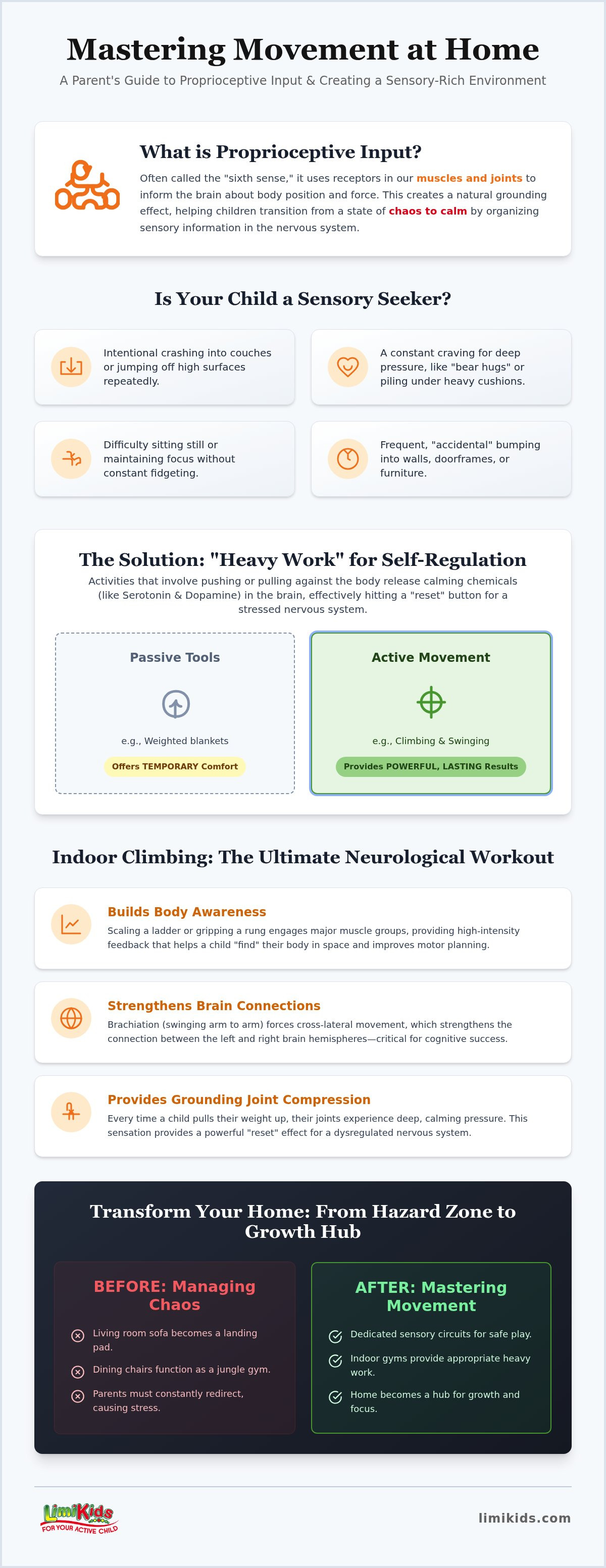
Ever wonder why your child seems to have an endless supply of "crash and burn" energy? It’s not just high spirits. It is a biological drive for sensory feedback. Researchers often define What is Proprioception as our "sixth sense." Instead of using eyes or ears, this sense relies on receptors in our muscles and joints. It tells the brain exactly where our body parts are and how much force we're using at any given moment. When this system is under-stimulated, children seek out intense physical sensations to feel grounded.
Think of proprioception as a natural filter for the nervous system. When a child receives the right amount of deep pressure, their brain organizes information more efficiently. This creates an immediate grounding effect that helps them transition from chaos to calm. While passive tools like weighted blankets offer temporary comfort, active movement provides the most powerful, long-lasting results. This is why choosing the right proprioceptive input toys for home is a game changer for daily regulation. You aren't just buying toys; you're providing the architectural support your child’s brain needs to thrive.
Signs Your Child is Seeking Proprioceptive Input
Sensory seekers are easy to spot once you know the markers. They aren't trying to be "naughty" or destructive. They are simply trying to "find" their bodies in space. Watch for these common behaviors:
- Frequent, "accidental" bumping into walls, doorframes, or furniture.
- A constant craving for deep pressure, such as "bear hugs" or piling under heavy sofa cushions.
- Difficulty sitting still or maintaining focus during quiet tasks without constant fidgeting.
- Intentional crashing into couches or jumping off high surfaces repeatedly.
The Role of "Heavy Work" in Self-Regulation
The most effective way to satisfy this sensory hunger is through "heavy work." This includes any activity that pushes or pulls against the body. When your child climbs, hangs, or carries something heavy, their muscles work hard. This physical exertion releases calming chemicals like serotonin and dopamine in the brain. It’s like hitting a reset button for a stressed nervous system.
To manage this need effectively, many parents are now building a structured home sensory diet. Integrating sensory motor equipment for home allows your child to get this vital input safely and predictably. Instead of scaling the kitchen cabinets, they can master their movements on dedicated indoor gyms. This proactive approach turns your living space into a hub for growth, focus, and achievement.
The Science of Heavy Work: How Indoor Climbing Builds Body Awareness
Climbing isn't just play. It's a full-body neurological workout. When your child scales a ladder or grips a rung, they engage every major muscle group simultaneously. This massive surge of sensory data is exactly what a seeking child needs. By pushing and pulling against gravity, they receive the high-intensity feedback that smaller, handheld proprioceptive input toys for home simply cannot match. This physical exertion acts as a bridge to cognitive success. A child who has just finished a session of heavy work is often more capable of sitting still and focusing on complex tasks because their nervous system feels "organized."
Brachiation, or the act of swinging from arm to arm, is particularly vital. Navigating monkey bars forces the brain to coordinate cross-lateral movements, which strengthens the connection between the left and right hemispheres. This isn't just about grip strength; it's about brain architecture. Using Montessori play equipment allows children to explore these movements at their own pace. It encourages independent discovery and forces them to solve physical puzzles in real-time. To see how these tools fit into a broader routine, you can explore how to structure a sensory diet that keeps your child regulated all day long.
Muscle Resistance and Joint Compression
Every time your child pulls their weight up a climbing frame, their joints experience deep compression. This sensation is incredibly grounding. It provides a "reset" effect for a dysregulated system, moving a child from a state of high-alert to one of calm stability. Joint receptors are specialized sensors located in the tissues surrounding your joints that provide the brain with constant data about limb position and movement. This internal map is what allows us to move with confidence. High-quality indoor jungle gyms provide the consistent resistance needed to keep this map updated and accurate.
Mastering Motor Planning Through Climbing
Motor planning is the ability to conceive, plan, and carry out a new physical action. It's a complex mental process that happens in a split second. Navigating a climbing wall or a set of rungs requires constant mental and physical adjustment. Your child has to decide where to put their foot, how hard to grip, and how to shift their weight. Structural equipment beats small toys for long-term success because it offers infinite variety. Unlike a simple fidget, a climbing frame presents a new challenge every time they approach it. This constant engagement builds the "motor muscles" of the brain, ensuring your child develops the coordination they need for sports, writing, and daily life. It is the most effective way to utilize proprioceptive input toys for home for lasting developmental gains.
Choosing Proprioceptive Toys for Home: Small Fidgets vs. Structural Gyms
Stop settling for plastic clutter that ends up under the sofa. When selecting proprioceptive input toys for home, you need to understand the hierarchy of effectiveness. Small fidgets and weighted lap pads have their place for quiet time, but they provide passive input. They don't solve the underlying need for high-intensity sensory feedback. Structural gyms represent the gold standard of active movement. They offer the resistance and gravity-defying challenges that truly regulate a seeking child. A handheld toy might occupy a child for five minutes; a climbing frame builds their brain for years.
Think about the "input-per-minute" value. A child squeezing a stress ball receives minimal joint feedback. A child climbing a ladder receives massive, organized input to every major muscle group instantly. When you invest in proprioceptive input toys for home, you're prioritizing long-term development over temporary distraction. High-quality equipment doesn't just take up space; it creates a dedicated zone for growth. You can fit a sensory powerhouse into almost any square footage if you choose the right design.
The Swedish Wall Gym: A Space-Saving Powerhouse
Verticality is your best friend in a modern home. Swedish walls are the ultimate solution for apartments or smaller bedrooms because they use wall space instead of floor space. These units aren't just ladders. They are modular systems where your child can climb, hang, and pull. This variety ensures they never hit a plateau in their development. One single installation provides the heavy work required to reset a dysregulated nervous system after a long school day. For detailed technical specs and installation tips, check out our ultimate guide to choosing an indoor home gym.
Monkey Bars and Climbing Frames: Maximum Input
For high-energy seekers, nothing beats full-body suspension. Monkey bars force a child to support their entire weight, providing the deepest possible joint compression in the shoulders and grip. This level of intensity is a "sensory reset" that small toys can't replicate. Durability is non-negotiable here because the equipment must withstand repetitive, forceful movements. Deciding between wooden vs metal indoor jungle gyms is a critical step for longevity. Metal frames often offer superior structural integrity for older children or more aggressive climbers, ensuring your home gym remains a safe, permanent fixture in your child's wellness routine.
Designing a Sensory-Rich Home: Where to Place Your Equipment
Stop treating your sensory equipment like a temporary obstacle or a mess to be hidden away. To get the most out of proprioceptive input toys for home, you must integrate them into your home’s permanent architecture. Basements often offer the structural support and cool temperatures needed for high-intensity, sweaty play. Bedrooms provide a private sanctuary for a child to regulate their system before sleep or immediately upon waking. Playrooms allow for a dedicated, "no-judgment" zone where movement is the primary goal and furniture is no longer at risk. A successful sensory circuit flows naturally through the house; maybe it starts with a climb in the bedroom and ends with a crash in the playroom. When you designate a specific area for activity, you give your child permission to explore their physical limits without constant redirection.
Creating a Safe Crash Zone
Crashing isn't destructive behavior; it's a vital sensory requirement. For many kids, the impact of hitting a soft surface provides the deep pressure their brain craves to feel grounded. You must pair your proprioceptive input toys for home with high-density safety mats to create a "crash zone." These mats absorb impact and protect joints during repetitive jumping, falling, or rolling. Always place your climbing frames or monkey bars at least two feet away from sharp corners, glass windows, or hard furniture edges. This proactive setup ensures the focus remains on developmental success, not injury prevention.
Integrating Play into Daily Routines
Sensory play works best when it's predictable and consistent. Use your indoor gym to bookend the day and manage difficult transitions. A quick "morning burn" session helps wake up the muscles and prepares the brain for the demands of the school day. Before starting homework, five minutes of climbing or hanging can significantly improve seated focus and reduce restless fidgeting. This burst of heavy work provides the neurological organization needed for complex cognitive tasks. A structured 10-minute sensory circuit in the late afternoon can dramatically reduce evening meltdowns by releasing pent-up energy before the bedtime routine begins.
Your home should be a tool for your child's success, not a source of daily frustration. By strategically placing equipment and following a consistent routine, you transform a standard living space into a developmental powerhouse. This architectural shift empowers your child to take control of their own regulation. Stop managing meltdowns and start facilitating movement. Browse our collection of indoor jungle gyms to build your home sensory circuit today and see the difference that professional-grade equipment makes.
Empowering Your Child with LIMIKIDS: Premium Indoor Gyms for Sensory Success
Your search for the ultimate home sensory solution ends here. At LIMIKIDS, we don't just sell equipment; we provide the tools for your child’s physical and emotional triumph. Since 2008, we've established ourselves as the Canadian authority in premium indoor playground equipment. We understand that proprioceptive input toys for home must be more than just fun. They must be durable, reliable, and scientifically beneficial. Our "grow with me" design philosophy ensures that your investment in a Swedish wall gym or monkey bars pays dividends for years. As your child gets taller and stronger, our gear adapts to meet their increasing need for challenge and resistance.
Transforming your living space into an empowering environment shouldn't be a logistical nightmare. We offer fast, reliable shipping across Canada, ensuring your family can start building a sensory circuit without delay. Whether you're looking for indoor climbing equipment or a complete indoor home gym, we provide the structural foundation your child needs to master their body awareness. It's time to stop looking at your furniture as a climbing frame and start providing a dedicated space for active discovery. This proactive shift supports long-term physical development while giving parents peace of mind. We believe that physical challenges can be overcome with the right tools, and we're here to provide them.
The LIMIKIDS Quality Standard
We prioritize structural integrity above all else. Our equipment is crafted from high-quality materials designed to withstand the intense, repetitive heavy work that sensory seekers require. Safety testing is at the core of everything we build. You can trust the reliability of our Swedish walls to remain stable and secure, even during the most high-energy play sessions. Beyond performance, we care about your home's appearance. Our gear features a modern, clean aesthetic that complements your interior design rather than clashing with it. You get professional-grade sensory motor tools that look as great as they perform. These systems are built for permanence and reliability.
Start Your Sensory Journey Today
Building a regulated, focused home life is a journey that starts with a single step. Our team is dedicated to supporting Canadian families as they select the most effective gear for pediatric wellness and physical development. We invite you to explore our extensive range of sensory play equipment and find the perfect fit for your space and your child’s unique needs. Don't wait for the next meltdown to take action. Empower your child with the gift of movement and watch their confidence soar. Shop the LIMIKIDS collection today and take the first step toward a calmer, more active home. We're your partner in creating a space where your child can truly thrive.
Build a Home That Powers Their Potential
You now have the blueprint to transform your living space into a sanctuary of growth. Movement is the ultimate regulator for a sensory-seeking child. By providing high-intensity heavy work, you aren't just saving your furniture; you're actively building your child's brain architecture. Investing in high-quality proprioceptive input toys for home like Swedish wall gyms creates a permanent foundation for body awareness and lasting emotional focus. We've proven that structural equipment consistently outperforms passive tools by providing the deep joint compression children crave.
LIMIKIDS has been a proud Canadian-owned and operated expert since 2008. Our space-saving Swedish wall designs are trusted by thousands of families to support healthy sensory development. We're here to help you turn every room into an opportunity for discovery and achievement. Stop managing the chaos and start facilitating the climb.
Transform your home with premium sensory equipment from LIMIKIDS.
Your child has the drive to move. Give them the safe, professional tools they need to master their world. You've got this!
Frequently Asked Questions
What is the best proprioceptive toy for a child who loves to crash?
High-density safety mats paired with a Swedish wall gym are the ultimate solution. Crashing is a valid sensory seeking behavior that provides the intense deep pressure a child’s brain needs to feel grounded. By providing a dedicated crash zone with structural equipment, you give them a safe outlet for heavy work. This prevents them from using your living room sofa as a landing pad. It ensures they get organized input every time they play.
Can indoor climbing gyms really help my child focus on schoolwork?
Absolutely. Integrating proprioceptive input toys for home acts as a neurological reset button. When a child engages in heavy work through climbing or hanging, their brain releases calming chemicals like serotonin. This organization helps them transition from a state of high energy to a focused, ready-to-learn mindset. Try a five-minute climbing session right before starting homework. It reduces restless fidgeting and improves seated focus for complex cognitive tasks.
How much space do I need for a Swedish wall gym at home?
You don't need a massive playroom to see results. Swedish wall gyms are designed specifically for space-saving success because they utilize vertical wall space rather than occupying the entire floor. Most units only require about two square feet of actual floor space for the base. However, always maintain a clear safety zone of at least four to five feet around the equipment. This allows for safe movement and proper mat placement during active play.
Is indoor climbing equipment safe for toddlers?
Yes, provided the equipment is specifically designed for their developmental stage. Montessori-inspired climbing equipment is built to encourage early motor planning and grip strength in a controlled environment. Safety is our priority. We recommend always pairing these tools with high-density safety mats. Since 2008, we've helped families build safe zones where toddlers explore their physical limits under the watchful eye of an empowering parent. It builds confidence and coordination early on.
What is the difference between vestibular and proprioceptive input?
These two systems work together but target different needs. Proprioceptive input comes from receptors in the muscles and joints. It tells the brain where the body is in space. Vestibular input comes from the inner ear and focuses on balance and movement. While a swing provides vestibular feedback, climbing a ladder provides the deep joint compression that defines heavy work. Both are essential for a complete sensory diet in any active home.
How do I know if my child is a sensory seeker or just high-energy?
Observe how your child interacts with their environment. High-energy children simply enjoy moving at a fast pace. Sensory seekers, however, often look for impact to feel regulated. If your child intentionally bumps into walls, craves tight bear hugs, or constantly crashes into soft surfaces, they're likely seeking proprioceptive feedback. Identifying these specific patterns helps you choose the right proprioceptive input toys for home to satisfy their biological drive for deep pressure and resistance.
Does LIMIKIDS ship sensory equipment across all of Canada?
Yes, we provide fast and reliable shipping across the entire country. As a Canadian-owned and operated company since 2008, we're dedicated to serving families from coast to coast. We understand the logistical challenges of getting high-quality sensory gear in Canada. Our team supports you as you select the most effective tools for pediatric wellness and physical development. Your indoor jungle gym or climbing frame arrives quickly and ready for action.
What weight capacity should I look for in a home indoor gym?
You should prioritize structural integrity and a grow with me capacity. For long-term use, look for equipment that supports at least 220 lbs. This high weight limit ensures the gym remains safe as your child grows into adolescence and engages in more aggressive climbing. Investing in professional-grade gear with a high capacity means your home sensory setup remains a permanent, reliable resource for your family’s physical development for many years to come.