






The Parent’s Guide to the Best Indoor Toddler Climbing Frame in 2026
Your living room sofa wasn't designed to be a mountain peak, but your toddler doesn't care. It's a daily battle between their boundless energy and your desire for a safe, clutter-free home. You know they need to move, climb, and test their limits, yet watching them scale a wobbly bookshelf is enough to make any parent's heart skip a beat. You need a solution that channels that drive into something productive and secure.
This guide will help you discover the perfect toddler climbing frame indoor to foster gross motor skills and confidence. You'll learn how to choose a system that fits your space, meets the latest 2026 safety standards, and actually grows with your child for years. We'll break down the benefits of modular steel designs, explore space-saving wall-mounted options for smaller homes, and reveal why the right equipment is a long-term investment in your child's physical development. Stop worrying about dangerous furniture and start building a home environment where your little one can thrive safely.
Key Takeaways
- Understand the developmental science behind the "climbing instinct" to better support your child's physical milestones.
- Learn why choosing a toddler climbing frame indoor with a high dynamic load capacity is essential for multi-child safety.
- Discover the secret to active play in small spaces by prioritizing verticality and wall-mounted equipment.
- Compare wood and metal materials to find the perfect balance between Montessori aesthetics and long-term structural integrity.
- Identify modular features that allow your play equipment to evolve from a simple climber into a comprehensive home gym.
The Science of Active Play: Why Toddlers Need to Climb
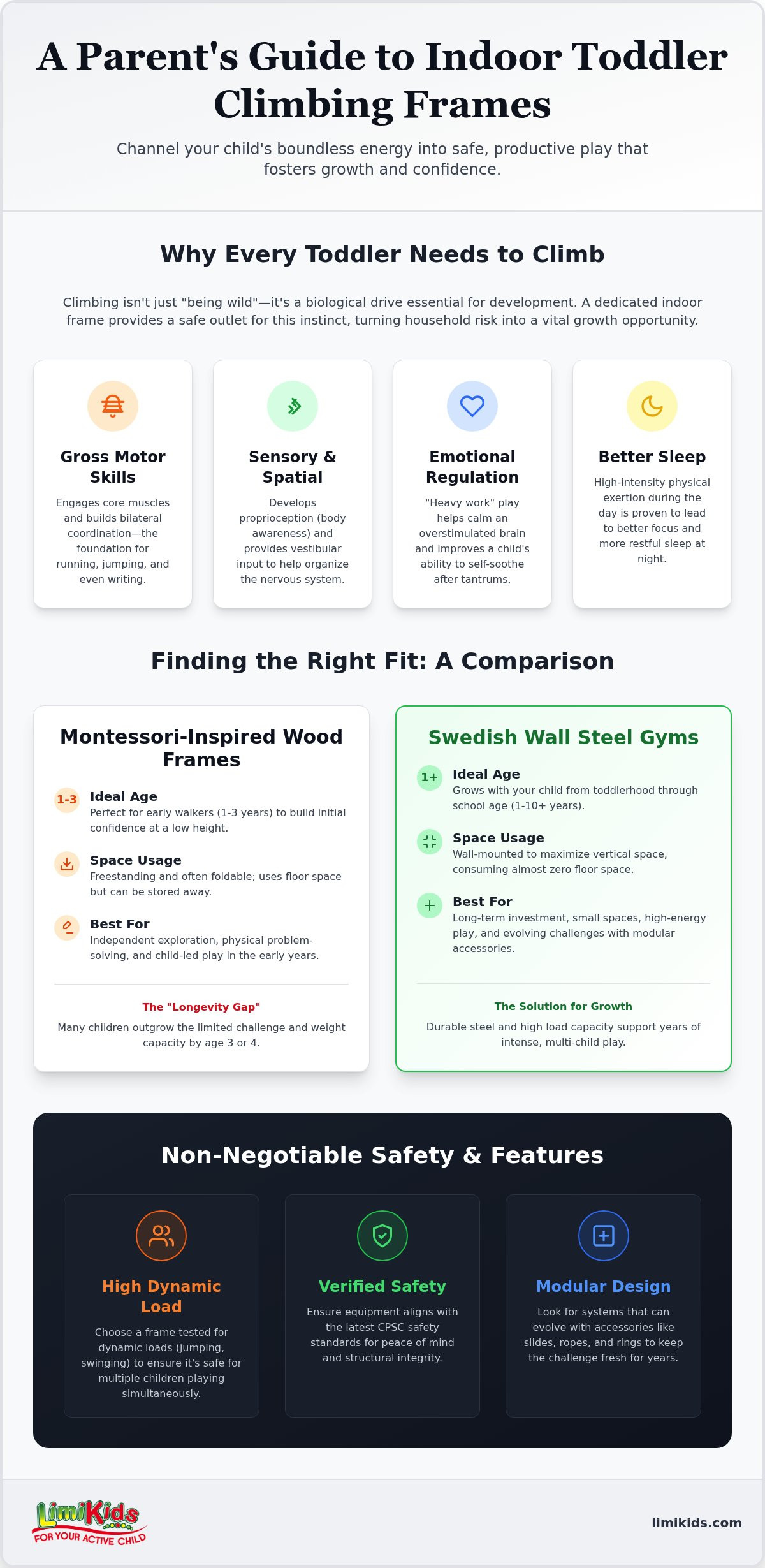
Toddlers aren't just being "wild" when they scale the back of your armchair. They're following a deep-seated biological drive to explore their physical limits. A toddler climbing frame indoor provides a designated, structured environment where this "climbing instinct" can safely unfold. Instead of viewing climbing as a household risk, see it as a vital component of sensory and physical growth. Moving the "playground" inside prevents children from scaling dangerous furniture; this significantly reduces the risk of tip-overs and falls. There's also a proven link between high-intensity physical exertion and better sleep patterns. When toddlers challenge their muscles during the day, they find it much easier to focus and settle when the sun goes down.
Developing Gross Motor Skills and Coordination
Climbing is a powerhouse for physical development. It forces children under 4 to engage their core muscles and practice bilateral coordination, which is the skill of moving both sides of the body in a synchronized way. This builds a foundation for everything from running to writing. Many modern systems also encourage "brachiation," the act of hanging or swinging by the arms. This specifically targets upper body strength and hand-eye coordination. Proprioception is the sense that allows us to perceive the location and movement of our body parts, and a climbing frame acts as a training ground for this crucial spatial awareness. Understanding the developmental benefits of play helps parents see every rung and ladder as a stepping stone toward physical mastery.
Sensory Integration and Emotional Regulation
Movement isn't just about muscles; it's about the mind. Vestibular input, or the sensation of movement and balance, helps a toddler’s nervous system organize itself. This often leads to improved emotional regulation and a better ability to self-soothe after a tantrum. For sensory seekers or children on the autism spectrum, an indoor gym is a game-changer. It provides the "heavy work" required to calm an overstimulated brain. For a deeper look at how to use these tools effectively, read our Sensory Motor Equipment for Home: Parent’s Guide. Transforming your home into an active space isn't just about fun. It's about giving your child the tools they need to navigate the world with confidence.
Types of Indoor Toddler Climbing Frames: Finding the Right Fit
Choosing the right toddler climbing frame indoor isn't just about aesthetics. It's about matching the equipment to your child's current ability while planning for their future needs. Many parents face the "Longevity Gap," where they buy a beautiful wooden climber only to find their child has outgrown it by their third birthday. To avoid this, you must analyze the materials and the structural design. While wood offers a warm, Montessori feel, high-quality steel systems provide the durability and weight capacity needed for years of intense play. Always verify that your choice aligns with CPSC safety standards to ensure the frame can handle dynamic movements without compromising stability.
Montessori-Inspired Freestanding Frames
Freestanding frames, like the classic Pikler triangle, are excellent entry points for early walkers aged 1 to 2. These structures allow toddlers to build initial confidence at a safe, low height. One major benefit is portability; many designs fold flat, making them ideal for multi-use rooms where floor space is at a premium. This style of play encourages independent exploration and physical problem-solving. For a deeper look at how these tools fit into a child-led environment, explore our guide on Montessori Play Equipment: The Parent’s Guide to Active Discovery at Home (2026). They are perfect for the first stages of discovery, though they may eventually need to be supplemented as your child's strength increases.
Swedish Wall Gyms: The Space-Saving Powerhouse
Vertical climbing is the ultimate secret for active play in apartments and smaller urban homes. Swedish wall gyms mount directly to your wall, utilizing vertical space rather than consuming your entire living room floor. These are permanent, rock-solid structures that support high-energy play without the wobbling associated with some freestanding models. They grow with your child from toddlerhood through school age. You can start with simple ladder rungs and add complexity as they develop. Adding multi-functional accessories like slides, climbing ropes, and rings keeps the environment fresh and challenging. You can find a wide range of indoor playground equipment that transforms a single wall into a comprehensive fitness zone. This modularity ensures your investment lasts for a decade, not just a season.
Safety Standards and Structural Integrity for Indoor Climbing
Safety isn't just a checkbox; it's the foundation of your child's confidence. When you bring a toddler climbing frame indoor, you're creating a controlled environment for healthy risk-taking. This means certain features are non-negotiable. Every surface must be perfectly smooth and splinter-free to protect soft hands. Finishes must be non-toxic and lead-free, as toddlers often explore with their mouths as much as their feet. High-quality hardware is equally vital. Look for locking nuts and bolts that won't loosen after months of vigorous use. A sturdy frame is only half the battle; you also need a dedicated fall zone. Impact-absorbing safety mats should extend around the structure to ensure every tumble ends in a giggle rather than a bruise.
Weight capacity is a figure many parents misinterpret. There's a massive difference between static weight and dynamic load. Static weight is what the frame can hold if a child sits perfectly still. Dynamic load accounts for the force of jumping, swinging, and climbing. High-end steel frames are often rated for a 220 lbs dynamic load, meaning they stay rock-solid even when multiple children play at once. If a frame feels wobbly under your own hand, it's not ready for your toddler's energy.
Wall-Mounting vs. Pressure-Mounting
How you secure the gym is as important as the gym itself. Stud-mounted systems involve drilling directly into the wooden or metal studs behind your drywall. This is the gold standard for permanent stability. If you have concrete walls or live in a rental where drilling is restricted, floor-to-ceiling pressure mounts are an excellent alternative. These systems use tension to stay in place, provided you have a solid ceiling. Both styles offer incredible security for swinging and climbing, but always match the mounting hardware to your specific wall type to prevent shifting during play.
The Debate: Wooden vs. Metal Durability
Material choice directly impacts long-term safety. Wooden frames are popular for their natural look, but they require regular inspections for cracks or loosening joints. Metal frames, particularly those made from high-grade steel, offer superior structural integrity and won't warp over time. They handle the wear and tear of a high-use indoor environment with ease. For a complete comparison of how these materials stack up, check out our guide on Wooden vs Metal Indoor Jungle Gym: The Ultimate Parent’s Guide to Choosing Right (2026). Maintaining your equipment is simple: check the bolts monthly and wipe down the rungs to keep the grip surface clean for the next little climber.
Maximizing Small Spaces: Indoor Play for Apartments and Condos
Living in a condo doesn't mean your child has to miss out on active development. Many parents believe they simply don't have room for a playground, but the secret lies in verticality. By moving the play area from the floor to the wall, you can transform a tiny apartment into a powerhouse of movement. A slim-profile toddler climbing frame indoor fits perfectly into a bedroom corner or a hallway. These systems are designed to integrate into your existing decor without taking over your living space. You don't need a dedicated playroom to give your child a safe outlet for their energy; you just need a single empty wall. This approach is particularly effective in urban Canadian homes where floor space is at a premium and outdoor play isn't always an option during winter months.
The Corner Gym Concept
Unused corners are often wasted space. A wall-mounted ladder or a set of monkey bars can turn a 2-foot wide section of wall into a full physical workout for a toddler. This targeted use of space allows for climbing, hanging, and stretching without obstructing the flow of the room. While a standard activity table might take up 12 square feet of floor space, a wall-mounted Swedish wall gym requires only a few square inches of floor contact. This minimal footprint ensures that your home remains functional for the whole family while still prioritizing your child’s need for movement. It's a professional-grade solution that respects your home’s boundaries.
Multi-Functional Play Zones
Your climbing frame can be more than just a ladder. It serves as a base for imaginative play and sensory regulation. Drape a blanket over the rungs to create an instant fort, or attach a sensory swing for a quiet reading nook. Keeping this equipment accessible at all times encourages independent play and physical autonomy. Having a dedicated "movement zone" provides a huge psychological benefit in small homes; it gives children a place where they are allowed to be active, reducing frustration and cabin fever. This designated space helps toddlers understand boundaries, knowing exactly where they can jump and climb safely. Ready to transform your apartment? Explore our space-saving indoor jungle gyms to find the perfect fit for your layout today.
Choosing LIMIKIDS: Premium Climbing Frames Designed for Growth
Don't settle for a play system that your child will outgrow by next year. Since 2008, LIMIKIDS has been the Canadian leader in premium indoor play, providing families with equipment that lasts a decade, not just a season. We believe that a toddler climbing frame indoor should be the starting line for a child's physical literacy journey. Our systems are specifically engineered to grow with your child from those first shaky steps to confident, athletic movements in their teenage years. By choosing a permanent, high-quality structure, you're investing in your child's long-term health and coordination. We offer national shipping across Canada, ensuring that every family has access to professional-grade fitness tools right in their own home.
The LIMIKIDS Difference: Quality and Safety
We bring nearly twenty years of expertise to every product we design. Our Swedish wall gyms and monkey bars are built with structural integrity as the top priority. We use high-impact materials designed for longevity and safety, moving far beyond the limitations of lightweight wooden toys. This commitment to quality means our frames can handle the intense dynamic loads of multiple children playing at once. We also understand that every child has unique needs. That's why we offer sensory-friendly attachments that provide the specific vestibular input many children crave. When you choose LIMIKIDS, you're choosing a compassionate expert dedicated to your child's developmental milestones and your own peace of mind.
Building Your Custom Indoor Playground
Your home gym doesn't have to be completed in a single day. We encourage parents to view their setup as a modular, evolving system. You can start with a simple, space-saving ladder to help your toddler master basic climbing and core stability. As their confidence and upper body strength develop, you can easily integrate new challenges. Add climbing ropes, rings, or spider nets to keep the environment engaging and fresh. This modularity makes our equipment a sustainable choice for growing families. You won't find yourself disposing of outgrown toys; instead, you'll be upgrading a professional fitness station that adapts to your child's changing abilities. Take the first step toward a more active home today. Explore our range of indoor climbing frames and gyms and discover the perfect fit for your child's growth.
Build a Foundation for Lifelong Physical Confidence
Investing in a toddler climbing frame indoor is more than just adding a toy to your home; it's about prioritizing your child's physical literacy and emotional regulation. You've discovered that vertical play is the secret to maximizing small spaces and that structural integrity is the absolute key to long-term safety. By choosing a modular system that evolves from simple rungs to a comprehensive home gym, you ensure your investment provides developmental value for years to come. Don't let another rainy day pass with your little one scaling wobbly furniture or dangerous bookshelves.
LIMIKIDS has been trusted by Canadian families since 2008 to deliver high-quality play solutions that last. Our equipment uses premium materials designed for maximum weight capacity, ensuring every swing and climb stays rock-solid as your child grows. With fast national shipping across Canada, your child's next physical breakthrough is just a few clicks away. Transform your home into a developmental playground with LIMIKIDS. Empower your child to move, grow, and conquer new heights with confidence every single day!
Frequently Asked Questions
What is the best age to start using an indoor climbing frame?
Most children can begin exploring low-height Montessori equipment around 12 months once they start pulling to stand. For a full-scale toddler climbing frame indoor system like a Swedish wall gym, age 3 is typically the ideal starting point. At this stage, they've developed the necessary grip strength and coordination for vertical movement. Always provide close supervision as your little one tests their limits and builds confidence on the rungs.
Are indoor climbing frames safe for toddlers in small apartments?
Yes, indoor climbing frames are incredibly safe and practical for small apartments when you choose a wall-mounted design. These systems utilize vertical space, leaving your floor clear for other activities. Unlike bulky freestanding toys, a slim-profile gym fits into narrow hallways or bedroom corners. This creates a dedicated movement zone that prevents toddlers from climbing on unstable furniture, which is a much greater risk in tight living quarters.
How do I choose between a wooden and a metal climbing frame?
Choosing between wood and metal depends on your long-term goals. Wooden frames offer a natural, sensory-rich feel that many parents prefer for the early Montessori years. However, high-grade steel frames provide superior structural integrity and a much higher weight capacity. Metal gyms don't warp or splinter over time; this makes them a better investment if you want a system that grows with your child into their school-age years and beyond.
Do I need a safety mat under a toddler climbing frame?
You should always place a high-quality safety mat under any climbing structure, regardless of its height. Even a low-profile toddler climbing frame indoor requires an impact-absorbing "fall zone" to prevent injuries during accidental slips. A thick, firm mat provides the necessary cushioning for joints and gives children the confidence to try new movements. Ensure the mat extends at least 3 to 6 feet around the frame in every direction for maximum protection.
Can a climbing frame help a child with sensory processing issues?
Climbing is an exceptional tool for children with sensory processing issues or autism. It provides intense proprioceptive input through muscle resistance and vestibular input through movement and balance. These sensations help a child’s nervous system organize itself, which often leads to better focus and emotional regulation. Many families add sensory-friendly attachments like swings or ropes to create a customized therapeutic environment that supports their child's specific developmental needs at home.
How much weight can a standard indoor toddler gym hold?
A standard high-quality steel indoor gym can typically hold a dynamic load of up to 220 lbs. This is significantly higher than the capacity of most wooden climbers, which often range between 60 and 130 lbs. A higher weight limit is crucial because it accounts for the force of jumping and swinging. It also allows multiple children to play together safely, ensuring the equipment remains a permanent fixture in your home for years.
Is it difficult to install a wall-mounted climbing gym?
Installing a wall-mounted gym is a straightforward process for most homeowners with basic tools like a drill and a stud finder. These systems are designed to be secured directly into wall studs for maximum stability. If you're dealing with concrete walls or a rental where drilling isn't allowed, floor-to-ceiling pressure-mounted options are available. Following the provided instructions ensures a rock-solid fit that can handle even the most vigorous climbing and swinging.
Will my toddler outgrow a Pikler triangle too quickly?
Many toddlers outgrow a standard Pikler triangle by age 3 or 4 as they seek more complex physical challenges. While these are great for early milestones, they lack the height and variety needed for older children. To avoid the longevity gap, consider a modular Swedish wall gym from the start. These systems allow you to add monkey bars, ropes, and rings, keeping the equipment relevant and challenging as your child grows into a teenager.