






Wood vs Plastic Indoor Playground: Choosing the Best Gym for Your Home in 2026
That "budget-friendly" plastic playset might be the most expensive mistake you make for your playroom this year. It looks fine in the box. But once it’s in your home, the reality of flimsy walls and tipping hazards sets in. You want a space where your kids can burn off energy safely. You need equipment that doesn't just take up floor space but actually builds strength and confidence. It's exhausting to worry about toxic chemicals or weight limits that your toddler will outgrow by next Tuesday.
We understand that you're looking for a permanent solution; a gym that grows with your family. This guide settles the wood vs plastic indoor playground debate for 2026. You’ll discover the critical differences in safety standards, structural integrity, and developmental impact. We'll help you choose a high-capacity gym that matches your Canadian home's aesthetic while providing the ultimate "active discovery" zone. From the latest ASTM safety updates to maximizing your vertical space, we’re diving into everything you need to know to make an informed investment in your child’s future.
Key Takeaways
- Understand why weight capacity is the ultimate safety metric for growing families and why natural wood fibers outperform molded plastic under stress.
- Learn how the wood vs plastic indoor playground choice impacts sensory development, offering superior grip and a chemical-free environment for active play.
- Discover the long-term financial benefits of premium wooden gyms, including higher resale value and structural durability that lasts for generations.
- Identify space-saving solutions like vertical Swedish walls that provide maximum activity without cluttering your Canadian living space.
- Gain the confidence to select a modular system that evolves with your child’s physical milestones from toddlerhood through their school-age years.
The Great Material Debate: Wood vs Plastic Indoor Playgrounds
Canadian parents are reclaiming their living rooms. Long winters and limited outdoor access have turned the home into a primary fitness hub for kids. Choosing between a wood vs plastic indoor playground is the first step in building a home gym that lasts. This material choice dictates everything from how much weight the bars can hold to whether the set will end up in a landfill or a younger sibling's room five years from now. You're not just buying a toy; you're investing in a structural foundation for your child's physical development.
The evolution of play has seen a massive shift from simple backyard structures to sophisticated indoor systems. Understanding the history and design of playgrounds shows us that while materials change, the need for safe, challenging physical activity remains constant. Today, families across Canada must weigh the initial C$ cost against the total years of use. While plastic offers a low barrier to entry, it often fails to meet the needs of an "active discovery" lifestyle as children grow. High-quality equipment should empower your child to push their limits, not restrict them with flimsy components.
Plastic Playgrounds: The Entry-Level Option
Plastic sets are often the first choice for parents with young toddlers. They're lightweight, easy to move, and relatively affordable at first glance. However, these sets often fall into the "colorful trap." Bright primary colors might delight a two-year-old, but they rarely match a modern home's decor. More importantly, plastic has a distinct shelf life. Unlike wood, molded plastic can degrade and become brittle over time, especially if exposed to sunlight near a window. Most plastic models have strict weight limits that children quickly outgrow. This turns a fun play area into a storage headache in less than twenty-four months.
Wooden Indoor Gyms: The Premium Standard
Wooden indoor gyms represent a commitment to durability and the Montessori-inspired philosophy of self-directed growth. These aren't just toys; they're structural Kids Fitness Equipment designed for permanence. High-quality wood provides a tactile, grounding experience that plastic simply cannot replicate. It offers superior grip and structural integrity, allowing for higher weight capacities that accommodate multi-child play. Because these systems use natural materials, they integrate seamlessly into your living space. Families often pair these gyms with high-quality decor from retailers like Living Chic to create a room that is both functional for kids and visually appealing for adults. A wooden Swedish wall or climbing frame feels like a piece of high-end furniture rather than a cluttered toy box. It's the superior choice for families who value both long-term function and home aesthetics.
Structural Integrity and Weight Limits: The Engineering of Safe Play
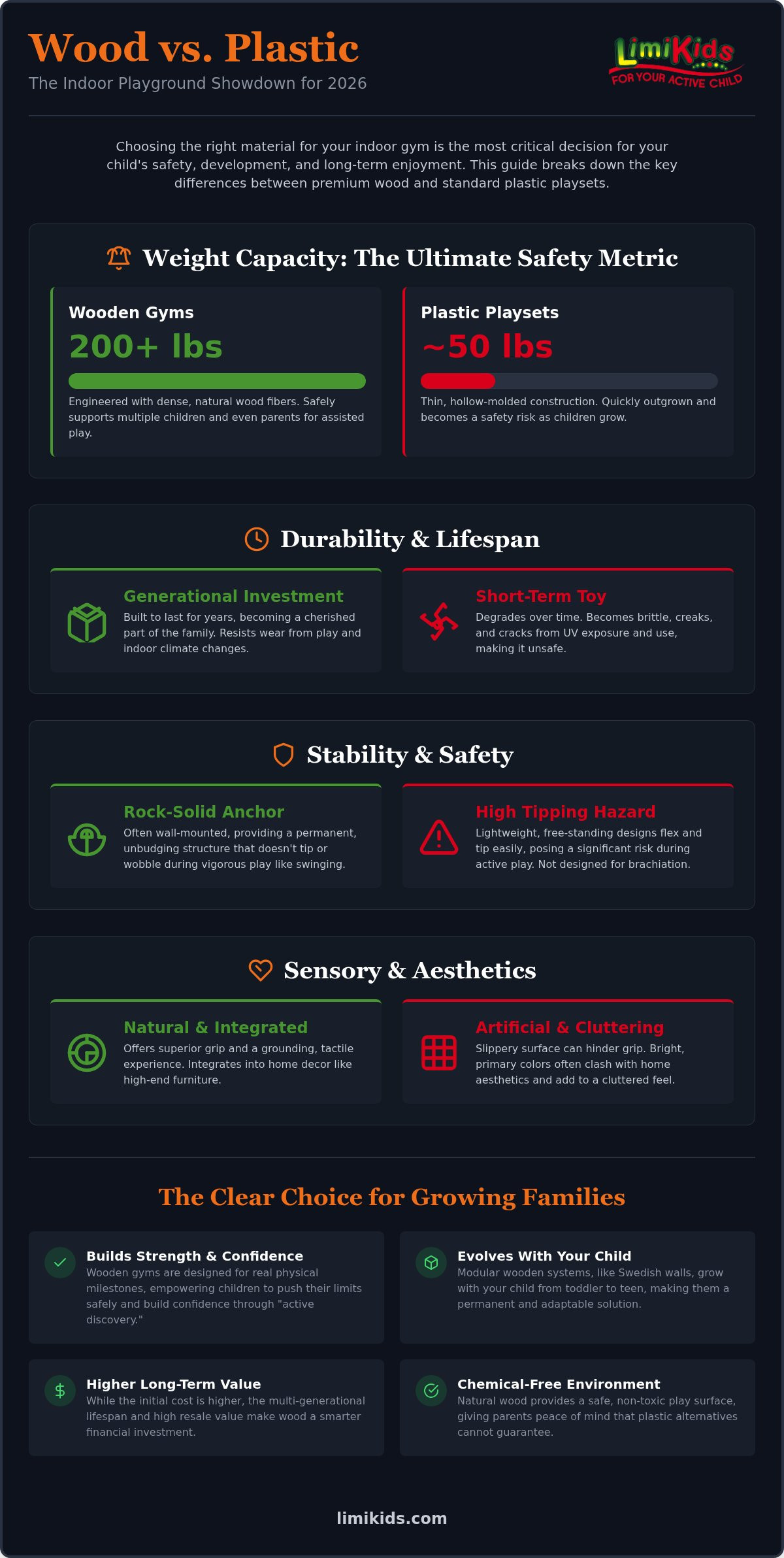
Weight capacity is the ultimate safety metric. It defines how hard your kids can play and for how long. When comparing a wood vs plastic indoor playground, the engineering gap is massive. Wood uses dense, natural fibers to manage stress through tension and compression. Plastic relies on thin, hollow molded walls. When a child swings or jumps, wood absorbs that energy and remains still. Plastic flexes, wobbles, and eventually fatigues. Safety first. Always.
Brachiation, the act of swinging from bar to bar, puts immense dynamic load on a frame. Following CPSC safety standards ensures your equipment handles these forces without structural failure. Most plastic sets aren't designed for this level of athletic intensity. They're built for light sliding or crawling. If you want a gym that supports real physical milestones, structural permanence is non-negotiable. Free-standing plastic sets tip easily during vigorous play, while wall-mounted wooden systems offer a rock-solid anchor that doesn't budge.
Weight Capacities: Comparing the Numbers
Most plastic sets max out around 50 lbs. That's fine for a toddler, but it's a short-term solution. What happens when their friends come over? Or when they hit age six? High-quality wooden Swedish walls often support 200 lbs or more. This high capacity allows for multi-child play without the fear of collapse. It even lets parents demonstrate moves or help with spotting. You need a safety margin that accommodates growth, not just your child's current weight. Build for the future, not just for today.
Durability Over Time: Resistance to Wear and Tear
Indoor heating cycles and UV light from windows are brutal on polymers. Over time, plastic becomes brittle. It cracks. It creaks. Once a plastic joint snaps, the whole unit usually ends up in a Canadian landfill. Wooden equipment is different. It stays silent and secure for years. If a wooden surface gets a scuff, you can sand it. If a bolt loosens, you tighten it. It's a professional-grade tool you maintain rather than a temporary toy you replace. For parents who want the strongest foundation, investing in high-end indoor climbing equipment ensures your home gym stands the test of time.
Sensory Development and Environmental Impact: Beyond the Surface
The way a material feels in your child's hand changes how they play. Determining the winner of the wood vs plastic indoor playground debate requires looking past the surface. While previous sections focused on strength, the sensory experience is where wood truly shines. Natural materials provide a grounding, tactile feedback that synthetic polymers cannot replicate. This connection between touch and movement is vital for developing brains. It turns a simple climb into a rich sensory session.
Safety extends beyond structural stability. Low-grade plastic sets often contain hidden chemicals like BPA, phthalates, or PVC. These substances can off-gas into your home environment, especially in smaller Canadian playrooms with limited ventilation. Aligning with home playground equipment safety standards means choosing materials that are as clean as they are strong. Natural wood finished with non-toxic oils ensures your child’s environment remains pure. It supports a focused, calm atmosphere that bright, neon plastic often disrupts.
Tactile Learning and Gross Motor Skills
Grip matters. A lot. Natural wood grain provides a micro-texture that helps small hands latch on securely. This friction is essential for building the confidence needed for indoor monkey bars. Plastic is often cold and slippery, making it harder for children to find a reliable hold. When choosing sensory motor equipment for home, material choice is a developmental tool. Wood stays warm to the touch and offers consistent resistance. This helps children refine their grip strength and proprioception through every successful reach and pull.
The Eco-Conscious Choice for 2026
Think about the lifecycle of your equipment. Wood is a renewable resource that, at the end of its long life, is entirely biodegradable. Most plastic playgrounds are made from petroleum-based materials that are notoriously difficult to recycle. In Canada, many of these bulky sets end up in landfills once they're outgrown or cracked. Choosing wood means choosing a "forever" piece of furniture. It is a sustainable investment that respects the planet your child will inherit. You aren't just buying a temporary toy; you're selecting a high-quality gym that can be passed down to the next generation without leaving a permanent footprint on the earth.
Maintenance, Longevity, and Resale Value: The True Cost of Ownership
Don't let the initial price tag fool you. When evaluating a wood vs plastic indoor playground, you have to look at the ten-year horizon. A cheap plastic set might cost less today, but if it cracks or becomes unstable within twenty-four months, your cost per use skyrockets. Premium wooden equipment is a long-term family asset. It doesn't just sit in your playroom; it holds its value, stays structurally sound, and eventually pays for itself through sheer longevity.
Think about the "Hand-Me-Down" factor. High-quality wood is built for generations. While plastic sets often end up as "curb alerts" because they've become too wobbly or dingy for another family to use, wooden gyms remain in high demand. In the Canadian secondary market, premium brands like LIMIKIDS often retain 50% to 70% of their original purchase price. You aren't just spending money; you're parking it in a high-utility piece of furniture that you can recoup later.
Cleaning and Upkeep Realities
There's a common myth that wood is harder to maintain than plastic. In reality, modern sealed finishes make cleanup effortless. A quick wipe with a damp cloth handles most household spills. Unlike plastic, which is surprisingly porous and prone to staining from juice or markers, high-end wood finishes create a protective barrier. If your wooden gym does see heavy wear after years of "active discovery," the solution is simple:
- Sand away scuffs: A light sanding can remove surface scratches that would permanently ruin a plastic set.
- Tighten and go: Wooden joints are designed for maintenance. A quick turn of a hex key restores that "like-new" rigidity.
- Sanitize with ease: Non-toxic sealants allow for easy sanitization without warping or discoloring the material.
The Investment Perspective: Resale Value
Stop viewing your playroom as a collection of disposable toys. When you choose a wooden system, you're investing in a piece of equipment that people actively search for in local Canadian parenting groups. Plastic playgrounds often look "tired" quickly. They fade, they scratch, and they collect dirt in molded crevices that are impossible to reach. Wood ages gracefully. It maintains its aesthetic appeal and structural integrity, making it a breeze to sell when your children finally outgrow it. Ready to upgrade your home with a system that lasts? Explore our range of indoor home gym for kids options to find your family's forever set.
Choosing the Best Indoor Gym for Your Growing Family
Your home is a launchpad for your child’s potential. Deciding on a wood vs plastic indoor playground comes down to your vision for their development. If you want a temporary distraction for a toddler, plastic might suffice. But if you want to foster strength, coordination, and confidence that lasts through their school years, wood is the only choice. Match the equipment to the child they are becoming, not just the child they are today. Invest in a system that challenges them to reach higher every single morning.
Safety certifications provide the peace of mind every Canadian parent deserves. When browsing, prioritize equipment that meets the latest ASTM F1487-26 and EN 71 standards. These updated regulations ensure the structure handles higher weight limits and prevents entanglement risks. While plastic sets often meet basic toy standards, premium wooden gyms are engineered to professional fitness benchmarks. This structural reliability is what allows for "active discovery" without constant parental hovering. You provide the tools; they provide the courage.
The Swedish Wall Advantage
Space is a premium in many Canadian homes. Bulky plastic playsets often dominate a room, eating up valuable floor space and creating clutter. A Swedish wall gym for kids solves this problem by going vertical. These sleek, wall-mounted systems use almost zero floor space while offering a massive range of activity. You can customize a wooden gym with ropes, rings, and ladders to keep the challenge fresh as your child grows. It’s a sophisticated fitness hub that stays out of the way when play is over.
Making the Decision for Your Home
Ready to choose? Use this quick checklist to finalize your decision:
- Age and Growth: Will this equipment still be safe and challenging in three years? Wood grows with them; plastic is often outgrown by age five.
- Space Efficiency: Do you have room for a wide plastic footprint, or do you need a space-saving vertical solution?
- Weight Capacity: Can the gym support multi-child play or the dynamic force of a swinging ten-year-old?
At LIMIKIDS, we specialize in premium wood because we refuse to compromise on structural integrity. We believe your home gym should be a permanent fixture of a healthy childhood. Stop settling for temporary toys and start building a foundation for lifelong fitness. It’s time to transform your living space into a zone of achievement. Explore the LIMIKIDS collection of indoor home gyms today and find the perfect fit for your family’s next adventure.
Build a Legacy of Active Play
Choosing between a wood vs plastic indoor playground is about more than just aesthetics. It’s a decision that defines your child’s safety, grip strength, and long-term physical confidence. You’ve seen how plastic serves as a short-term toy while premium wood acts as a foundational developmental tool. These systems don't just occupy floor space; they transform your home into a powerhouse of growth that evolves alongside your child’s physical milestones. Invest in a gym that supports their ambition from their first climb to their most daring swing.
We’ve been perfecting premium structural integrity since 2008 to ensure your equipment handles every jump and swing with ease. Our systems are specifically designed to grow with your child, providing a high weight capacity that lasts for a decade or more. With fast shipping across Canada, your family’s next adventure is closer than you think. Don't settle for flimsy materials that won't stand the test of time. Invest in quality that empowers your children to push their limits safely every single day. Your child's potential is limitless; give them the tools to reach it.
Shop the Best Indoor Home Gyms in Canada and start building your home's ultimate discovery zone today!
Frequently Asked Questions
Are wooden indoor playgrounds safe for toddlers?
Yes, they are incredibly safe when built to modern standards. High-quality wood provides a stable, non-slip surface that helps toddlers develop balance. Unlike plastic, wood doesn't flex or tip easily. This stability is crucial for little ones finding their feet. You'll find that the natural texture provides a better grip for small hands. Always ensure the set is age-appropriate and supervised to foster a sense of confident discovery.
Do wooden gyms require a lot of assembly compared to plastic?
Most wooden gyms require more initial assembly than snap-together plastic sets. However, this assembly is what provides their superior structural integrity. You'll typically use a hex key or screwdriver to secure the components. It’s a one-time setup that results in a permanent, rock-solid gym. The extra thirty minutes spent on assembly pays off in years of safe, wobble-free play. It's a small trade-off for a piece of equipment that lasts.
Can wooden indoor gyms be used outdoors if they are treated?
No, these gyms are strictly designed for indoor residential use. Indoor wood finishes aren't built to withstand Canadian humidity, rain, or extreme UV exposure. Using them outside will void your warranty and compromise the structural integrity over time. Keep your gym in a climate-controlled environment to ensure it remains a safe, durable asset for your family. This protects your investment and ensures the wood stays smooth and secure for years.
What is the weight limit for a typical wooden Swedish wall gym?
A high-quality wooden Swedish wall gym typically supports 200 lbs or more. This high capacity is a key factor in the wood vs plastic indoor playground debate. It allows multiple children to play simultaneously without safety concerns. Some models are even sturdy enough for parents to use for light stretching or demonstration. Always check the specific model's rating. Higher weight limits mean the equipment grows with your child into their teens.
How do I clean and sanitize a wooden indoor playground?
You can easily clean wooden equipment with a damp cloth and a mild, non-toxic soap. Modern finishes create a protective barrier that resists moisture and stains. Avoid using harsh chemicals or soaking the wood. For sanitizing, a quick wipe with a diluted vinegar solution or child-safe disinfectant works perfectly. Regular dusting keeps the grip surfaces optimal for your child's active discovery. It's a low-maintenance solution that stays looking beautiful for years.
Is wood more expensive than plastic for an indoor gym?
Wood generally has a higher upfront cost, but it offers better long-term value. While plastic sets are cheaper initially, they often need replacement as children grow or materials degrade. Wood is a "forever" investment that retains high resale value in the Canadian market. When you calculate the cost per year of use, wood often proves to be the more economical choice. You're paying for permanence and structural reliability rather than a disposable toy.
Will a wooden playground cause splinters?
Premium wooden gyms are meticulously sanded and sealed to prevent splinters. High-quality manufacturing processes ensure every surface is smooth to the touch. We use dense woods that don't easily crack or peel under normal use. Regular inspections are still recommended to ensure safety. If you ever notice a rough spot from heavy impact, a quick touch-up with fine-grit sandpaper restores the smooth finish instantly. It's a simple fix that keeps play safe.
How much space do I need for a wooden indoor climbing frame?
Space requirements depend on the model, but vertical Swedish walls are the ultimate space-savers. They typically only require a small footprint of floor space near a wall. You should allow for a six-foot safety zone around the equipment for jumping and movement. Many modular systems are designed specifically for Canadian apartments where every square inch counts. Measure your ceiling height first to ensure a perfect fit for your new home gym.