






Small Space Sensory Room: 2026 Vertical Play Guide
What if your child climbing the walls wasn't a problem to solve, but the ultimate solution to your limited square footage? You want a dedicated place for your child to regulate and grow, but your Canadian apartment or cozy townhouse feels like it's already bursting at the seams. It's frustrating to feel like you have to choose between a clutter-free home and the vital sensory support your child needs to thrive. You aren't alone in this struggle. Many parents feel the same weight of trying to balance a calm environment with high-energy developmental needs.
The good news is that you can build a high-impact sanctuary by exploring innovative sensory room ideas for small spaces. This guide shows you how to stop looking at crowded floor plans and start looking at your walls instead. You will discover how to transform even the smallest corner into a powerhouse of development using vertical space and smart, modular equipment. We will preview the best 2026 trends for Swedish wall systems, compact vestibular tools, and space-efficient layouts that improve focus and motor skills without taking over your living room. It is time to turn that unused corner into a zone of pure potential.
Key Takeaways
- Reclaim your floor space by utilizing vertical climbing systems to provide high-impact vestibular and proprioceptive input.
- Discover innovative sensory room ideas for small spaces that transform a compact 4x4 area into a full developmental zone.
- Master the "Active vs. Calm" split strategy to balance high-energy movement with deep pressure regulation in a single footprint.
- Maximize your investment by choosing modular, multi-functional equipment that delivers the highest sensory value per square foot.
- Explore why a wall-mounted indoor gym is the ultimate space-saving anchor for a safe and durable Canadian home sanctuary.
What is a Small-Space Sensory Room and Why Does Your Child Need One?
Think about your home. You don't need a massive basement or a dedicated wing to support your child’s development. Implementing effective sensory room ideas for small spaces starts with redefining what a "room" actually is. In a modern Canadian apartment or townhouse, a sensory room is a high-impact, dedicated 4x4 or 5x5 area optimized for specific sensory input. It is a sanctuary designed to feed the brain exactly what it needs to regulate. When researching What is a Sensory Room?, you'll find they are designed to stimulate the senses through specific, controlled environments. At home, this means targeting three core systems: the vestibular (balance), the proprioceptive (body awareness), and the tactile (touch).
Many families living in compact urban spaces struggle with "sensory deprivation." This isn't about a lack of toys. It's about a lack of meaningful physical resistance and movement. When children can't find ways to exert themselves, they often become dysregulated. They might "act out," struggle to sit still, or have trouble sleeping. By focusing on sensory room ideas for small spaces that utilize your walls, you provide more developmental input than a floor covered in loose toys ever could. You are trading clutter for concentrated growth.
The Science of Sensory Integration at Home
Movement isn't just about burning energy; it actually organizes the brain. When a child engages in purposeful physical activity, it helps them process information more efficiently, leading to better focus and calmer nights. You might notice your child is "sensory seeking" if they are constantly jumping on the sofa, crashing into walls, or spinning in circles. These aren't just high-energy antics. They are desperate attempts to get the input their nervous system craves. Proprioception is the "heavy work" muscles and joints need to feel grounded. Without it, children often feel "untethered" in their own environment. Providing a safe outlet for this "heavy work" is the fastest way to bring peace back to your home.
Why Vertical Space is Your Secret Weapon
Floor-based play is often messy and consumes precious square footage. In contrast, vertical play is organized and utilizes "dead" wall space that would otherwise go to waste. We call this "climbing for calm." Vertical exertion requires intense focus and muscle engagement, which naturally regulates the nervous system and lowers stress levels. Montessori play equipment encourages this independent discovery by allowing children to test their limits safely. By moving the play from the floor to the wall, you create a permanent, structured environment that is always ready for use. It's a professional-grade solution that fits perfectly into your family's daily life.
Vertical Solutions: Maximizing Wall Space for Sensory Play
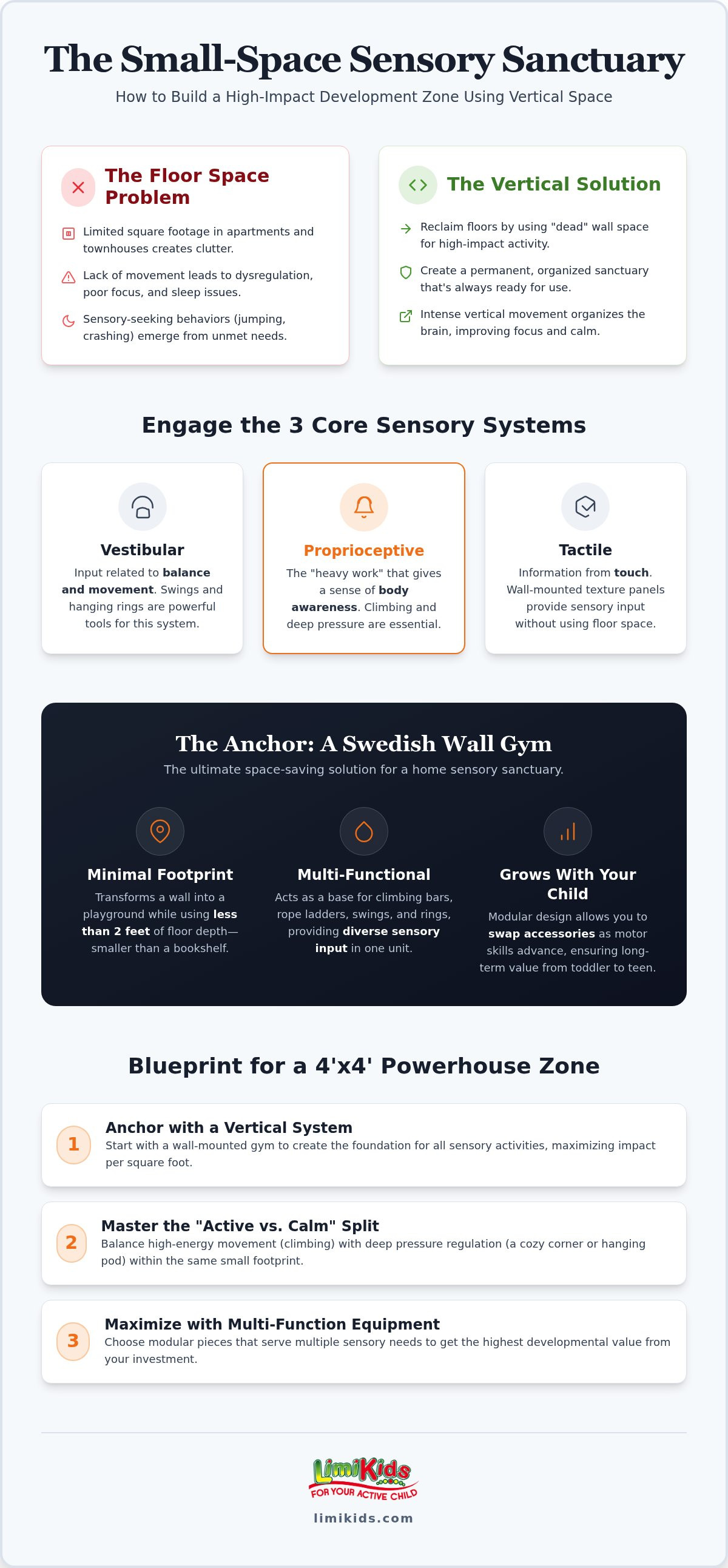
Stop worrying about floor space. Most traditional guides assume you have a massive basement for a ball pit or a sprawling obstacle course. Most of us don't. We have walls. This shift in perspective is the core of effective sensory room ideas for small spaces. The Swedish Wall Gym acts as your ultimate anchor, turning a flat, boring surface into a multi-dimensional playground. You can flank the gym with wall-mounted tactile panels. These provide essential touch-based input and visual interest without losing a single square inch of walking room. It's about building up, not out.
The Power of the Swedish Wall Gym
Why is this the gold standard for compact homes? It is a powerhouse of versatility. A Swedish wall gym for kids usually occupies less than 2 feet of floor depth. That is less space than a standard bookshelf. It offers bars for climbing, hanging, and deep stretching. It grows with your child. You can swap out a rope ladder for a trapeze bar or a pull-up station as their motor skills advance. You can even use the top rungs to create a high-altitude "nest" or "escape zone" for quiet reading and decompression. It is about maximizing every vertical centimetre to provide various types of sensory feedback.
Suspension doesn't require a massive ceiling mount. You can safely add a swing or a set of gym rings in a corner by using the frame of the wall gym as your support. This provides the vital vestibular input children need to self-regulate and find their balance. If you're looking for the perfect starting point to build your home sanctuary, check out the durable indoor climbing equipment designed specifically for active Canadian families.
Safety and Structural Integrity
Safety is the absolute foundation of active play. In Canadian homes, you must secure your equipment directly to wall studs for maximum stability and weight capacity. Always use a reliable stud finder before installation. It is a simple step that ensures the gym stays rock-solid during high-energy sessions. You also need a high-quality crash mat to protect against tumbles. Choose a modular mat that folds easily. You can tuck it against the wall or under a bed when playtime is over to keep the room organized. Premium materials are non-negotiable for vertical safety. When kids are climbing several feet high, you need equipment that won't flex, creak, or fail under pressure. This isn't just about fun; it is about providing the serious structural integrity that gives every parent peace of mind.
Multi-Functional Sensory Zones: Small Space Layout Strategies
Effective layout is the secret to making a tiny area feel like a professional clinic. When you explore sensory room ideas for small spaces, the most powerful strategy is the "Active vs. Calm" split. This approach divides your 5x5 corner into two distinct functional zones. One side provides the high-intensity input needed to organize the brain. The other offers the quiet retreat needed to prevent overload. You can even maximize utility with modular furniture. Use sturdy storage bins that double as stepping stones for balance work. It's about making every object work double duty. You aren't just storing toys; you're building an obstacle course.
Don't overlook your standard reach-in closet. Remove the doors, add some padding, and you've created a sensory "den" without losing any bedroom floor space. Ditch bulky floor lamps for LED strips and small projectors. They create immersive, tunable lighting environments while keeping your walkways clear. These small-scale adjustments ensure your sensory room ideas for small spaces remain practical for a busy Canadian household.
If you're also considering professional lighting or acoustic upgrades for your home, you can check out LG Interiors Inc for high-quality stretch ceiling solutions.
The Active Zone: Vestibular and Proprioceptive Input
Your active zone is where the "heavy work" happens. Pair your monkey bars with a soft, high-density landing mat to encourage safe hanging and swinging. This setup is essential for building core strength and body awareness. Integrating a small indoor jungle gym into a bedroom corner provides a permanent station for vestibular growth. It keeps the high-energy "climbing the walls" behavior contained to a safe, designated area. If you're deciding on the best materials for your home, check out this indoor jungle gym guide to help you choose between wooden or metal frames based on your child's specific activity level and your home's aesthetic.
The Calming Zone: Tactile and Visual Regulation
Every child needs a "squeeze" space to reset their nervous system. Use weighted blankets or a low-mounted compression swing to provide deep pressure. This helps children feel grounded after intense physical activity. Hang vertical wall mirrors to expand the feel of the room visually and offer immediate feedback during movement. For children with auditory sensitivities, install felt wall tiles. They add a soft tactile texture and act as excellent sound-dampeners, reducing the "echo" effect often found in smaller rooms. This creates a peaceful environment where your child can truly decompress and find their focus.
Essential Compact Sensory Equipment for Every Budget
Building a sanctuary doesn't have to break the bank or take over your home. The secret is focusing on "Value Per Square Foot." Many parents get overwhelmed by giant catalogs of expensive gear. You don't need 20 different items. You need a few high-impact pieces that deliver multiple types of sensory input. This is where professional sensory room ideas for small spaces really shine. By selecting versatile equipment, you ensure every dollar and every inch of your Canadian home works harder for your child’s development.
Investing in high-quality sensory motor equipment for home is a game-changer. It provides the structural integrity needed for daily "heavy work" while maintaining a slim profile that respects your living area. You want tools that are built to last, not toys that end up in a landfill after six months of use.
The 'High-Impact' Starter List
Start with these three essentials. They cover roughly 90% of your child's sensory needs in a tiny footprint:
- Swedish Ladder: This is your vertical engine for active play and proprioceptive input.
- Folding Mat: It provides a tactile surface for floor work and essential safety for climbing.
- Therapy Swing: Attached directly to your wall frame, it delivers the vestibular motion kids crave for regulation.
Metal frames are often the superior choice for high-energy seekers. They offer exceptional durability and higher weight limits than traditional wooden sets. They won't warp or creak even during the most intense climbing sessions. This reliability is crucial for your peace of mind and your child's safety.
Budget-Friendly Sensory Hacks
You can supplement your professional gear with clever DIY additions. Mount "fidget" stations directly to the sides of your climbing frame. Use simple household items like locks, zippers, or textured fabrics to add a fine-motor component to a gross-motor station. Create a "sensory bin" filled with rice or kinetic sand that slides easily under the bed. This keeps tactile play accessible but completely out of sight when guests arrive. Rotate small light-up toys every few weeks to keep the environment fresh and engaging. It prevents sensory boredom without adding any permanent bulk to the room. Ready to start building? Explore our full range of space-saving indoor climbing equipment today and transform your corner into a sanctuary.
Designing Your LIMIKIDS Sensory Sanctuary
You have explored the best sensory room ideas for small spaces. Now it's time to turn those concepts into a physical reality. Choosing LIMIKIDS means choosing a partner dedicated to your child's physical development since 2008. We don't just sell equipment; we provide the tools for a lifetime of movement and regulation. Our systems are designed to fit into the reality of modern Canadian living. Whether you are in an urban apartment or a cozy townhouse, our space-saving designs ensure your child never has to compromise on their sensory needs. Build it once. Build it right. Build it for their future.
The LIMIKIDS Advantage
Quality is our non-negotiable standard. We specialize in high-grade systems that offer superior structural integrity. This means no wobbling, no creaking, and absolute safety during high-energy play. We understand the Canadian market. You won't wait months for a "special order" to cross the border. We offer fast shipping across Canada to get your sanctuary up and running quickly. Our team acts as your empowering guide. We help you navigate technical details like ceiling height and weight limits to find the perfect fit for your specific home. From compact monkey bars to multi-functional Montessori gyms, our designs are built to grow alongside your child, providing immense value for years to come.
Next Steps: Measuring and Ordering
Ready to transform your corner? Follow this quick checklist before you place your order to ensure a perfect fit for your new equipment:
- Measure your ceiling height: Most of our systems are adjustable, but knowing your exact limit is key for a secure fit.
- Locate your wall studs: Secure mounting is essential for vertical safety. Use a reliable stud finder.
- Clear your footprint: Even a 4x4 area can become a high-impact zone if the floor is clear of obstructions.
- Check for overhead obstacles: Ensure there is plenty of clearance away from light fixtures or ceiling fans.
If you're unsure about which layout works best for your floor plan, reach out to our dedicated customer support team. We provide personalized recommendations based on your specific needs and space constraints. We are here to ensure your installation is seamless and your child's new gym is rock-solid from day one. Don't let a small footprint stop the big progress your child is capable of making. Explore our collection of space-saving indoor gyms today! and start building the sanctuary your family deserves.
Build Your Child’s Future Upward
Square footage is no longer a barrier to your child’s developmental success. You now have the blueprint to transform a tiny corner into a high-impact sanctuary by prioritizing verticality and smart zoning. These sensory room ideas for small spaces prove that even a 4x4 area can deliver the vital vestibular and proprioceptive input your child needs to thrive. By choosing professional-grade equipment that evolves with your family, you are investing in years of improved focus and regulation.
LIMIKIDS has been proudly serving Canadian families since 2008 with premium, safety-tested materials that handle the most enthusiastic "heavy work." Our fast national shipping ensures you don't have to wait to start this home transformation. It's time to trade cluttered floors for active walls and watch your child’s confidence soar. Ready to reclaim your home and empower your child? Shop our Space-Saving Indoor Sensory Gyms today. Your journey toward a calmer, more organized home starts with a single wall. Let's get climbing!
Frequently Asked Questions
What is the minimum space needed for a sensory room?
You can create a high-impact zone in as little as 16 to 25 square feet. A dedicated 4x4 or 5x5 corner is often the perfect footprint for effective sensory room ideas for small spaces. This size allows for a wall-mounted gym and a folding crash mat. It's about using the vertical height of your room rather than sprawling across the floor.
Can I install a sensory gym in a rental apartment?
Yes, many systems are rental-friendly. You can use stud-mounted gyms and simply fill the small screw holes when you move out. Some specialized models even offer pressure-mounting between the floor and ceiling, which requires no drilling at all. Always check your lease agreement, but a sensory sanctuary is a temporary addition that is easy to uninstall and take with you.
How do I choose between a wooden and metal climbing frame for sensory play?
Metal frames are the top choice for high-energy seekers who need maximum weight capacity and durability. They won't warp or creak over time. Wooden frames offer a softer aesthetic and a natural tactile experience. If your child needs intense "heavy work" and rock-solid stability during aggressive climbing, a premium metal system is usually the better long-term investment for your home.
Are sensory rooms only for children with autism or ADHD?
Absolutely not. While these spaces are vital for neurodivergent children, every child benefits from active sensory play. These gyms support core strength, fine motor skills, and emotional regulation for everyone. It's about providing a safe, structured outlet for the natural movement every child's brain craves. A sensory sanctuary helps any child feel more grounded and focused in their daily environment.
What is the most important piece of equipment for a small sensory space?
The Swedish wall gym is the ultimate anchor for sensory room ideas for small spaces. It provides massive vestibular and proprioceptive input while taking up less than two feet of floor depth. When you pair this with a high-density folding mat, you create a complete developmental station. It is the most efficient way to turn a small corner into a professional-grade regulation zone.
How do I keep a small sensory room from becoming cluttered?
Focus on verticality and smart storage. Mount your primary equipment to the wall to keep the floor clear for movement. Use under-bed bins or hanging organizers for smaller tactile items like fidgets or weighted lap pads. A "less is more" approach prevents visual clutter, which is essential for children who are easily overwhelmed by too much stimulation in a small area.
Is professional installation required for Swedish wall gyms?
Professional installation isn't strictly required because most systems are designed for straightforward DIY assembly. You will need basic tools like a drill, a level, and a stud finder. If you are comfortable locating wall studs and following a manual, you can set it up yourself in a few hours. However, hiring a local handyman is a great option if you want absolute peace of mind.
How much does a basic small sensory room setup cost in Canada?
A functional home setup in Canada can vary, but a basic starter room is often achievable for under C$5,000. This range typically covers a professional-grade climbing anchor, safety mats, and a few tactile accessories. While large institutional builds cost significantly more, a home sanctuary is a practical investment in your child’s daily regulation. Always prioritize safety-tested materials that offer the best longevity for your money.