






The Crucial Benefits of Active Play for Toddlers: Building Brains and Bodies
What if your toddler’s living room climbing session was actually a high-speed workout for their developing brain? It’s easy to view jumping and hanging as simple "energy burning," but the reality is much more powerful. Active play isn't just a break from learning. It is the primary engine of cognitive and physical architecture for your child.
We understand the daily struggle of keeping little ones active when Canadian weather keeps you trapped indoors for months at a time. You want them off the tablet and moving, yet you worry about the safety of "risky" play inside the home. The benefits of active play for toddlers go far beyond simple physical fitness. They include improved sensory processing, better emotional regulation, and essential gross motor milestones that set the stage for a lifetime of health.
This guide reveals how movement-rich indoor environments transform your child’s development. You will discover how to satisfy their natural urge to climb using safe, space-saving solutions like Swedish wall gyms. We’ll explore the direct link between physical activity and brain growth while giving you the tools to support your child’s milestones with confidence. It’s time to turn your home into a launchpad for your toddler’s potential.
Key Takeaways
- Identify the critical developmental window between ages one and four and discover the long-term benefits of active play for toddlers.
- Learn how "heavy work" and sensory play stimulate the vestibular system to improve your child’s coordination and emotional regulation.
- Explore the direct link between climbing and cognitive breakthroughs, including enhanced spatial reasoning and complex problem-solving skills.
- Find out how to maximize limited indoor square footage with space-saving vertical solutions like Swedish wall gyms.
- Identify the essential safety features and material standards required to build a durable, high-performance indoor playground in your home.
The Foundation of Toddler Growth: Why Active Play is Non-Negotiable
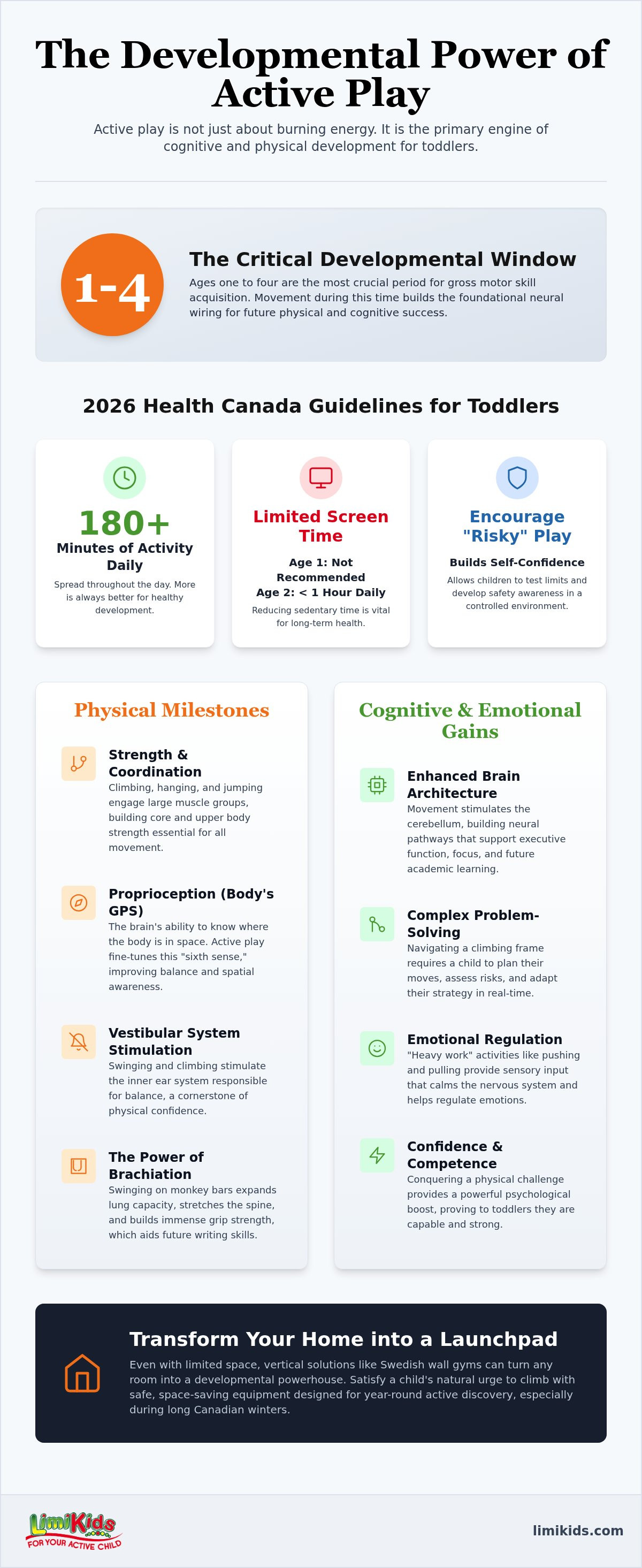
Active play is the engine of human growth. It isn't just about "running around." Real active play engages large muscle groups and intensely stimulates the vestibular system, which is responsible for balance and spatial orientation. Between the ages of one and four, your child is in a critical developmental window. This is the prime time for gross motor skill acquisition. If they don't move now, they miss out on the foundational wiring required for later physical success.
Contrast this with passive entertainment. While a tablet might keep a child quiet, it does nothing for their neurological architecture. Active movement triggers complex responses in the brain that screens simply cannot replicate. When a toddler climbs, hangs, or jumps, they are mapping their world in real-time. Understanding the role of play in development helps parents transition from seeing movement as a chore to seeing it as a biological necessity. Establishing an "active home" ensures this vital growth happens year-round, even when the Canadian winter makes outdoor play impossible.
The "Energy Burn" Myth vs. Developmental Reality
Many parents believe play is just a tool to tire kids out before bed. That is a myth. The true benefits of active play for toddlers are found deep within the brain. Physical movement stimulates the cerebellum, an area directly linked to executive function and emotional regulation. Every time your child navigates a climbing frame, they are building neural pathways that support future learning. Active play is the primary work of a toddler. It builds the focus and coordination they will need for school and beyond. Don't just burn energy; build a better brain.
Health Canada Guidelines for Toddler Activity in 2026
The 2026 Health Canada movement guidelines are clear. Toddlers aged one to two need at least 180 minutes of physical activity every single day. This should be spread throughout the day, and more is always better. For one-year-olds, sedentary screen time is not recommended at all. For two-year-olds, it should be limited to less than one hour. Reducing sedentary time is vital for long-term health. Establishing these habits early helps combat the rising childhood obesity rates, which hit 11% for children aged 5 to 11 in 2024. Incorporating "risky play" through safe indoor climbing equipment also builds self-confidence. It allows children to test their limits and develop safety awareness in a controlled environment. Movement is the best medicine for a growing body.
Physical Milestones: Building Strength, Coordination, and Confidence
Your toddler is a natural explorer. Once they master walking, their eyes immediately turn upward. This transition from floor-based movement to climbing and hanging is a massive leap in physical development. It signals the growth of Proprioception. This is your child's "sixth sense," or the brain's ability to understand where the body is in space without looking at its limbs. High-quality indoor climbing equipment for kids provides the perfect terrain for this discovery. Every time they reach for a higher rung, they are fine-tuning their internal GPS.
These movements do more than just build visible muscle. They forge a powerful "core" and incredible upper body strength. Pulling their own weight up a ladder requires intense coordination between the hands, eyes, and trunk. This physical mastery creates a deep psychological sense of competence. When a toddler realizes they can conquer a vertical challenge, their self-esteem sky-roots. They aren't just moving. They are proving to themselves that they are capable and strong. If you want to foster this independence, consider how indoor jungle gyms can transform a corner of your home into a developmental powerhouse.
The Power of Brachiation: Why Monkey Bars Matter
Brachiation is the technical term for swinging from arm to arm. It is a game-changer for a child's anatomy. This movement naturally stretches the spine and expands lung capacity by opening up the chest cavity. Integrating monkey bars for kids into your daily routine also builds massive grip strength. Why does this matter? Strong hands now lead to better pencil control and writing endurance later in school. Most toddlers start by simply hanging for a few seconds. Soon, they progress to a single swing, eventually mastering full movement across the bars. It's a clear, rewarding path of progression.
Vestibular Stimulation: Balance and the Inner Ear
The vestibular system, located in the inner ear, is the command center for balance. Activities like swinging, spinning, and tilting help the brain process complex sensory information. One of the hidden benefits of active play for toddlers is the link between a strong vestibular system and better focus. When a child’s balance is rock-solid, their brain doesn't have to work as hard to stay upright, leaving more "processing power" for learning and listening. Using sensory motor equipment for home allows you to provide this essential input in a safe, controlled environment. It turns a rainy afternoon into a high-impact sensory workout.
Cognitive and Emotional Breakthroughs Powered by Movement
Movement ignites the mind. When your toddler navigates a climbing frame, they aren't just moving muscles; they are solving complex geometric puzzles. They calculate distances. They assess grip strength. They plan their next move. This is spatial reasoning in its most raw, effective form. One of the primary benefits of active play for toddlers is this rapid-fire cognitive development that occurs during physical challenges. Every climb is a lesson in physics and body awareness.
Physical exertion also serves as a powerful tool for emotional regulation. Occupational therapists often refer to this as "heavy work." Pushing, pulling, and climbing provide deep pressure to the joints and muscles, which naturally calms a frantic nervous system. It’s the perfect antidote to a "meltdown" afternoon. Beyond mood, this activity regulates the body's internal clock. Consistent active play leads to deeper, more restorative sleep patterns. When children work their bodies hard during the day, their brains transition into rest more efficiently at night.
Physical challenges also build "grit" and resilience. In a world of instant gratification, climbing requires patience and persistence. A toddler may fail to reach a specific rung five times before finally succeeding on the sixth. This process teaches them that effort leads to achievement. This early resilience is a foundational skill that supports emotional health well into their school years. They learn that obstacles are meant to be overcome, not avoided.
Executive Function and Spatial Awareness
For parents interested in how structured programs can build this kind of grit, you can visit Bushi Ban Child Care to explore their specialized fitness and martial arts curriculum designed to foster resilience and physical mastery in children.
Climbing requires a plan. Your toddler must visualize their "route" before they take the first step. This builds cognitive mapping skills and teaches cause and effect. If they reach too far, they learn the limits of their span. Montessori-inspired systems excel here. They encourage independent discovery without constant adult intervention. This autonomy allows the child to test theories about gravity and balance in real time. They aren't just following instructions; they are leading their own developmental journey.
Building Self-Esteem Through Physical Achievement
Every "I did it!" moment is a brick in the foundation of their self-image. Conquering a new height on a climbing frame provides an immediate, tangible boost to a toddler’s ego. Safe indoor environments are essential because they allow for "controlled failure." A child might not reach the top on the first try, but they can safely try again until they do. This builds a robust sense of self-worth. Early physical confidence often translates into a "can-do" attitude that carries over into social interactions and academic learning. When they feel strong in their bodies, they feel brave in their world.
Designing the Ultimate Indoor Play Environment for Canadian Homes
Canadian homes often face a square footage challenge. When the winter keeps you indoors for months, your living room must become a high-performance growth center. Think vertically. By using vertical play solutions, you can maximize a small or medium-sized room without sacrificing floor space for other family activities. One of the key benefits of active play for toddlers is that it can happen anywhere if you have the right infrastructure. Use your walls to build a world of discovery.
Structural integrity is your first priority. High-quality metal systems offer incredible weight limits and durability, while wood provides a warm, natural aesthetic. Both materials must be professional-grade to withstand the daily rigors of an energetic toddler. For parents seeking open-ended activity that encourages independence, Montessori play equipment is the gold standard. It allows children to choose their own challenges and master them at their own pace.
Safety is your foundation. Follow this essential checklist for a secure home gym:
- Maintain a 2-meter clearance zone around all equipment.
- Install high-density padding or thick gym mats beneath every climbing surface.
- Verify weight limits for both the equipment and your home's mounting points.
- Ensure all finishes are non-toxic and every surface is splinter-free.
Swedish Wall Gyms: The Space-Saving Powerhouse
Swedish walls are the ultimate solution for narrow rooms or homes with low ceilings. They take up almost zero floor space while offering a massive range of movement. These systems are incredibly versatile. You can add rings, ladders, or ropes to keep the environment fresh. Most importantly, these systems grow with your child. What starts as a simple ladder for a toddler eventually becomes a full-body fitness station for a school-aged child. It's a long-term investment in their health.
Safety Standards: What Every Parent Must Know
Never compromise on materials. Look for splinter-free surfaces and non-toxic finishes that are safe for little hands. The "fall zone" is a critical concept; you must have high-quality gym mats that can absorb impact effectively. Safety isn't a "set and forget" task. Perform regular equipment inspections every month to check for bolt tightness and structural wear. A safe environment is the only way to allow your child the freedom they need to explore. Transform your home into a safe haven for movement with professional-grade indoor playground equipment today.
Transforming Your Home with LIMIKIDS: The Path to Active Discovery
LIMIKIDS is the premier provider of indoor active play gear across Canada. Since 2008, we’ve focused on three core pillars: safety, durability, and space-saving design. We know that the benefits of active play for toddlers are only realized when movement is accessible every single day. Our systems bridge the gap between pediatric research and the reality of your living room. We transform standard indoor spaces into high-energy growth centers. View an indoor gym as more than just a playset. It is a long-term investment in your child’s physical health and cognitive resilience. Empower your child to move, climb, and discover within the safety of your own home.
Our mission is to replace sedentary screen time with vibrant, purposeful movement. We understand the logistical challenges of modern Canadian parenting. Weather, space, and safety concerns shouldn't stop your child’s development. We provide the tools to build a movement-rich environment that respects your home’s footprint. By choosing professional-grade equipment, you’re providing a permanent infrastructure for success. Your home becomes a launchpad for their potential.
Quality That Grows with Your Toddler
Invest in equipment that evolves. Most LIMIKIDS systems are modular by design. This means they grow alongside your child’s confidence and height. A simple ladder that supports a one-year-old’s first steps eventually becomes a complex climbing circuit for a preschooler. We use high-impact, premium materials designed for years of heavy use. You aren't buying a temporary toy. You are installing a durable system that maintains its structural integrity through thousands of hours of play. Reliability is our promise to your family. As your child’s skills advance, our equipment remains a challenging and relevant part of their daily routine.
Getting Started with Your Home Gym
Start small but think big. For a child aged 1 to 2, we recommend beginning with stable, low-profile climbing frames or Montessori-inspired systems. These tools encourage the very first steps of active discovery in a secure, controlled environment. We make the transition to an active home seamless for Canadian families. Enjoy reliable nationwide shipping and expert support as you select the perfect system for your space. It’s time to stop worrying about limited outdoor time and start celebrating the power of indoor movement. Explore our full range of indoor home gyms and start your child’s active journey today. Your toddler’s future strength begins with the choices you make at home.
Empower Your Child’s Potential Through Movement
Active play is the fundamental building block for your toddler’s physical and mental future. Movement stimulates the cerebellum, builds emotional resilience, and establishes lifelong health habits. By transforming your home into a space for discovery, you ensure critical milestones aren't missed during long Canadian winters. The long-term benefits of active play for toddlers include superior coordination, sharper focus, and the unshakable confidence that comes from physical mastery.
Don't let limited space or outdoor conditions hold your child back. LIMIKIDS has been trusted by Canadian families since 2008 to provide premium, safety-tested indoor playground equipment that fits perfectly into residential life. With our fast national shipping across Canada, you can start building a movement-rich environment today. Your toddler is ready to climb. Give them the tools to reach new heights!
Build your child’s future with a premium LIMIKIDS indoor home gym!
Frequently Asked Questions
How many minutes of active play do toddlers need every day?
Health Canada guidelines for 2026 recommend that toddlers aged one to two accumulate at least 180 minutes of physical activity throughout the day. This total should include a mix of light activity and energetic play. More movement is always better for their development. For children under two, sedentary screen time isn't recommended at all. Establishing these active habits early is one of the key benefits of active play for toddlers.
Is indoor climbing equipment safe for a 2-year-old?
Indoor climbing equipment is safe for two-year-olds when it's specifically designed for residential use and paired with proper safety measures. High-quality systems feature non-toxic finishes and splinter-free surfaces. You must always use high-density gym mats to create a safe fall zone beneath the structure. Active supervision is essential as your child learns to navigate the rungs. These structures allow toddlers to test their limits safely while building essential physical confidence.
How do I choose between a wooden or metal indoor jungle gym?
Your choice depends on your specific goals for durability and home aesthetics. Metal systems often offer higher weight limits and modular attachments that grow with your child into their school years. Wooden systems provide a natural, Montessori-inspired look that blends seamlessly into modern home decor. Both materials are professional-grade and designed for structural integrity. Consider your available space and how many children will use the equipment before making your final selection.
Can active play really improve my toddler’s brain development?
Physical movement is a primary driver of neurological architecture in young children. When a toddler climbs or jumps, they stimulate the cerebellum, which is responsible for motor control and executive function. This active engagement builds complex neural pathways that support future learning and emotional regulation. Unlike passive entertainment, movement-rich environments require the brain to map the body in space. This significantly enhances spatial reasoning and problem-solving skills during these formative years.
What is the best indoor gym equipment for a small apartment?
Swedish wall gyms are the most efficient solution for small apartments or narrow rooms. These systems utilize vertical space, meaning they have a very small footprint on your floor. You can install them against a single wall while still providing a full range of movement through ladders, ropes, and rings. This space-saving design ensures that even families in urban environments can provide the benefits of active play for toddlers without cluttering their living areas.
How does active play help with my child’s sensory processing?
Active play provides essential vestibular and proprioceptive input that organizes a child's nervous system. Activities like swinging or hanging are often called "heavy work" because they provide deep pressure to muscles and joints. This input helps toddlers understand their body’s position in space and can have a profound calming effect. Consistent sensory play through climbing equipment helps children process environmental information more efficiently. This leads to better focus and fewer emotional meltdowns during the day.
What are the benefits of monkey bars for toddlers who cannot swing yet?
Even if a toddler cannot swing yet, simply hanging from monkey bars provides incredible developmental advantages. This activity builds the grip strength necessary for future fine motor tasks like writing and drawing. It also encourages natural spinal alignment and expands lung capacity by opening the chest cavity. Toddlers often start by reaching for the bars, which improves their reach and shoulder stability. This foundational strength prepares them for the complex coordination required for full movement later.
Does active play help toddlers sleep better at night?
Physical exertion is directly linked to more restorative sleep patterns in young children. When toddlers engage in vigorous play during the day, their bodies naturally transition into rest more effectively at night. Beyond just "tiring them out," active play helps regulate their internal circadian rhythms. The sensory input from climbing and jumping also helps calm the nervous system. This makes it easier for children to fall asleep and stay asleep throughout the night.