






Toddler Sensory Gym: The Ultimate Parent’s Guide to Indoor Development 2026
What if your living room could do more for your child’s brain than a tablet ever could? You’ve felt that restless energy build up during a long Canadian winter when the local park is buried in snow. It’s a daily struggle. You need a toddler sensory gym that turns your indoor space into a developmental powerhouse. You want your child to move, to challenge their limits, and to build confidence without the clutter.
It’s not just about burning off steam. It’s about building a neurological foundation through intentional movement. By choosing the right indoor climbing equipment and sensory play tools, you provide a safe, durable environment for your child to develop coordination and strength. You can foster independence right in your hallway or bedroom. It is time to trade passive screen time for active discovery.
This guide will show you how to maximize vertical space with equipment that grows alongside your family. We’ll explore how Montessori-inspired systems keep your little ones active year-round. Transform your home into a space where discovery never stops and your child’s potential is the only limit.
Key Takeaways
- Transform your home into a developmental hub by understanding how a toddler sensory gym provides vital vestibular and proprioceptive input.
- Save valuable floor space with vertical Swedish wall systems designed to maximize play in compact living areas.
- Select durable indoor climbing equipment that prioritizes structural integrity over flimsy, toy-grade alternatives.
- Create a professional-grade safety zone using high-density impact mats and strategic layout planning.
- Build your child's confidence with stable, wobble-free gear that grows with their physical milestones.
What is a Toddler Sensory Gym and Why Does Your Home Need One?
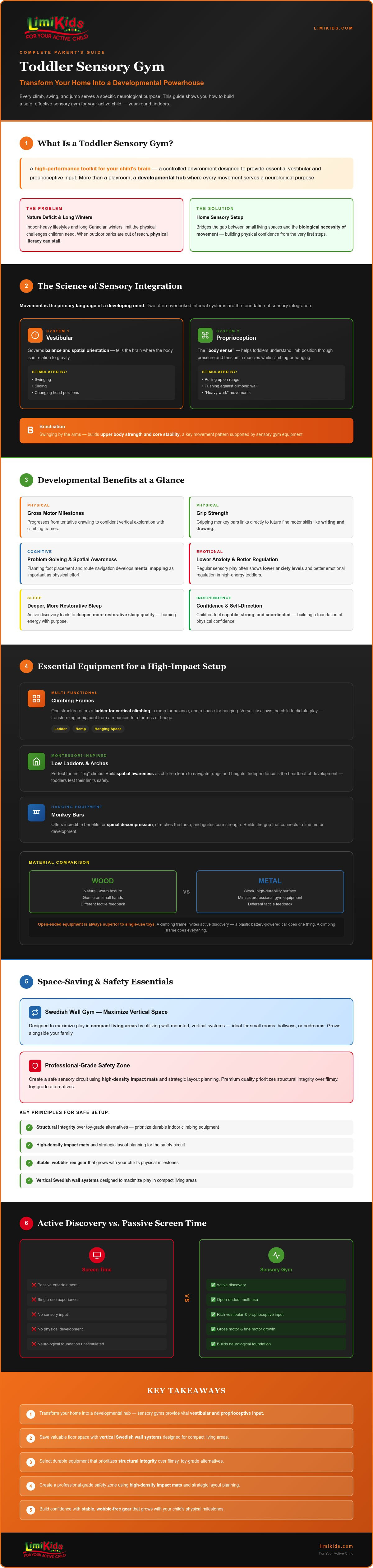
A toddler sensory gym is a high-performance toolkit for your child’s brain. It is more than just a place to play; it is a controlled environment designed to provide essential vestibular and proprioceptive input. Modern parenting has evolved. We have moved past the idea of a simple "playroom" and toward the concept of a developmental hub. In this space, every climb, swing, and jump serves a specific neurological purpose. You aren't just buying equipment. You're investing in your child's ability to process the world around them.
Many families struggle with a growing "nature deficit." Indoor-heavy lifestyles and long winters often limit the physical challenges a child needs. When outdoor parks are out of reach, physical literacy can stall. A home sensory setup solves this problem directly. It bridges the gap between small living spaces and the biological necessity of movement. Building these skills early creates a foundation of physical confidence. It ensures your child feels capable, strong, and coordinated from their very first steps.
The Science of Sensory Integration at Home
Movement is the primary language of a developing mind. To interact with their environment, children must master sensory processing. This involves two internal systems that are often overlooked. The vestibular system governs balance and spatial orientation. It tells the brain where the body is in relation to gravity. Proprioception is the "body sense." It helps toddlers understand their limb position through the pressure and tension in their muscles while they climb or hang. High-quality indoor climbing equipment provides the resistance needed to sharpen these senses.
- Vestibular Input: Stimulated by swinging, sliding, and changing head positions.
- Proprioceptive Input: Developed through "heavy work" like pulling up on rungs or pushing against a climbing wall.
Brachiation is the act of swinging by the arms to build upper body strength and core stability.
Physical Milestones Supported by Sensory Play
Climbing frames for kids are powerful tools for hitting gross motor milestones. Your toddler will progress from tentative crawling to confident, vertical exploration. This physical growth supports more than just balance. Grip strength is a major developmental indicator. The hand strength your child builds while gripping monkey bars or ladder rungs has a direct link to future fine motor skills, such as writing and drawing. There is also a massive emotional benefit. High-energy toddlers who engage in regular sensory play often show lower anxiety levels and better emotional regulation. Most importantly for tired parents, active discovery leads to deeper, more restorative sleep quality. They burn energy with purpose while building a body that is ready for anything.
Essential Equipment for a High-Impact Sensory Setup
Building a toddler sensory gym requires moving beyond the toy aisle. You need tools that challenge the body and brain simultaneously. High-impact setups prioritize multi-functional climbing frames because they serve multiple sensory needs at once. One structure can offer a ladder for vertical climbing, a ramp for balance, and a space for hanging. This versatility is key. It allows your child to dictate the play, transforming the equipment from a mountain to a fortress or a bridge.
Choosing between wood and metal isn't just about aesthetics. Wood offers a natural, warm texture that is gentle on small hands; metal provides a sleek, high-durability surface that mimics professional gym equipment. Both provide different tactile feedback. Open-ended equipment is always superior to single-use toys. A plastic battery-powered car does one thing. A climbing frame does everything. It invites active discovery rather than passive entertainment. This approach ensures the equipment remains relevant as your child grows.
Climbing Structures and Montessori Principles
Independence is the heartbeat of development. Using Montessori play equipment allows toddlers to test their limits safely. Low-to-the-ground ladders and arches are perfect for those first "big" climbs. They build spatial awareness as children learn to navigate rungs and heights. Problem-solving skills flourish here too. Your child must decide where to put their foot next, planning their route with every step. This mental mapping is just as important as the physical effort.
Monkey Bars and Hanging Equipment
Don't underestimate the power of hanging. Integrating monkey bars for kids into your home setup offers incredible benefits for spinal decompression. It stretches the torso and ignites core strength that is hard to build elsewhere. For advanced vestibular input, add rings or a trapeze. These attachments introduce swinging and rotation, which are vital for balance. Safety is paramount here. Ensure all hanging gear is mounted to a stable frame and use high-density mats below. If you are ready to transform your space, explore our range of Indoor Home Gym for Kids options to find the perfect fit.
Space-Saving Design: The Swedish Wall Gym Solution
Small spaces shouldn't limit big growth. A Swedish wall is the ultimate vertical play solution for a compact toddler sensory gym. Unlike bulky standalone sets that eat up floor space, these systems utilize unused vertical real estate. You get a full range of movement in a footprint that projects only a few inches from the wall. It's the perfect answer for urban living where every square foot counts. You can turn a narrow hallway or a corner of a bedroom into a high-octane development zone without rearranging your entire life.
These systems are built for longevity. A modular wall gym grows with your family. You can start with a basic ladder for a toddler and add monkey bars or rings as their confidence and strength increase. When compared to traditional plastic sets, the footprint of a Swedish ladder is significantly smaller while offering higher developmental value. It is a permanent fixture of growth, not a temporary toy. You aren't just buying a play set; you're installing a foundation for fitness that lasts for years.
The Engineering of a Premium Swedish Ladder
Structural integrity is non-negotiable. When you anchor gear to your home, you need high-quality materials that meet strict safety standards. Premium ladders are designed to handle multi-child use, ensuring the system remains rigid even during vigorous play. A Swedish ladder is a vertical climbing system that anchors securely to wall studs to provide a stable, permanent base for movement. Reliability builds trust. When the equipment doesn't wobble, your child feels safe to push their limits. You can rest easy knowing the frame is as solid as the walls of your home.
Integrating Sensory Gyms into Multi-Use Rooms
You don't need a dedicated basement to build a world-class play space. Placing a kids indoor climbing frame in a bedroom or shared living area is easy with the right strategy. Use high-density safety mats to define a clear "play zone." This creates a visual boundary that keeps the rest of the room organized. It tells your toddler exactly where the "active zone" begins and the "quiet zone" ends.
Aesthetic integration is possible. Modern designs focus on clean lines and natural finishes. They don't scream "daycare center" or clutter your home's decor. Instead, they look like a sleek piece of fitness equipment that happens to be the coolest part of the room. By choosing wall-mounted systems, you maintain your floor space for daily life while keeping active discovery just a reach away. It's a win for your child’s development and a win for your home’s design.
Implementation Guide: Creating a Safe Sensory Circuit
Setting up your toddler sensory gym is about precision and purpose. You are creating a circuit that challenges the body while keeping the mind focused. Preparation begins with clearing the floor. You need a dedicated "fall zone" around every piece of equipment. This space must be free of furniture and sharp corners. High-density impact mats are the foundation of this zone. They provide the necessary shock absorption for jumps and accidental slips. Without proper mats, the risk of injury increases and your child’s confidence may waver.
Introducing new gear requires a gentle touch. Don't push your toddler to climb to the top on day one. Let them touch the rungs. Let them explore the textures at ground level. This prevents overwhelm and builds a positive association with the gym. Active supervision is critical, but it differs from hovering. You should be close enough to assist, yet distant enough to allow for independent discovery. Success in a sensory circuit comes when a child feels they have conquered a challenge on their own terms.
Age-Appropriate Progressions
Your child’s needs will shift rapidly. Between 12 and 24 months, focus on low-profile climbing and tactile exploration. This is the time for arches and floor-based rungs. As they move into the 2 to 3 year range, you can introduce hanging, sliding, and testing their grip on monkey bars. Adjust the height of your equipment as they grow. Keeping the challenge "just-right" ensures they stay engaged without becoming frustrated. A gym that is too easy will be ignored; one that is too hard will be avoided.
Safety Standards and Maintenance
Safety is a continuous process. Establish a monthly maintenance checklist to ensure everything remains in peak condition. Tighten any loose bolts and inspect the equipment for wear and tear. High-quality gear is built to last, but regular checks are essential for peace of mind. Critical safety features include:
- Non-toxic finishes: Ensure all surfaces are safe for curious hands and mouths.
- Rounded edges: Every corner should be smooth to prevent scrapes during active play.
- Mat thickness: Match your mat density to the height of your climbing structure for maximum protection.
Ready to build your child's developmental hub? Explore our Indoor Home Gym for Kids collections to find the perfect starting point for your home circuit.
Why Premium Quality Matters for Your Toddler’s Safety
Quality is the silent partner in your child's success. It’s the difference between a shaky plastic frame and a rock-solid foundation. If it wobbles, they stop. Structural stability is what builds a child's confidence during play. When a toddler sensory gym remains perfectly still under their weight, they feel empowered to reach for the next rung. Toy-grade equipment often prioritizes low costs over long-term durability. Gym-grade equipment, however, is engineered to withstand the vigorous energy of growing children without tipping or flexing.
Investing in premium sensory motor equipment for home is a commitment to your child's health and your home’s environment. Natural materials like high-grade wood and professional-strength metal offer superior tactile feedback compared to disposable plastic. They’re safer, non-toxic, and built to last for years. While a cheap toy might end up in a landfill within months, a premium gym is a multi-year investment. It grows with your family, serving as a reliable hub for physical activity from the first crawl through the elementary years.
The LIMIKIDS Commitment to Quality
We don't just sell equipment; we build spaces for active discovery. With decades of expertise crafting safe indoor environments across Canada, we understand the unique needs of modern families. Our designs merge developmental science with home aesthetics. We use high-quality materials that meet strict safety standards, ensuring every joint and anchor point is secure. You get a system that looks sleek in your living room while providing the structural integrity of a professional gymnastics center. We've been specializing in indoor fitness since 2008, and that experience shows in every piece of gear we ship.
Choosing the Best Indoor Climbing Gear for 2026
Don't settle for "good enough" when it comes to your toddler's safety. Look for a manufacturer that offers real support, comprehensive warranties, and transparent safety testing. Reliability matters, especially for large equipment. You need fast, reliable national shipping that brings the gym directly to your door without the hassle. Verify weight capacities and material origins before you buy. A great gym should feel like a permanent part of your home, not a temporary distraction. Ready to transform your space? Explore our full range of indoor home gyms and start your toddler's journey toward strength and confidence today!
Build a Legacy of Active Discovery
You now have the blueprint to transform your home into a powerhouse of neurological and physical growth. Remember that verticality is your secret weapon in compact living areas. By choosing a modular Swedish wall system, you maximize development without sacrificing your square footage. Safety is the foundation that allows your child to take bold risks and build lasting confidence. Physical literacy starts at home, and the right environment makes all the difference.
Investing in a high-quality toddler sensory gym ensures your child stays active and engaged regardless of the weather outside. LIMIKIDS has been proudly serving Canadian families since 2008 with equipment expertly designed for maximum safety and durability. We prioritize fast national shipping so your family can start this adventure without delay. Don't let limited space or screen time hold back your child's potential. It is time to turn your living space into a zone of achievement.
Empower your child's growth with a premium LIMIKIDS indoor gym and watch them conquer new heights today. Your toddler’s journey toward strength and independence starts with that very first climb!
Frequently Asked Questions
What is the best age to start a toddler in a sensory gym?
Most toddlers can begin exploring a toddler sensory gym as soon as they are crawling and pulling themselves up, typically around 12 months. Early exposure to low-profile climbing arches and soft mats builds foundational balance. As they grow, you can add more complex attachments like ladders or rings. It's about matching the equipment to their current physical milestones while providing a safe environment for active discovery.
Can a sensory gym help a child with autism or ADHD?
Yes, a toddler sensory gym is an excellent tool for children with neurodivergent needs. It provides the heavy work required for proprioceptive and vestibular regulation, which helps calm the nervous system. Activities like climbing, hanging, or swinging can improve focus and reduce sensory seeking behaviors. These controlled movements offer a productive outlet for high energy while building the physical confidence needed for daily transitions.
How much space do I really need for an indoor climbing frame?
You don't need a dedicated playroom to install a high-impact system. Swedish wall gyms are designed to maximize vertical space, projecting only a few inches from the wall. However, you must account for a fall zone of at least 4 to 6 feet in front of the equipment. This area should be kept clear of furniture and covered with high-density mats to ensure every landing is safe.
Are indoor monkey bars safe for toddlers under 3?
Indoor monkey bars are safe for toddlers under 3 when used with active supervision and age-appropriate height settings. Grip strength is a critical developmental milestone at this age. Start by letting your child hang for short bursts while you support their weight. Ensure the bars are mounted to a stable frame and that you have professional-grade impact mats below. This controlled challenge builds incredible core strength and coordination.
What are the benefits of a Swedish wall gym over a traditional play set?
Swedish wall gyms offer superior versatility and a much smaller footprint than traditional plastic play sets. They utilize vertical real estate, making them perfect for urban homes or shared spaces. Unlike disposable toys, these systems are modular and grow with your family. You can add new attachments as your child’s skills evolve. The structural integrity of a wall-mounted system also provides a more stable, wobble-free experience for the child.
How do I ensure the gym is safely anchored to my wall?
Safety begins with a secure connection to your home's structure. You must anchor the gym directly into wall studs using high-quality hardware designed for weight-bearing loads. Never mount a climbing system to drywall alone. If you aren't confident in your DIY skills, consult a local professional to ensure the installation is rigid and permanent. A properly anchored gym should feel like a solid extension of the wall itself.
What kind of flooring or mats should I use under a toddler gym?
High-density impact mats are non-negotiable for any indoor playground setup. These mats are specifically engineered to absorb shock and protect joints during jumps or accidental slips. Look for mats with a non-slip surface and a thickness that corresponds to the height of your climbing equipment. Using professional-grade flooring transforms a simple corner into a dedicated, safe play zone that encourages your toddler to test their physical limits.
How does climbing equipment help with sensory integration?
Climbing equipment provides intense sensory input that sharpens the brain's ability to process information. Vertical movement engages the vestibular system, which manages balance and spatial orientation. Meanwhile, the pressure on muscles and joints during a climb provides proprioceptive feedback. This combination helps toddlers understand where their body is in space. It builds the neurological foundation required for complex motor skills, improved focus, and better emotional regulation.