






2026 Guide to Kids Physical Development Equipment
What if your living room was the most powerful tool in your child's developmental toolkit? Your home is the primary gym where coordination is built and milestones are conquered. We know the struggle. You want your kids active, but screen time is a constant lure and indoor space feels tight. It's frustrating to choose between a "toy" that breaks in a week and authentic kids physical development equipment that builds real strength. You need solutions that last.
We agree that every child deserves a space where they can safely push their limits. This guide will show you exactly how to transform your home into a powerhouse of growth with tools tailored for every developmental stage. You'll learn how to maximize small spaces, meet the 180-minute daily activity standard, and select gear that meets rigorous ASTM F1148-22 safety benchmarks. From indoor jungle gyms to sensory tools, we're diving into the durable equipment that turns your floor plan into a launchpad for physical success. Let's get moving.
Key Takeaways
- Combat the modern "Developmental Gap" by replacing sedentary screen time with purpose-built gross motor tools that spark active play.
- Learn to select high-quality kids physical development equipment based on specific motor skill "jobs to be done" rather than just choosing toys.
- Map your home gym setup to childhood milestones, using tools like monkey bars to encourage essential upper-body brachiation and lung development.
- Master the logistics of indoor play by designing professional-grade impact zones and maintaining critical safety clearances for every climbing structure.
- Discover why investing in premium, durable materials creates a lasting legacy of fitness that grows with your child for years to come.
Why Kids Physical Development Equipment is Essential in 2026
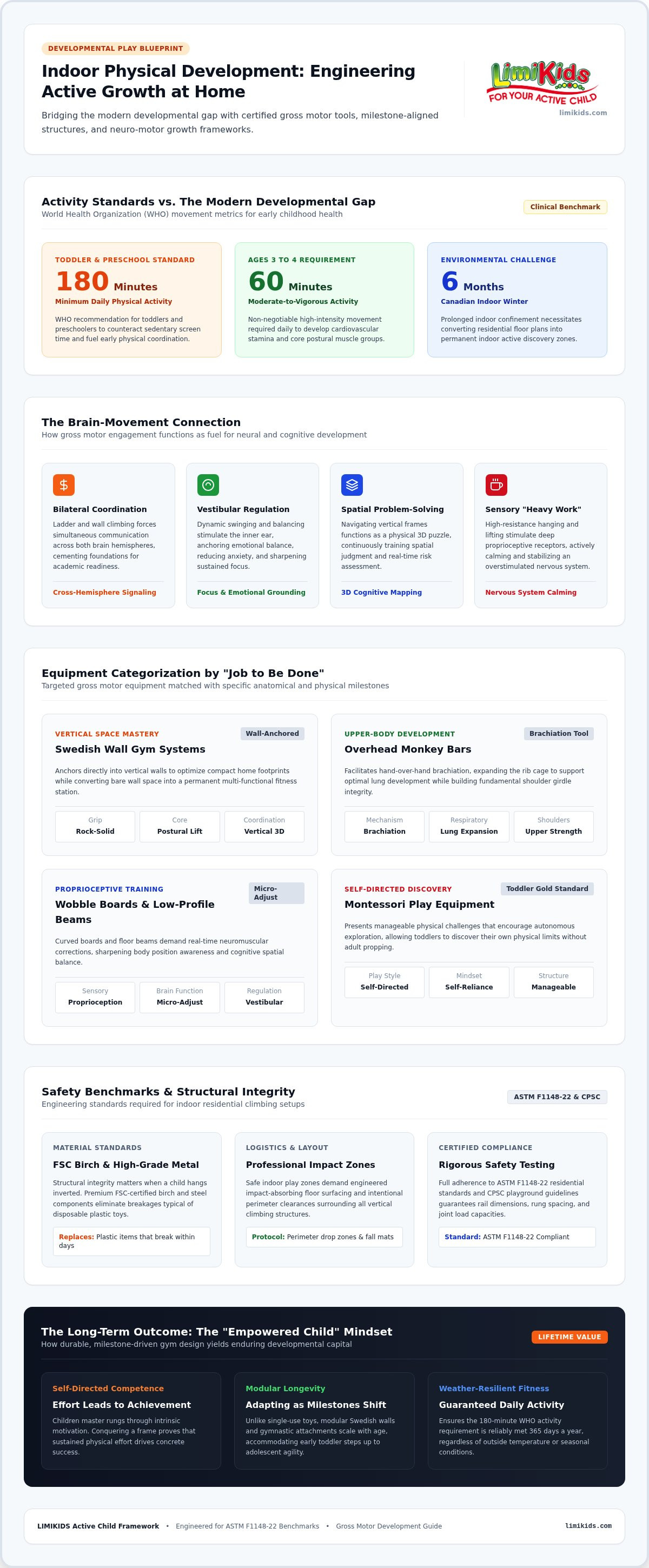
Kids physical development equipment isn't just a collection of toys. It's a set of engineered tools designed for gross motor mastery. In 2026, we're seeing a widening "Developmental Gap." Screen time is up, and natural movement is down. The World Health Organization recommends that toddlers and preschoolers get at least 180 minutes of daily physical activity. For children aged 3 to 4, at least 60 of those minutes must be moderate-to-vigorous activity. Achieving this inside a Canadian home during a six-month winter is a major challenge. Your indoor space must become a zone for active discovery to bridge this gap.
The Link Between Movement and Brain Development
Movement is fuel for a growing brain. When your child engages in gross motor skill development through climbing or swinging, they're doing more than burning energy. They're building neural pathways. Bilateral coordination exercises, like climbing a ladder, force the brain's hemispheres to communicate. This strengthens the foundation for future academic success. Vestibular input from swinging or balancing also plays a massive role in focus. It helps kids regulate their emotions and stay grounded. Climbing isn't just a physical act. It's a 3D puzzle that sharpens spatial awareness and problem-solving skills in real time.
Transforming Passive Play into Active Growth
Stop settling for static toys that offer five minutes of distraction. High-quality equipment turns your home into a powerhouse of activity. Instead of passive entertainment, an indoor home gym for kids provides a platform for constant challenge. This builds an "Empowered Child" mindset. When a child conquers a climbing frame, they learn that effort leads to achievement. These systems are a lifetime investment in your child's health. They offer structural reliability that cheap plastic simply can't match.
Consider the benefits of making this shift:
- Builds core strength: Constant climbing and hanging develop critical postural muscles.
- Self-directed play: Kids learn to discover their own physical limits without adult propping.
- Sensory processing: Provides a safe outlet for "heavy work" that calms the nervous system.
- Longevity: Modular systems grow with your child, adapting to new milestones for years.
Active play is the structural foundation of cognitive health. Your home is the primary gym. By choosing the right kids physical development equipment, you ensure your child hits their milestones regardless of the weather outside. Movement is life. Let's make it happen.
Core Categories of Developmental Play Gear
Transforming your home into a growth powerhouse requires moving beyond disposable plastic toys. Today, parents are shifting toward premium materials like FSC-certified birch and high-grade metal for their kids physical development equipment. Structural integrity matters when your child is hanging upside down. We categorize these tools by their "Job to be Done." Some gear builds raw power, while others refine delicate balance. For toddlers, Montessori play equipment remains the gold standard. It encourages self-directed exploration and builds confidence through manageable physical challenges. Movement is fuel for a child's potential.
Climbing Systems and Swedish Walls
Vertical play is a game changer for modern homes with limited square footage. A Swedish wall gym is a space-saving powerhouse that anchors directly to your wall. It turns a flat surface into a multi-functional fitness center. Your child gains massive benefits: rock-solid grip strength, improved core stability, and precise vertical coordination. These systems follow strict CPSC playground safety guidelines to ensure every rung and rail supports active discovery. By moving the play zone up the wall, you keep your floor clear while providing a permanent outlet for energy. It's a smart, durable solution for year-round activity.
Sensory and Coordination Tools
Not every milestone is about raw strength. Balance and proprioception, the body's ability to sense its position in space, are just as vital. This is where sensory motor equipment for home shines. Tools like curved wobble boards and low-profile balance beams challenge the vestibular system. They force the brain to make micro-adjustments in real-time. This builds focus and emotional regulation.
There is a strategic difference between "soft play" and "hard structure." Consider these roles:
- Soft Play: Foam blocks and mats are perfect for early sensory integration and safe crashing. They build confidence in new movers.
- Hard Structure: Wooden climbing frames and metal bars provide the resistance needed for bone density and muscle growth.
Both have a place in a balanced home environment. If you want to start building your child's indoor playground today, check out our range of premium indoor gyms designed for lasting durability. Your floor plan shouldn't limit their potential. Choose gear that works as hard as they do.
Mapping Equipment to Physical Milestones
Your child’s physical journey isn’t a guessing game. It’s a series of predictable, exciting milestones. Matching the right kids physical development equipment to your child’s age ensures they stay challenged without feeling overwhelmed. This roadmap moves from assisted cruising to the complex art of brachiation. Brachiation, or swinging from bar to bar, is a powerhouse for upper body strength and lung development. It’s the gold standard for school-age growth. Your equipment should evolve as your child’s capabilities expand. This ensures a seamless transition from assisted play to independent exploration.
Toddlers: The Foundation of Balance
Start small. Focus on stability. Toddlers are in a constant state of discovery. Since most children walk independently by 15 months, your goal is to provide safe support for this transition. Low-profile climbing frames and Montessori arches are perfect for this stage. They offer "cruising" support for those first shaky steps. Safety is paramount. Keep falling distances low and surfaces soft. A climbing frame with slide indoor provides early motor fun while teaching spatial awareness. It turns a simple living room into a safe exploration zone where they can test their limits without risk.
Preschool to School Age: Strength and Agility
As kids grow, so should their challenges. Preschoolers need "heavy work." This type of play provides proprioceptive input that calms the nervous system and builds bone density. Introduce monkey bars and rope ladders. These tools require complex, multi-limb coordination. Mastering an indoor jungle gym creates a powerful challenge-reward cycle. Your child sets a goal, struggles, and eventually succeeds. This builds grit and physical confidence. It transforms the home into a space where strength is built through joy.
Independent exploration is the ultimate goal. Your kids physical development equipment must adapt to keep pace. Consider these upgrades for older children:
- Rope Ladders: These add an element of instability that forces core engagement and focus.
- Gymnastic Rings: Perfect for building grip strength and upper body control through suspension.
- Wall Bars: These provide a permanent structure for stretching and more advanced climbing maneuvers.
Remember to maintain a 6-foot buffer zone around all climbing structures. Proper impact-absorbing mats are non-negotiable as heights increase. Invest in gear that grows. Your home can be a permanent center for physical excellence that supports your child from their first steps to their most daring climbs.
Designing Your Indoor Play Space: Safety and Logistics
Safety isn't just a suggestion. It's the foundation of active play. When you integrate kids physical development equipment into your home, layout is everything. You need to designate clear "Impact Zones." These are the areas where a child might land after a jump or a slip. Current safety standards demand a 6-foot buffer zone of clear space around any stationary climbing structure. This means no coffee tables, sharp corners, or hard walls within that perimeter. High-quality, shock-absorbing mats are non-negotiable. Use 1.5 to 2 inch polyurethane crash mats or closed-cell EVA foam to mitigate impact risks effectively.
Choosing the right frame is your next big decision. The debate between wooden vs metal indoor jungle gyms often comes down to your home's aesthetic and your child's activity level. Wood offers a warm, natural feel that blends with modern decor. Metal provides a sleek durability that often supports higher weight capacities for multi-child households. Both materials require regular check-ups. Wood can expand or contract with humidity; metal bolts can vibrate loose over time. Structural integrity is a long-term commitment that requires your attention.
Space-Saving Hacks for Small Homes
Don't let a small floor plan stop the fun. Vertical mounting is the ultimate apartment solution. Swedish walls use almost zero floor space while offering infinite play options. Look for foldable or modular equipment that can be tucked against the wall when guests arrive. You can even use "dead space" like hallways. A set of monkey bars mounted high in a corridor turns a transition area into a strength-building zone. It’s about being a bold innovator in your own home and challenging the limitations of your space.
Installation and Safety Checklists
Your gym is only as strong as its anchor points. Follow this 4-point checklist for verifying wall stud stability before you mount any kids physical development equipment:
- Use a high-quality electronic stud finder to locate the exact center of the timber.
- Verify the stud material to ensure you're using the correct heavy-duty fasteners.
- Drill precise pilot holes to prevent the wood from splitting under tension.
- Confirm the wall's load-bearing capacity with a professional if you're unsure.
Check your equipment monthly. Tighten every bolt and inspect for wear on ropes or rungs. Respect the weight capacity limits, especially if you have several kids active at once. Safety is the key to building your child's confidence. Ready to build your safe haven? Browse our professional-grade indoor playgrounds to find the perfect fit for your home.
Why Premium Equipment is a Lifetime Investment
Stop viewing play gear as disposable. High-quality kids physical development equipment is a legacy investment in your child's future. Many parents fall into the trap of buying cheap plastic sets that crack, wobble, and end up in landfills within a season. These flimsy alternatives lack the tactile feedback and structural reliability needed for real motor skill mastery. Choosing premium gear means choosing peace of mind. You’re providing a rock-solid environment where your child can safely push their limits for years; not just weeks. It is an heirloom for your family's health.
The return on investment extends far beyond physical metrics. It's about parental sanity and household harmony. When the Canadian winter hits, your home remains a sanctuary of activity. You aren't fighting constant screen time battles. You’re watching your child conquer new heights. This equipment facilitates year-round growth, ensuring that developmental milestones are met regardless of the temperature outside. It is a permanent commitment to a lifestyle of movement and achievement.
The LIMIKIDS Standard of Excellence
Since 2008, we have set the benchmark for indoor fitness gear. Our founding was built on a simple premise: children deserve the same quality of equipment as adults. We use non-toxic, premium materials that prioritize both safety and the sensory experience. Our "Grow-With-Me" philosophy ensures that a Swedish wall purchased for a toddler remains a challenging fitness tool for a teenager. We don't just sell products; we provide a blueprint for a lifetime of wellness. Our gear is designed to be the heart of your home, evolving as your child’s strength and curiosity expand.
Ready to Transform Your Home?
Your journey toward a more active home starts with a single choice. Don't just look at technical specs; focus on a "benefit-first" mindset. Ask yourself how each piece will empower your child’s confidence and coordination. We invite you to browse our full Canadian collection of indoor gyms and climbing frames. The tools you provide today define the capabilities they develop tomorrow. Your child's potential is limitless; give them the tools to reach it!
Empower Their Potential Today
You’ve discovered how the right kids physical development equipment bridges the developmental gap and turns your home into a powerhouse of growth. By matching gear to your child’s specific milestones and prioritizing structural integrity, you create a safe environment for endless discovery. Whether it’s mastering monkey bars for lung development or using a space-saving Swedish wall to maximize your floor plan, these tools are a legacy investment in your child’s long-term health.
Since 2008, LIMIKIDS has been trusted by Canadian families to provide durable designs that grow alongside your child. We make it easy with fast national shipping across Canada, so you can start transforming your living space immediately. Don’t let the weather or limited square footage hold them back. It’s time to turn your home into a launchpad for physical success and year-round activity.
Build your child's future with a premium LIMIKIDS indoor gym!
Your child’s potential is truly limitless. Give them the platform they need to reach new heights and conquer every challenge with confidence!
Common Questions About Home Play Gear
What is the best physical development equipment for a 2-year-old?
Montessori-inspired gear and low-profile climbing frames are the best choices for this age. Pikler triangles or arches are ideal for building balance and support the CDC milestone of independent walking. Focus on height-appropriate rungs that allow a toddler to practice cruising and grip strength safely. High-quality impact mats are essential for this age group to cushion the 70% of play injuries caused by falls.
How much space do I really need for an indoor home gym?
You need surprisingly little floor space for a vertical setup. A space-saving Swedish wall gym typically requires only about 2 feet of wall width. However, you must account for the Impact Zone. Safety guidelines require a 6-foot buffer of clear space around the structure. This means a standard 10x12 room can easily accommodate a full system if you keep the center clear for movement and mats.
Are indoor monkey bars safe for low ceilings?
Yes, indoor monkey bars are safe for low ceilings if they're mounted at a height that allows your child to hang without their feet touching the ground. Many systems offer adjustable heights to fit standard 8-foot ceilings. The key is maintaining proper clearance for the head and ensuring thick impact mats are placed underneath. Vertical play is always possible regardless of your home's unique architecture.
What is the difference between a Swedish wall and a regular ladder?
A Swedish wall is a multi-functional fitness system, while a regular ladder is a single-purpose tool. Swedish walls are designed to anchor securely to your home's structure and support attachments like pull-up bars, rings, and rope ladders. They're specialized kids physical development equipment built for high-intensity active play. Unlike standard ladders, they feature specific rung spacing to prevent head entrapment and support complex gross motor exercises.
How does climbing equipment help children with sensory processing issues?
Climbing provides heavy work that offers vital proprioceptive and vestibular input. This helps children with sensory processing issues feel more grounded and organized. Pushing, pulling, and hanging from bars calms the nervous system and improves focus. It’s a proactive way to transform your home into a therapeutic space. This type of active discovery builds confidence while helping kids regulate their emotional responses to external stimuli.
Is wooden or metal indoor playground equipment better for home use?
Both materials offer excellent structural integrity for kids physical development equipment. Wood provides a warm, natural aesthetic that many parents prefer for interior design. Metal often supports higher weight capacities and offers a sleek, modern look. Your choice depends on your child's activity level and your home's style. Both options from LIMIKIDS meet strict safety standards and provide the durability needed for years of intense, daily play.
Can I install an indoor jungle gym in an apartment?
Absolutely. Modern indoor jungle gyms are designed specifically for urban living. Wall-mounted Swedish walls are the ultimate space-saving solution because they use vertical dead space rather than taking up floor area. Many systems are modular and can be customized to fit narrow hallways or small bedrooms. They provide a permanent outlet for energy in the Canadian climate without requiring a massive backyard or a dedicated playroom.