






Indoor Play Structures: The Ultimate Parent's Guide
What if your living room could do more than just house a sofa and a television? Imagine transforming that square footage into a high-octane hub by choosing the right indoor play structure for home to ignite your child's physical potential. It's a bold shift, but it's the ultimate way to reclaim your home from the "winter blues" and the constant lure of digital screens.
We understand the frustration of tripping over stagnant toys that don't encourage movement. You need a solution that burns off restless energy while keeping your space organized and safe. This guide promises to help you turn your living area into a developmental powerhouse that lasts for years. We'll explore space-saving Swedish wall gyms, Montessori-inspired systems, and durable climbing equipment designed for maximum growth. Get ready to create a play space that inspires movement and respects your home's footprint.
Key Takeaways
- Combat the screen time crisis by creating a dedicated zone for gross motor development that keeps your kids active regardless of the weather.
- Compare the benefits of vertical Swedish walls and low-profile Montessori gyms to find the best match for your child's developmental stage.
- Master the logistics of sizing your space by calculating ceiling height and necessary safety clearances for an indoor play structure for home.
- Evaluate the durability of wood versus metal and understand why weight capacity is vital for long-term safety and sibling play.
- Discover how space-saving, sensory-smart designs can transform even small apartments into high-energy hubs for physical achievement.
Why Every Modern Home Needs an Indoor Play Structure
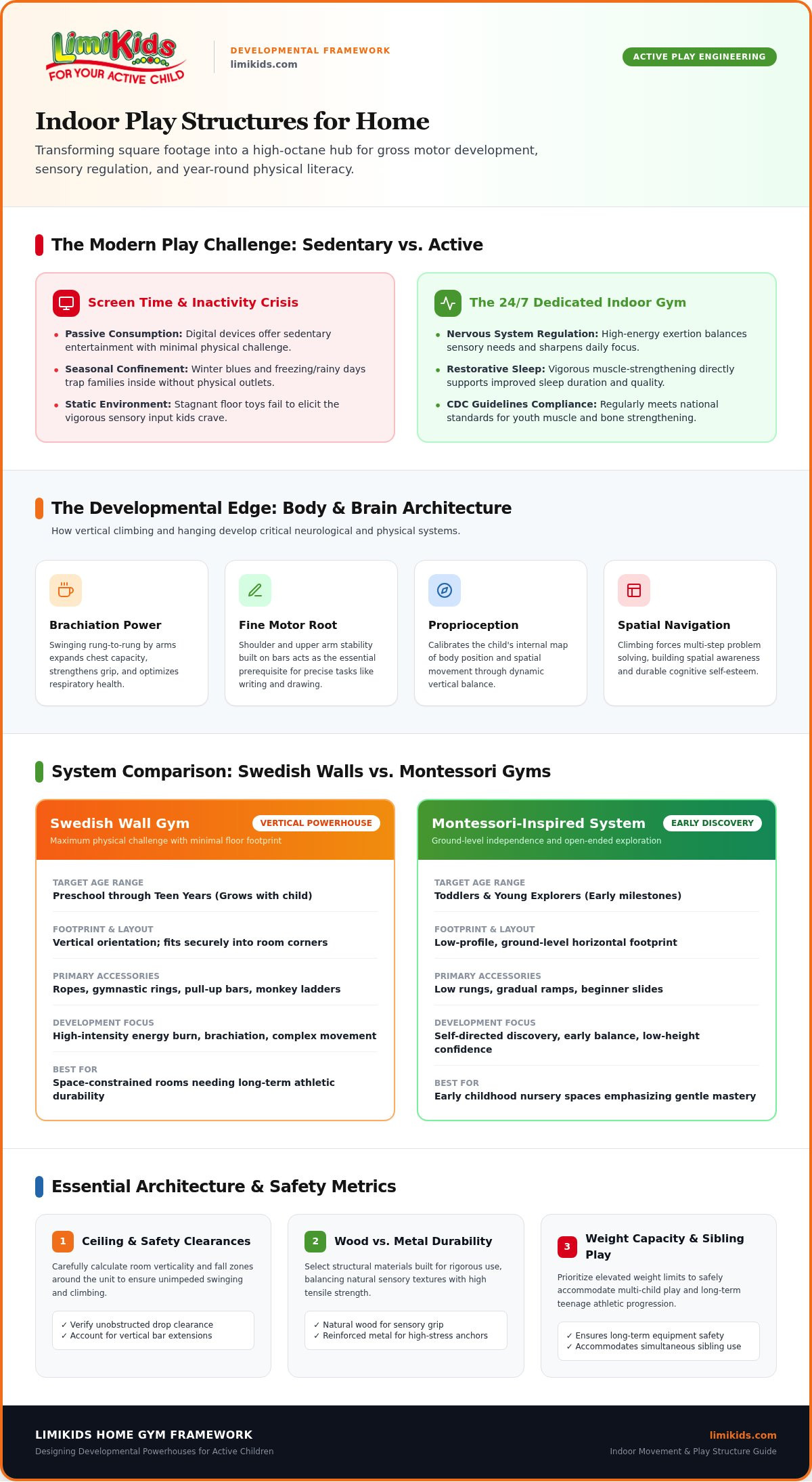
Stop thinking of play as a mere distraction. It's the essential work of childhood. An indoor play structure for home serves as a high-performance zone for gross motor development, providing a dedicated space where kids can push their physical boundaries. It's the foundation for a lifetime of health and confidence.
We're currently facing a screen time crisis. Digital devices offer passive consumption, but children crave active creation. A high-quality indoor play structure for home provides a vital physical outlet that's available 24/7, regardless of the weather outside. This isn't a luxury. It's a year-round necessity for families who want to prioritize movement over sedentary habits. Rainy days and freezing winters often trap families indoors, leading to mounting frustration. By installing a permanent solution, you ensure that your child's need for vigorous activity is met every single day. Through active discovery, children test their limits safely and learn exactly what their bodies can achieve.
Combatting the Sedentary Lifestyle
Digital entertainment is often the path of least resistance, but it doesn't provide the sensory input children need. An indoor gym offers a constant alternative to the lure of the tablet. When kids engage in high-energy play, they regulate their nervous systems more effectively. This exertion directly translates to improved sleep quality and a longer attention span during quiet activities. Active play is the primary vehicle for childhood learning.
The Developmental Edge: Physical and Cognitive Gains
Climbing is a full-body cognitive challenge. It forces a child to use spatial awareness and problem-solving skills to navigate from one point to another. These movements do more than build muscle; they build brains. Developing upper body strength through hanging and swinging is a prerequisite for fine motor success. Strong shoulders and arms provide the stability needed for delicate tasks like writing and drawing.
Many specialized systems, such as Swedish wall bars, are designed to maximize this vertical growth. These structures are excellent for developing proprioception, which is the body's internal map of its own position and movement. By challenging their balance and coordination daily, children become more resilient and physically capable. Think of it as a laboratory for physical milestones. Each successful climb to the top rung boosts self-esteem and encourages a can-do attitude that carries over into school and social life. You aren't just buying equipment; you're investing in your child's sensory and cognitive architecture.
Decoding Play Systems: Swedish Walls vs. Montessori Gyms
Choosing the right indoor play structure for home involves more than just picking a color. You need to match the equipment to your child's current developmental stage and your room's layout. The CDC physical activity guidelines for children recommend regular muscle-strengthening activities, and both Swedish walls and Montessori systems provide the perfect platform for this growth. It's about finding the balance between safety and a healthy physical challenge.
Swedish Wall Gyms: The Vertical Powerhouse
If you're tight on floor space, the Swedish wall is your best friend. These systems use vertical height rather than a massive horizontal footprint. They're built for longevity and grow with your child from preschool through their teenage years. By utilizing The Swedish Wall Gym: A Space-Saving Wonder, you can fit a full fitness suite into a corner of a bedroom. These gyms often include multi-functional attachments like ropes, rings, and bars that challenge different muscle groups. They're the ultimate tool for older children who need to burn intense energy and master complex movements.
Montessori-Inspired Systems for Early Discovery
For the youngest adventurers, Montessori-inspired systems offer a low-profile entry into the world of movement. These structures focus on independence and self-directed play. Toddlers build confidence by navigating rungs and slides that are close to the ground. This type of indoor play structure for home allows little ones to test their balance without the intimidation of height. Using Montessori Play Equipment: The Parent’s Guide to Active Discovery at Home (2026) helps parents understand how natural materials and open-ended designs foster early problem-solving. These systems prioritize safety and accessibility, creating a secure environment for early milestones.
Don't overlook the importance of monkey bars for upper body development. Scientists call this "brachiation." It's the act of swinging from rung to rung using only your arms. This specific movement expands the chest, improves grip strength, and even supports respiratory health. Whether you choose a wall-mounted ladder or a ground-based gym, you're giving your child a massive head start in physical literacy. If you're ready to see how these systems fit your life, explore our range of indoor climbing equipment to find the perfect match for your family's needs.
Sizing Your Space: From Compact Apartments to Full Playrooms
Don't let a small floor plan limit your child's big energy. Before you install an indoor play structure for home, you must master the art of the tape measure. Ceiling height is your most critical variable. Most standard homes have eight-foot ceilings, which is perfect for vertical systems, but always verify your specific clearance before ordering. If your ceilings are higher, you have even more room for advanced climbing rungs and hanging rings that challenge older kids.
Beyond height, you need to establish a designated "Safety Zone." This is the empty buffer around the equipment that prevents collisions with furniture or walls. Following the American Academy of Pediatrics home playground safety guidelines ensures you have adequate shock-absorbing space and clearance. Generally, aim for at least two to three feet of open space around the perimeter of the structure. This zone keeps the area safe for high-speed play and protects your home's decor from accidental bumps.
Horizontal structures like jungle gyms are fantastic for dedicated playrooms, but they require significant floor real estate. Vertical structures, on the other hand, utilize the "dead space" of your walls. Integrating these into shared living areas is surprisingly simple. Choose materials that complement your home's aesthetic, and use safety mats to define the play zone clearly. This keeps the action contained while respecting the rest of your living space.
Small Space Solutions: Maximizing Square Footage
Living in an apartment doesn't mean you have to skip the gym. Vertical Swedish walls are the ultimate space-savers because they use the wall as the primary support, leaving your floor mostly clear for other activities. Look for foldable or modular components that you can tuck away when guests arrive. This flexibility allows you to maintain a functional home without it feeling like a permanent, cluttered playground. For a deeper dive into finding the right fit for your specific layout, check out The Ultimate Guide to Choosing an Indoor Home Gym for Kids in 2026.
Scalable Systems: Equipment that Grows with Your Child
Think of your play system as a long-term investment rather than a temporary toy. Modular gyms are brilliant because they evolve alongside your child's abilities. A simple toddler climbing frame can eventually support a complex monkey bar system or high-tension ropes. By purchasing an indoor play structure for home that accepts new attachments, you save money in the long run. You aren't replacing the whole unit every two years; you're simply upgrading the physical challenge. Buy for the next stage today to ensure the equipment remains a developmental powerhouse for a decade or more.
Safety and Durability: What to Look for Before You Buy
Safety isn't a secondary concern. It's the absolute foundation of every climb, swing, and jump your child takes. When you invest in an indoor play structure for home, you're selecting a piece of structural equipment that must withstand years of intense physical use. High-quality construction is easy to spot once you know where to look. Focus on the details. Premium systems feature smooth, splinter-free finishes and rounded edges that protect small hands during rapid movement. Secure mounting points and heavy-duty bolts are the hallmarks of a system built for longevity. Avoid "cheap" alternatives that use thin-walled tubing or low-grade plastics; these often wobble or degrade under pressure.
Weight capacity is a vital metric that many parents overlook. It's not just about your child's current weight. You must account for the dynamic forces of jumping and the reality of sibling play. A structure with a high weight rating ensures that the equipment remains stable even when two or three kids are active at once. This durability protects your investment and provides the peace of mind you need to let them explore their limits. A system that can support 200 pounds or more is a clear indicator of structural integrity and reliability.
Structural Integrity: Metal vs. Wood
The choice between metal and wood often comes down to your family's specific goals. Metal Swedish walls offer incredible permanence and often boast higher weight-bearing stats, making them ideal for older kids and high-energy activities. They provide a sleek, modern look and require almost zero maintenance over time. Wood, however, brings a natural warmth and tactile feel that many parents prefer for early Montessori-style play. To make the best choice for your layout, consult our guide on Wooden vs Metal Indoor Jungle Gym: The Ultimate Parent’s Guide to Choosing Right (2026). Both materials can be safe, provided they use non-toxic finishes and robust joinery.
Installation Essentials for Peace of Mind
Your installation method determines the ultimate safety of the indoor play structure for home. Wall-mounted systems offer the highest level of stability by anchoring directly into your home's structural studs. This is the gold standard for high-energy climbers. Pressure-mounted systems are a versatile alternative for renters or those who want to avoid drilling, but they require regular checks to ensure the tension remains optimal. Always use professional-grade hardware designed for the specific load requirements of your equipment. High-impact landing mats are non-negotiable for any home setup to ensure every descent is cushioned and safe. Ready to secure your child's future play? Browse our collection of high-quality kids gym equipment to find a system built to last.
Building Your Ultimate Home Gym with LIMIKIDS
Canadian families face a unique challenge: long, freezing months where outdoor play simply isn't an option. Since 2008, LIMIKIDS has acted as an empowering guide for parents looking to reclaim their living space from the limitations of the season. We don't just sell toys. We provide high-performance tools for physical and cognitive development. Choosing a premium indoor play structure for home from our collection means investing in a system designed specifically for the rigors of daily, high-energy use. It's time to turn your home into a hub of activity that defies the weather outside.
Our philosophy centers on the idea that play equipment should adapt to your child, not the other way around. This "grow-with-them" approach ensures your investment remains a developmental powerhouse for years. Whether your child is a toddler mastering their first rungs or a school-aged climber seeking new challenges, our systems provide the necessary resistance and variety. We prioritize high-impact sensory words and grounded technical descriptors because we know you value both the joy of play and the reality of structural integrity.
The LIMIKIDS Difference: Quality You Can Trust
We prioritize structural integrity because your child's safety is non-negotiable. Every rung, rope, and bolt is selected for its reliability and permanence. Because we're focused on the needs of families across the country, we offer fast shipping and dedicated support that understands your local environment. Our space-saving designs ensure that even the smallest apartment can become a center for physical achievement. For a deeper look at how these tools impact development, read our Sensory Motor Equipment for Home: Parent's Guide. Quality isn't just a buzzword for us; it's the promise of a safe, durable play space.
Sensory-Smart Play for Every Child
Every child has a unique sensory profile. Some crave intense movement and high-speed swinging, while others need to build confidence through steady, controlled climbing. Our indoor play structure for home supports these diverse needs by focusing on coordination and strength-building. We use vibrant, action-oriented designs that encourage discovery and achievement. This proactive approach helps children master physical milestones in a secure environment. It's about building the confidence they'll carry into the world. Stop letting the winter blues dictate your family's energy levels. Empower your kids to climb higher and grow stronger every single day. Explore the LIMIKIDS Collection and find the perfect fit for your family today.
Ignite Your Child's Physical Potential Today
You've seen how a dedicated indoor play structure for home transforms stagnant screen time into a journey of active discovery. By choosing between space-saving Swedish walls or low-profile Montessori systems, you're tailoring your environment to support your child's specific developmental milestones and sensory needs. Remember that structural integrity, weight capacity, and a clearly defined safety zone are the essential keys to long-term peace of mind and endless energy burn.
Since 2008, LIMIKIDS has focused on providing premium quality, space-saving designs that respect your home's footprint while challenging your child's strength and coordination. Our commitment to durability means your investment grows alongside your family, providing a reliable outlet for movement for years to come. With fast shipping across Canada, your home's evolution into a year-round fitness powerhouse is just a click away. Don't wait for better weather to get your kids moving.
Build Your Child's Dream Gym at LIMIKIDS
Empower your kids to climb, swing, and grow stronger every single day. Your child's path to physical confidence starts right in your living room!
Frequently Asked Questions
Are indoor play structures safe for toddlers?
Yes, indoor play structures are safe for toddlers when you choose age-appropriate designs like Montessori-inspired climbing frames. These systems prioritize low-profile heights and natural materials to build confidence without the risk of high falls. Always ensure you have a high-impact landing mat in place to cushion every movement. For the youngest climbers, supervised play on a dedicated indoor play structure for home encourages early motor skill development while keeping the environment controlled and secure.
How much space do I really need for an indoor gym?
The space required depends on whether you choose a vertical or horizontal system. A Swedish wall gym is the ultimate space-saver, requiring only a small section of wall and about two to three feet of floor clearance for the "Safety Zone." Horizontal jungle gyms require a larger footprint, typically needing at least six to eight square feet of dedicated room. Always measure your ceiling height first, as most standard systems are designed for eight-foot clearances.
Can an indoor play structure be installed on drywall?
You cannot install a wall-mounted indoor play structure for home directly onto drywall alone. These systems must be anchored into the structural wood or metal studs behind the wall to ensure they can support the dynamic weight of a climbing child. If your home layout doesn't allow for stud alignment, consider a pressure-mounted system that secures between the floor and ceiling. This provides a stable, permanent-feeling anchor without the need for drilling into your walls.
What is the weight limit for a Swedish wall gym?
Most premium Swedish wall gyms are engineered for high-capacity use, often supporting 200 pounds or more. This high weight limit is essential for ensuring structural integrity during vigorous sibling play or when multiple attachments are used at once. Choosing a system with a robust capacity means the equipment remains stable and reliable as your child grows. It's a hallmark of professional-grade manufacturing that distinguishes high-quality indoor playground equipment from cheaper, less durable alternatives.
How do indoor climbing frames help with child development?
Climbing frames are essential tools for developing gross motor skills and proprioception. By navigating rungs and ropes, children improve their spatial awareness and problem-solving abilities. The physical exertion also builds upper body strength, which is a necessary foundation for fine motor skills like writing. Beyond the physical gains, mastering a difficult climb boosts self-esteem and encourages a "can-do" attitude. These structures turn your home into a laboratory for critical developmental milestones and sensory processing.
Do I need professional help to install monkey bars at home?
Most indoor home gyms are designed for DIY assembly and don't require professional installation services. Manufacturers like LIMIKIDS provide comprehensive instructions and professional-grade hardware to help you secure the system yourself. You'll generally need basic tools like a drill, a level, and a stud finder to ensure a safe mount. While the process is straightforward for most parents, always follow the specific safety guidelines provided with your equipment to guarantee a secure, wobble-free play zone.
What are the best indoor play structures for small apartments?
Vertical Swedish wall gyms are the most efficient choice for small apartments. These structures utilize the "dead space" on your walls rather than taking up valuable floor real estate. Many systems also feature foldable components or modular attachments that you can tuck away when they aren't in use. This allows you to maintain a functional living area while providing your children with a high-energy physical outlet. Space-saving designs ensure that square footage never limits your child's growth.
How do I choose between a wooden or metal jungle gym?
Choose a metal jungle gym if you prioritize permanence, higher weight capacities, and zero maintenance. Metal systems are often more versatile for older children who need advanced attachments like monkey bars. Wooden structures are ideal if you prefer the aesthetic warmth of natural materials and are focused on early Montessori-style play for toddlers. Both options provide incredible durability, but metal often offers a sleeker, space-saving profile that fits modern homes while supporting the intense energy of multiple growing children.