






Best Kids Home Fitness Equipment 2026: Parent's Guide
Stop settling for flimsy plastic that breaks before the weekend is over. The best kids fitness equipment for home isn't just a plaything; it's a high-performance developmental tool that transforms your living room into a powerhouse of growth. You want your children to move, climb, and thrive, but cramped indoor spaces and endless screen time often get in the way. It's frustrating to watch high-energy kids feel stuck inside, especially when you're worried about the structural integrity of typical store-bought toys.
We agree that your home should be a safe harbor for active play, no matter the weather outside. You deserve equipment that stands up to the "bounce factor" and meets the latest safety benchmarks. This guide promises to help you discover the most reliable indoor gear to boost gross motor skills and provide a vital energy outlet. We'll preview the top-rated Swedish walls, modular climbing systems, and sensory tools that evolve with your child from their first toddler climbs through their school-age milestones. Let's turn your space into a hub of movement and achievement.
Key Takeaways
- Transform your home into a high-energy hub. Combat screen time and boost cognitive focus through active play.
- Identify the best kids fitness equipment for home. Choose gear that matches your child's developmental milestones and your living space.
- Maximize vertical space. Learn how Swedish wall gyms provide a full-body workout without taking over your floor.
- Demand structural integrity. Invest in high-quality steel and hardwood systems that exceed modern safety standards.
- Future-proof your investment. Select modular equipment that evolves from toddlerhood to school age for years of reliable use.
Why Home Fitness Equipment is Essential for Modern Child Development
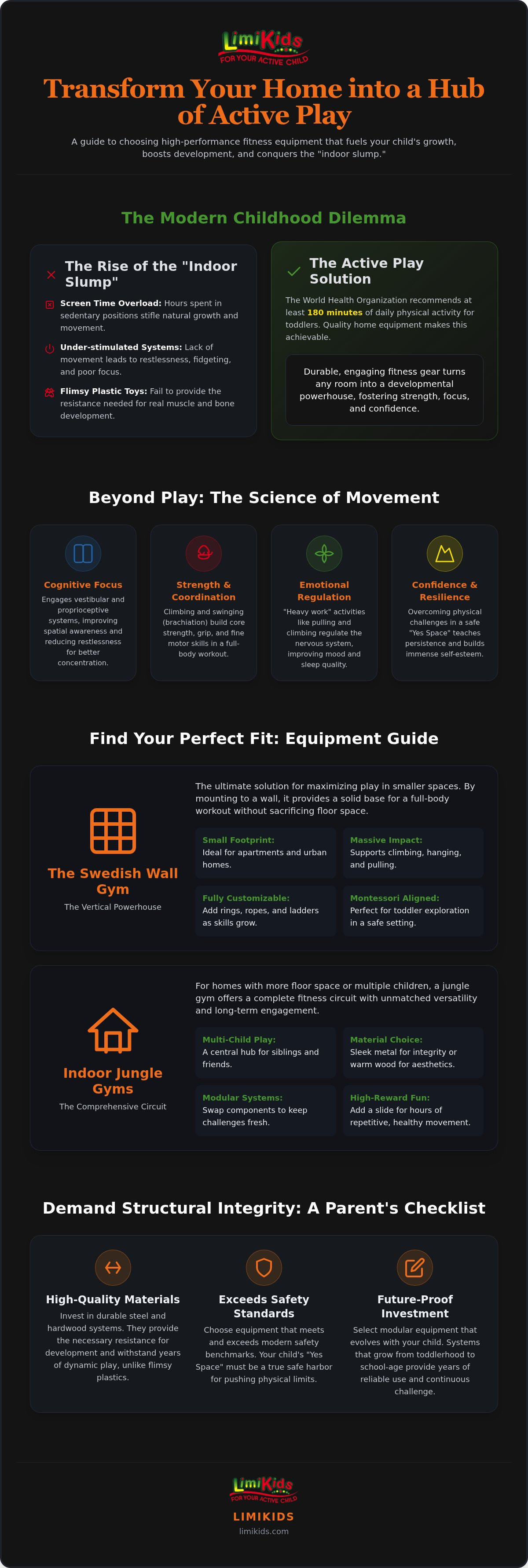
Modern childhood is facing a movement crisis. With screen time addiction on the rise, many children spend hours in sedentary positions that stifle their natural growth. The World Health Organization recommends at least 180 minutes of daily physical activity for toddlers, yet achieving this indoors is a challenge for many families. This is where the best kids fitness equipment for home becomes a game-changer. It isn't just about "keeping them busy." It is about providing the sensory input their developing nervous systems require to function at their peak.
Physical activity supports cognitive focus and emotional regulation by engaging the proprioceptive and vestibular systems. Proprioception is the body's internal GPS, helping kids understand where their limbs are in space. Vestibular input, triggered by swinging or hanging, governs balance and spatial orientation. When these systems are under-stimulated, children often become restless or fidgety. Cheap plastic toys fail to solve this. They lack the structural resistance needed for true muscle growth and bone density development. You need durable, high-impact tools that can handle the dynamic force of a growing child.
Combating the "Indoor Slump" with Active Play
Movement is the ultimate mood stabilizer. Engaging in heavy work, such as climbing or pulling, helps regulate a child's nervous system and significantly improves sleep quality. By creating a dedicated "Yes Space," you empower your child to push their physical limits without constant parental intervention. This environment fosters a sense of autonomy and safety. When a child finally reaches the top of a climbing frame, the psychological boost is immense. They learn that persistence pays off. This resilience translates directly into academic and social confidence, proving that physical challenges are just opportunities for growth.
Beyond Cardio: Building Strength and Coordination
The best kids fitness equipment for home focuses on functional development rather than just burning energy. Climbing is a full-body workout that strengthens the core and sharpens fine motor skills through precise hand-eye coordination. Brachiation, the scientific term for swinging from monkey bars, is particularly vital. It stretches the spine, strengthens the grip, and expands lung capacity. These activities help children develop physical coordination, strength, and flexibility during critical growth windows. By linking fitness gear to gross motor milestones, you ensure your child is building a foundation of physical literacy that will serve them for a lifetime.
Types of Kids Fitness Equipment: From Montessori to Swedish Walls
Choosing the right gear is about more than just filling a room. It's about engineering an environment for success. Unlike plastic toys that clutter floors, the best kids fitness equipment for home utilizes your vertical space to create a multi-functional gym. These systems align with the Physical Activity Guidelines by encouraging the vigorous, muscle-strengthening play children need daily. You aren't just buying a plaything; you're investing in a permanent developmental hub that challenges your child's physical limits every single day.
The Swedish Wall Gym: A Vertical Powerhouse
Small footprint. Massive impact. Swedish wall gyms are the ultimate solution for urban families or anyone short on square footage. By mounting directly to the wall or ceiling, these frames provide a rock-solid base for climbing, hanging, and pulling. You can customize them with rings, ropes, and rope ladders to keep the challenge fresh as your child grows stronger. They also serve as a perfect foundation for Montessori play equipment, allowing toddlers to explore their physical boundaries in a controlled, safe environment. It's the most efficient way to turn a bedroom or hallway into a high-energy zone.
Indoor Climbing Frames and Jungle Gyms
If you have multiple children or a bit more floor space, an indoor jungle gym offers a comprehensive fitness circuit. Metal frames provide unmatched structural integrity and a sleek, modern feel that lasts for decades. Wooden options offer a warm, natural aesthetic and a different tactile experience for younger climbers. Adding a climbing frame with slide indoor provides a high-reward finish to every climb, keeping kids engaged for hours of repetitive, healthy movement. Look for modular systems that let you swap components. This flexibility ensures the equipment stays relevant as your child’s skills evolve from simple steps to complex coordination.
Beyond climbing, specialized monkey bars target grip strength and upper body coordination. This is essential for fine motor development and handwriting skills later on. For families with neurodiverse needs, sensory play equipment provides the specific tactile and vestibular input required for self-regulation. Whether it's a sensory swing or a textured climbing wall, the right tools make a profound difference in a child's daily life. Finding the best kids fitness equipment for home means looking for gear that balances this fun with real therapeutic value. Explore our professional-grade Indoor Jungle Gyms to find a system that fits your family's unique developmental goals.
Choosing the Right Equipment Based on Age and Space
Don't just buy for today. Invest in the athlete your child is becoming. The best kids fitness equipment for home should challenge their current abilities while providing room to grow. Selecting the wrong gear often leads to bored children or, worse, safety hazards. You need a system that respects both your child's developmental stage and your home's square footage. By matching equipment to specific age milestones, you ensure they stay engaged and safe throughout their childhood. As they grow, they may also enjoy exploring new disciplines; for example, inSPORTline offers a variety of gear for activities such as water sports that can inspire active families to explore new hobbies together.
Age-Appropriate Fitness Milestones
Toddlers (Ages 1-3) thrive on discovery. Focus on low-height Montessori-inspired equipment that encourages crawling, pulling up, and basic balancing. Safety is paramount here. Use soft landings and equipment that sits close to the floor to build early confidence. As they transition to the preschool years (Ages 3-5), introduce monkey bars and more complex climbing routes. This stage is critical for developing grip strength and bilateral coordination. Engaging in these activities supports healthy physical, social, cognitive, and emotional development as they master increasingly difficult physical tasks.
You don't need a massive playroom to build a high-energy hub. Space-saving Swedish wall gyms are the gold standard for apartments and shared living areas. These units mount directly to the wall, leaving your floor real estate open for other activities. If you're working with standard 8-foot ceilings, look for adjustable systems that maximize vertical play without hitting the rafters. Measure your space carefully before you buy. You need a clear safety zone of at least 1.5 meters around dynamic accessories like swings or ropes to prevent collisions.
For multi-use rooms, consider modular equipment that can be tucked away or used as part of the decor. The best kids fitness equipment for home isn't always the biggest; it's the most versatile. Foldable mats and removable attachments allow you to transform a basement or bedroom into a gym in seconds and back again when playtime is over. Focus on verticality. When you build up instead of out, you turn even the smallest corner into a powerhouse of physical growth and achievement.
Safety Standards and Installation: What Every Parent Must Know
Safety isn't just a checklist. It's your peace of mind. When you're hunting for the best kids fitness equipment for home, look past the bright colors and focus on the skeleton of the system. High-quality materials like powder-coated steel and solid hardwood are essential for long-term reliability. These materials don't just support your child; they withstand the intense dynamic force of active play. While a child might only weigh 50 pounds, the force they exert while swinging or jumping can be triple that. This is why "over-engineering" is a critical safety feature, not an unnecessary luxury.
Installation methods must match your home's architecture. Wall-anchored systems offer maximum stability by securing directly into your home's framing. For Canadian homes with finished basements or specific flooring needs, floor-to-ceiling pressure mounting provides a rock-solid alternative without the need for drilling. Regardless of the method, the goal is absolute rigidity. A system that wobbles is a system that fails. Always prioritize impact-absorbing flooring or thick safety mats to protect against the inevitable tumbles that come with physical discovery.
Essential Safety Checklist for Home Gyms
Before the first climb, perform a thorough inspection. Check every joint for pinch points and ensure all finishes are smooth to the touch. You must respect the "Fall Zone" rule: maintain at least 1.5 meters of clear space in every direction around dynamic accessories like swings or ropes. This prevents collisions with furniture or walls. Routine maintenance is your best defense against wear. Tighten bolts every few months and inspect ropes for any signs of fraying. A proactive approach ensures the gear remains as safe as the day it was installed.
Installation Tips for a Secure Setup
A secure setup starts with the right foundation. Use a stud finder to identify the structural heart of your walls. Standard drywall won't hold the weight of an active child; you must anchor into wood or metal studs using professional-grade hardware. If your floors are uneven, use a level to ensure the weight distribution is balanced across the entire frame. This prevents unnecessary stress on specific joints of the equipment. For complex structural mounting or if you're unsure about your wall type, consult a professional to ensure the installation meets your home's specific requirements.
Ready to build a safe, high-energy hub for your family? Explore our collection of Indoor Playground Equipment designed with industry-leading safety standards and structural integrity in mind.
Why LIMIKIDS is the Gold Standard for Indoor Kids Fitness
LIMIKIDS isn't just another retailer; we're your partner in pediatric wellness. Since 2008, we've remained the premier choice for Canadian families looking for the best kids fitness equipment for home. We understand the unique challenges of our climate and our modern living spaces. You need gear that survives the long winters and fits into your home without sacrificing aesthetic or safety. Our legacy is built on structural integrity and a deep understanding of how physical movement shapes a child's future. We don't sell temporary toys. We provide the permanent tools for a lifetime of health, confidence, and achievement.
The LIMIKIDS Difference: Quality You Can Feel
Generic plastic playthings often lose their appeal and structural strength within months. Our systems are different. Crafted from high-quality metal and solid hardwood, they are engineered to withstand the intense dynamic force of high-energy play. This durability is exactly why thousands of parents trust us to support their children's physical milestones. Our equipment is designed to grow. It adapts as your child transitions from simple toddler steps to advanced, high-resistance climbing. We take pride in offering specialized support for sensory motor equipment for home, ensuring every child has the specific tactile and vestibular input they need to thrive. Plus, our commitment to fast shipping across Canada means your new developmental hub arrives quickly and reliably.
Taking the Next Step Toward an Active Home
Ready to transform your living room into a powerhouse of growth? Starting your indoor home gym for kids is a bold, proactive step toward a healthier future. We act as your empowering guide, offering professional-grade recommendations that respect your specific ceiling heights and developmental goals. You don't have to guess which system is right. We provide the expertise needed to choose the perfect configuration for your family's unique needs. Join the thousands of active families across the country who have successfully traded screen time for climbing time. Let's build a rock-solid foundation of physical literacy together. Your home is capable of becoming an incredible space for achievement and joy. Pick the equipment that matches your child's ambition.
Build Your Child's High-Energy Future Today
Physical literacy is the greatest gift you can give your child. By choosing the best kids fitness equipment for home, you aren't just filling a room; you're building a rock-solid foundation for lifelong health and spatial confidence. We've explored how vertical Swedish walls and modular climbing systems maximize even the smallest urban floor plans while providing the high-resistance challenge kids crave. Safety is never a compromise when you prioritize structural integrity and professional-grade materials over flimsy plastic alternatives.
LIMIKIDS has been a trusted partner for Canadian families since 2008. Our premium, safety-tested systems are designed to grow with your child from their first toddler climb to their most ambitious school-age achievements. It's time to reclaim your living space from screens and transform it into a hub of movement and joy. With fast national shipping across Canada, your home's developmental transformation is only a few clicks away.
Explore the Best Kids Fitness Equipment for Your Home at LIMIKIDS and start your journey today. Your child is ready to reach new heights. Let's provide the tools to help them get there!
Frequently Asked Questions
Is indoor fitness equipment safe for toddlers?
Indoor fitness equipment is safe for toddlers when you choose age-appropriate systems like Montessori-inspired climbing frames. These units focus on low-height discovery and crawling to build confidence safely. Always pair equipment with thick safety mats to absorb impact from small tumbles. Supervision is essential, but high-quality gear designed for this age group provides a controlled environment for toddlers to master their gross motor skills without the risks of outdoor playgrounds.
How much space do I really need for an indoor jungle gym?
You don't need a massive playroom to install the best kids fitness equipment for home. A standard Swedish wall gym requires only a small section of wall space. However, you must account for the "fall zone," which is a clear safety radius of at least 1.5 meters around the equipment. This ensures children have enough room to swing or jump without hitting furniture. Measuring your ceiling height is also critical to ensure a proper fit.
Can indoor gym equipment be installed in an apartment?
Indoor gym equipment is highly suitable for apartments, especially if you choose space-saving Swedish wall designs. Many systems offer floor-to-ceiling pressure mounting, which doesn't require drilling into the walls or floor. This makes them ideal for renters who want to provide a high-energy outlet for their children without losing their security deposit. These vertical systems turn a hallway or bedroom corner into a complete fitness zone while leaving the floor real estate open.
What are the benefits of a Swedish wall gym over a standard playground?
Swedish wall gyms provide year-round access to physical activity, unlike outdoor playgrounds that are seasonal. They are specifically engineered for verticality, allowing for targeted core strength and upper body development in a compact space. While public playgrounds are generic, home systems can be customized with sensory attachments like ropes and rings. This creates a personalized developmental hub that encourages repetitive, high-quality movement that is often difficult to achieve in a crowded public setting.
How does indoor climbing help with sensory processing issues?
Indoor climbing is a powerful tool for children with sensory processing issues because it provides intense proprioceptive and vestibular input. "Heavy work," such as pulling one's weight up a ladder or hanging from monkey bars, helps regulate the nervous system and improves body awareness. These activities can lead to better emotional regulation and focus. Many occupational therapists recommend this type of active play to help children manage sensory seeking or avoidance behaviors in a safe environment.
What is the weight limit for LIMIKIDS equipment?
Weight limits for LIMIKIDS equipment vary depending on the specific model, but our systems are engineered to handle significant dynamic force. Most our climbing frames and Swedish walls support weights that far exceed a typical child's standing weight to account for the "bounce factor" of active play. This over-engineering ensures structural integrity and safety for years of high-energy use. Always check the specific product manual for the exact weight capacity of your chosen gym system.
Do I need special tools to install a home gym for my kids?
You don't need specialized equipment to install most home gyms, but basic household tools are essential for a secure setup. A stud finder is mandatory for wall-mounted systems to ensure you're anchoring into the home's structural framing. A level is also necessary to keep the equipment balanced, and a standard power drill will be needed for mounting hardware. While the process is straightforward, following the provided instructions carefully is the best way to ensure maximum stability and safety.
How do I choose between a wooden and a metal indoor gym?
Choosing between wood and metal depends on your home’s aesthetic and your child's activity level. Metal systems often offer higher weight capacities and a sleek, modern look that is incredibly durable for high-intensity play. Wooden systems, such as Montessori-inspired frames, provide a warm, natural feel and a softer tactile experience for younger children. Both materials provide excellent structural integrity, so the best kids fitness equipment for home is ultimately the one that fits your space and goals.