






Swedish Wall vs. Jungle Gym: Which Indoor Gym Is Best for Your Kids? (2026)
Only 39% of Canadian children meet daily physical activity guidelines. That's a wake-up call for any parent, especially when those long winters keep everyone trapped inside. You want your kids to climb, swing, and build confidence, but your floor space is precious. You're likely weighing the swedish wall vs jungle gym to see which one fits your home and your child's energy. It's about more than just play; it's about building a foundation for physical health without turning your living room into a cluttered mess.
We know you're worried about complex installations or equipment that kids outgrow in a blink. You need a solution that offers maximum developmental benefits while respecting your room layout. This article reveals the critical differences between vertical Swedish walls and multi-directional jungle gyms. We'll look at safety standards like ASTM F1148-22 and explore how these systems support sensory processing and motor skills. You'll discover exactly which setup turns your home into an active sanctuary for years to come.
Key Takeaways
- Determine if your child thrives on structured vertical climbing or multi-dimensional play by comparing the swedish wall vs jungle gym.
- Solve floor space limitations by choosing vertical systems for compact rooms or standalone structures for expansive play areas.
- Master the science of brachiation to build superior upper body strength and grip during those long Canadian winters.
- Align your room's layout with the right installation method, from permanent wall-mounted studs to flexible standalone frames.
- Select a durable system that evolves with your child, transforming from a toddler playground into a teen-proof fitness station.
Defining the Indoor Play Space: Swedish Wall vs. Jungle Gym
Choosing the right indoor equipment changes how your children interact with their environment. It’s a decision between two distinct philosophies of movement. One system focuses on vertical efficiency and structured strength. The other prioritizes sprawling exploration and multi-sensory variety. Understanding the swedish wall vs jungle gym distinction is the first step toward reclaiming your living space while fueling your child's physical milestones.
What is a Swedish Wall Gym?
Historically recognized as the Swedish ladder or stall bars, this equipment originated in the world of physical therapy and gymnastics. A Swedish wall is a permanent, high-capacity fitness tool designed to maximize vertical space while supporting intense physical training for all ages. It mounts securely to your wall studs, providing a rock-solid anchor for active play. You can easily expand its utility with specialized attachments. Add gymnastic rings for core work, rope ladders for balance, or pull-up bars for upper body conditioning. This system turns a few inches of wall space into a comprehensive development center that remains relevant from toddlerhood through the teen years.
What Defines a Kids Indoor Jungle Gym?
An indoor jungle gym is a standalone or modular system designed for 360-degree movement and high-energy exploration. Unlike vertical ladders, these structures offer a multi-dimensional playground experience. They often integrate horizontal monkey bars, climbing nets, and slides into a single unit. The focus is on variety and imaginative play. Children develop spatial awareness as they navigate through, over, and under different obstacles. These systems are perfect for high-energy kids who need a diverse range of activities to stay engaged. They transform a playroom into a sensory-rich environment where gross motor skills flourish through free-form movement.
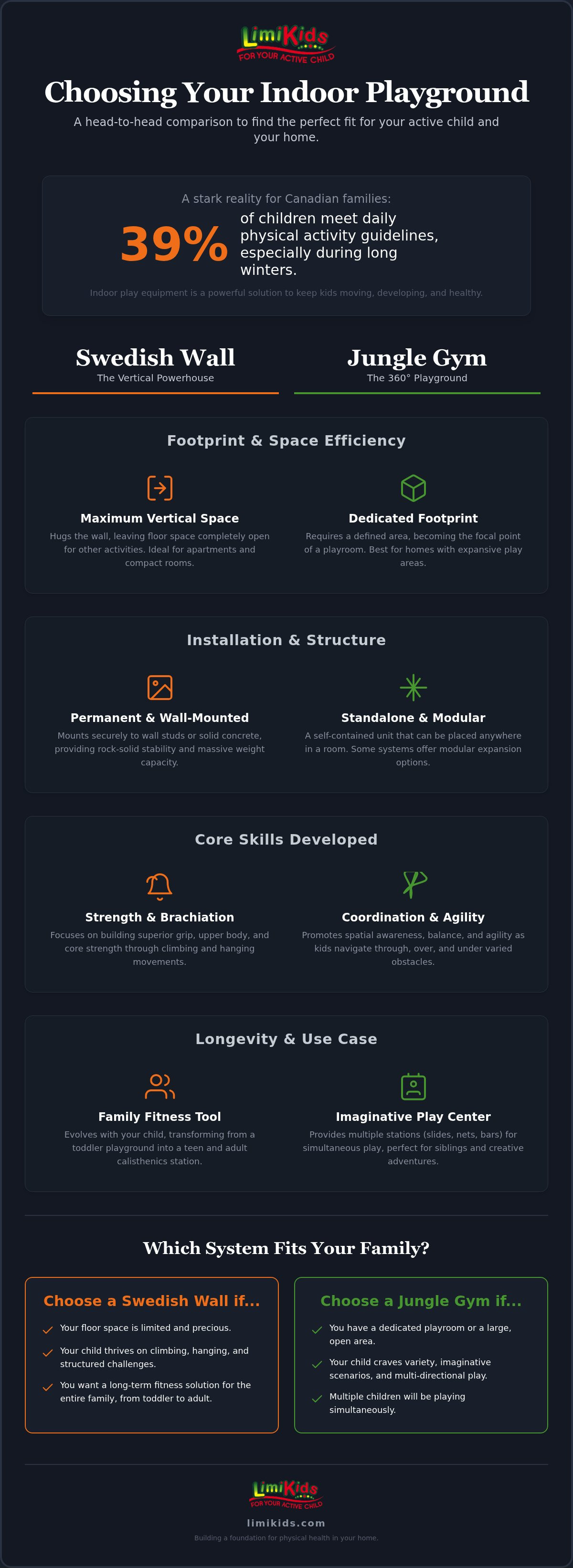
Your home's square footage and ceiling height often dictate the final choice. Swedish walls are the ultimate space-savers. They utilize vertical real estate, leaving your floor clear for other activities. In contrast, jungle gyms require a dedicated footprint. They become the focal point of the room. Consider these core differences when planning your space:
- Structural Integrity: Swedish walls offer massive weight capacities, making them suitable for older children and even adults.
- Play Variety: Jungle gyms provide multiple stations, allowing siblings to play simultaneously without crowding each other.
- Skill Focus: Swedish walls emphasize grip and core strength through climbing; jungle gyms focus on coordination and agility through varied obstacles.
The primary difference in the swedish wall vs jungle gym debate often comes down to your child's natural play style. Do they prefer the challenge of climbing high and hanging? Or do they crave the variety of a sprawling obstacle course? Both systems offer incredible developmental benefits, but matching the equipment to your specific room layout ensures a setup that lasts for years.
The Swedish Wall Gym: A Space-Saving Vertical Powerhouse
Vertical space is a parent’s secret weapon. When comparing a swedish wall vs jungle gym, the Swedish wall wins on efficiency every time. It hugs the wall. It leaves the playroom floor open for other activities. This vertical powerhouse is the ideal solution for Canadian families living in apartments or homes where floor space is a premium. It transforms a bare wall into a launchpad for physical achievement without cluttering your living environment.
Brachiation is the secret science behind these systems. By hanging and swinging from the rungs, children develop incredible upper body strength and grip. This movement isn't just for fun; it builds shoulder stability and functional power that supports sports and daily activities. Unlike temporary toys, these stall bars offer true longevity. They transition effortlessly from a toddler's climbing frame to a teen's calisthenics station. Even adults can use the high weight capacity for pull-ups and core training, making it a permanent fixture for family fitness.
Safety is the foundation of every setup. Structural integrity depends on proper installation. You must mount these systems to wood studs or solid concrete walls to ensure they remain rock-solid during vigorous play. To guarantee your home environment meets the highest standards, always reference the CPSC playground safety guidelines for residential equipment spacing and hazard prevention. A secure installation gives you peace of mind while your children push their physical limits.
Vertical Climbing and Sensory Integration
Climbing is a multi-sensory experience. It improves core stability and helps children understand their body's position in space. Integrating sensory motor equipment for home use is a proven way to help high-energy kids regulate their focus. Swedish walls are frequently favored for sensory processing therapy because they provide the deep pressure and proprioceptive input children crave. It’s a rhythmic, calming way to burn energy after a long day at school.
Attachments That Grow with Your Child
Progression is built into the design. Start your toddlers with low-level climbing to build their confidence. As their coordination peaks, you can add gymnastic rings, trapeze bars, or rope ladders to keep the challenge fresh. Eventually, the top pull-up bar becomes the ultimate tool for teen and adult fitness. This adaptability ensures the equipment never gathers dust. You can explore a variety of kids gym equipment options that adapt to your child's changing developmental needs.
The Indoor Jungle Gym: A 360-Degree Multi-Sensory Playground
If the Swedish wall is a vertical ascent, the jungle gym is a multi-dimensional expedition. It’s the ultimate playground for high-energy kids who need constant variety to stay engaged. While the swedish wall vs jungle gym debate often focuses on space, the real difference lies in the direction of movement. Jungle gyms encourage 360-degree navigation, forcing children to think through, over, and under obstacles. This develops advanced spatial awareness and problem-solving skills on the fly. It also makes these structures the perfect hub for siblings and playdates. Multiple children can explore different zones simultaneously without bumping into each other. You can choose from standalone units that act as a room's centerpiece or modular designs that adapt to your specific floor plan. Flexibility is key when transforming your home into a growth-focused environment.
Climbing on this equipment isn't just about burning off steam. According to the U.S. physical activity guidelines, climbing on playground equipment counts as a vital muscle-strengthening activity for growing bodies. Whether they are swinging from bars, scaling nets, or balancing on beams, they are meeting essential developmental milestones right in your living room. This type of play builds the functional strength that kids need for everything from carrying a heavy backpack to excelling in organized sports. It’s a proactive way to ensure your children stay active even when the weather keeps them indoors.
Mastering Gross Motor Skills with Monkey Bars
Horizontal movement is a game-changer for hand-eye coordination. Integrating monkey bars for kids into your home setup builds the confidence needed to take calculated risks. Children learn to time their swings and judge distances with precision. "The jungle gym creates a seamless 'flow' of play, where a slide leads to a climb, a climb leads to a swing, and every movement sparks a new discovery." This continuous activity keeps the heart rate up and the mind sharp. It’s about building a 'can-do' attitude through physical achievement. By navigating these horizontal challenges, kids develop the grip strength and core stability required for more advanced athletic pursuits later in life.
Material Matters: Wooden vs. Metal Systems
Choosing the right material impacts both the look and the longevity of your gym. Premium wood systems offer a warm, tactile feel that blends beautifully with modern home decor. They provide a natural aesthetic that many parents prefer for sensory-rich environments. On the other hand, metal systems are the champions of durability. They boast higher weight capacities and a "teen-proof" structural integrity that withstands years of heavy use. Metal is often the go-to for families with multiple high-energy kids who need equipment that won't budge. For a deeper analysis of which frame suits your lifestyle, check out our guide on wooden vs metal indoor jungle gym options. Whether you prioritize the organic feel of wood or the permanence of metal, the goal remains the same: creating a safe space for limitless growth.
Head-to-Head Comparison: Footprint, Installation, and Safety
Space is the final frontier in home design. When deciding on a swedish wall vs jungle gym, the most practical factor is the physical footprint. Swedish walls are vertical masters. They require only a few inches of depth from your wall, leaving the rest of the room entirely open. In contrast, jungle gyms are three-dimensional structures that claim significant floor space, often measured in several square feet. This choice depends on whether you have a dedicated playroom or need a fitness solution that blends into a bedroom or hallway without obstructing traffic.
Installation styles also differ between these two systems. Swedish walls are permanent fixtures. They mount directly to your home's structure, offering rock-solid stability for high-intensity climbing. Standalone jungle gyms are often movable. While they are bulky, you can reposition them if you decide to rearrange your furniture. Your choice impacts your budget as well. Because of the size and weight of these frames, they require heavy-duty protection during shipping; to see how industrial-grade items are secured, you can discover Packaging For Industry (PFI). Swedish walls typically represent a lower initial investment for a high-capacity tool, while jungle gyms are a larger investment that provides an all-in-one playground for multiple children at once.
Mounting equipment in Canadian homes requires a basic understanding of your walls. Most modern residential builds use standard 16-inch stud spacing. You must secure your Swedish wall into these wood studs or solid concrete to ensure it stays put during a workout. When you set up a premium kids indoor gym, expect the assembly process to take a few hours. Focus on the details. Look for non-toxic finishes and smooth, polished rungs. These quality markers prevent splinters and ensure the equipment is safe for sensitive skin and curious hands.
Safety Standards and Weight Limits
Residential grade equipment is far from flimsy. High-quality metal systems often feature weight capacities reaching up to 130 kg (approximately 285 lbs), making them durable enough for the whole family. Safety is about more than just weight limits. You must manage your fall zones effectively. A high-quality, thick gym mat is the most important accessory you'll ever buy. It cushions impacts and provides the confidence kids need to try new moves. Supervision remains essential, especially as younger children learn to navigate higher rungs. Match the equipment to your child's age and always ensure the landing area is clear of toys or hard furniture.
Ready to reclaim your space? Explore our full range of indoor playground equipment to find the perfect fit for your home layout.
Making the Final Choice: Which LIMIKIDS System Fits Your Family?
Choosing the right system is about matching your home's DNA with your child's natural drive. You've seen the technical specs. You understand the footprint. Now, it's time to pull the trigger. The swedish wall vs jungle gym decision shouldn't feel like a compromise; it’s an investment in your child's physical literacy. Assess your room one last time. If you have high ceilings but narrow floor space, go vertical. If you have a sprawling basement begging for a centerpiece, go multi-dimensional. Don't just think about today. Consider the "growth" factor. A quality system should serve your family for a decade, not just a season. LIMIKIDS has been the trusted guide for Canadian families since 2008. We design equipment that withstands the test of time and the intensity of high-energy play.
Think about your child's personality. Do they have a "mountain climber" spirit, constantly reaching for the highest point? Or are they "explorers" who love to crawl, hide, and swing across obstacles? Your choice will define their daily movement patterns. A Swedish wall offers a structured path to strength, while a jungle gym provides a canvas for imaginative, free-form play. Both paths lead to the same goal: a confident, active, and healthy child who isn't afraid to tackle physical challenges. Trust your instincts as a parent. You know how they play best.
The Case for the Swedish Wall
Choose the Swedish wall if you live in an apartment or want to keep the bedroom floor clear for other activities. It’s a permanent fitness anchor that maximizes every inch of vertical real estate. It adds an immediate "cool factor" to any room, transitioning seamlessly from a toddler's ladder to a teen's workout station. For parents who value self-directed discovery, this is a top-tier choice for Montessori play equipment. It encourages independence and builds foundational grip strength in a compact, sleek package that never looks like clutter.
The Case for the Jungle Gym
Select the jungle gym for the ultimate "wow" factor. It’s the undisputed king of social play. If your home is the neighborhood hub for playdates, this system provides the variety needed to keep multiple kids moving simultaneously without conflict. It’s a 360-degree discovery zone that turns any large playroom or basement into a professional-grade active space. It demands attention and rewards that attention with endless hours of variety. Ready to transform your home into a space of growth and activity? Explore our indoor jungle gyms to find the perfect match for your high-energy household.
Transform Your Home Into an Active Discovery Zone
Your home is the primary stage for your child’s physical development. Deciding on a swedish wall vs jungle gym is the first step toward transforming your living space into a hub of growth and movement. Whether you prioritize the vertical efficiency of stall bars for strength training or the 360-degree variety of a multi-sensory jungle gym, you're investing in your child's long-term health. These systems aren't temporary toys. They're durable, high-capacity tools designed to evolve with your family from toddlerhood through the teen years.
LIMIKIDS has been Canadian owned and operated since 2008. We take pride in providing premium materials that are rigorously safety tested for residential use. With fast shipping across Canada, your new indoor playground is closer than you think. Don't let another long winter keep your kids on the couch. Empower their success with a setup that challenges their limits and builds their confidence every single day.
Shop the Full LIMIKIDS Collection of Indoor Gyms and start your family's active journey today!
Frequently Asked Questions
Is a Swedish wall gym safe for drywall?
A Swedish wall gym is only safe for drywall if you mount it directly into the wood studs behind the wall. Drywall is a brittle material. It cannot support the dynamic weight of a climbing child or adult alone. Always use a stud finder to locate the structural framing. If you have metal studs or unusual wall types, you might need additional blocking or specialized hardware to ensure the system remains rock-solid.
What age is best for an indoor jungle gym?
Most indoor jungle gyms are designed for children between 18 months and 10 years old. Early introduction helps toddlers develop basic motor skills and balance. As they grow, the complexity of the movements increases. Look for systems that meet safety standards like ASTM F1148-22. This ensures the equipment is developmentally appropriate and safe for the specific weight and agility levels of growing kids. It’s an investment in their long-term physical success.
How much space do I really need for an indoor gym?
Your space requirements depend on the system you choose. A Swedish wall only needs about 6 to 10 inches of depth from the wall. However, an indoor jungle gym requires a larger horizontal footprint, often several square feet of open floor. Regardless of the choice in the swedish wall vs jungle gym debate, always maintain a clear fall zone of at least six feet. This safety buffer prevents collisions with furniture during play.
Can adults use a Swedish wall for pull-ups?
Yes, adults can absolutely use a Swedish wall for pull-ups and core exercises. Many premium metal models feature a high weight capacity of up to 130 kg, which is roughly 285 lbs. This makes the equipment a versatile fitness tool for the entire family. It transitions perfectly from a child’s play area to an adult’s calisthenics station. Just ensure the wall mounting is secure and verified before beginning any high-intensity adult strength training workouts.
Do I need a professional to install a Swedish wall?
Professional installation isn't mandatory, but you do need basic DIY skills and the right tools. You must be comfortable locating wall studs and using a drill to secure the mounting brackets safely. Following the manufacturer’s instructions is critical for structural integrity. If you aren't confident in your ability to find structural supports or handle a power drill, hiring a local handyman is a smart way to ensure total peace of mind for your family.
What is the difference between a Swedish ladder and stall bars?
There is no functional difference between a Swedish ladder and stall bars. Both terms describe a vertical ladder system used for gymnastics, physical therapy, and fitness. The name Swedish ladder refers to its historical origins. Stall bars is a common term used in modern gym environments. When comparing a swedish wall vs jungle gym, remember that these vertical systems focus on structured climbing and upper body strength rather than multi-directional exploration or imaginative play.
Are indoor jungle gyms better than outdoor ones for Canadian winters?
Indoor jungle gyms are superior for Canadian families because they provide a climate-controlled environment for year-round activity. Outdoor sets become slippery, icy, and dangerous during the colder months. Having a dedicated indoor space ensures your kids stay active even when the sun sets early. These systems transform your home into a safe, warm sanctuary where kids can burn energy and build strength regardless of the snow or freezing temperatures outside your window.
What kind of safety mat should I use under my climbing frame?
Use a thick, high-density foam mat specifically designed for gymnastics or active play. A thickness of at least 2 inches is recommended to absorb impact and protect against falls. Ensure the mat covers the entire fall zone around the equipment. Non-slip surfaces are essential to prevent the mat from sliding during vigorous movements. Choosing a high-quality mat is the most important step in creating a safe, injury-free environment for your children to explore.