






Home Sensory Room Equipment: 2026 Parent's Guide
Fidget toys and hand-held gadgets are just Band-Aids when your child's nervous system is screaming for real, impactful movement. You’ve likely felt the frustration of a living room cluttered with small toys that fail to provide the deep sensory input your child actually craves. Stop managing the clutter and start building a foundation for growth. Investing in the right sensory room equipment for home means moving beyond distraction and toward true developmental progress.
You want a home that supports focus and calm without sacrificing your entire floor plan. We'll show you how to transform even the smallest Canadian living space into a high-impact sensory haven that drives measurable gains in motor skills and self-regulation. This 2026 guide covers everything from space-saving Swedish walls to professional-grade climbing frames designed for maximum safety. Get ready to create a designated zone where your child can safely push their limits and find their balance.
Key Takeaways
- Identify the specific "heavy work" tools that provide the deep sensory input your child needs for better focus and regulation.
- Learn how to select high-impact sensory room equipment for home that fits perfectly into small Canadian floor plans without sacrificing durability.
- Understand the difference between active and passive play to ensure your gear supports long-term gains in motor skills.
- Explore the critical safety features and weight limits that guarantee your indoor gym grows alongside your child for a decade.
- Discover how professional-grade climbing equipment encourages independent play and reduces the need for constant parental intervention.
What is Sensory Integration Equipment for Home?
Sensory integration equipment for home isn't just a collection of toys; it’s a specialized toolkit for your child's nervous system. These tools provide specific tactile, vestibular, and proprioceptive input to help a child process the world around them. Think of it as fuel for development. When you bring this gear into your living space, you're giving your child the power to self-regulate on their own terms. It turns a standard room into a proactive environment for growth.
This approach centers on the "Sensory Diet" concept. Just as we need food to nourish our bodies, many children need specific movement "snacks" throughout the day to nourish their brains. Home access is a total game-changer. Instead of waiting for a weekly therapy appointment, your child can access the input they need the moment they feel overwhelmed or under-stimulated. Play is the essential work of a child’s nervous system. We are shifting the focus away from clinical therapy and toward functional, active home play that fits your family's lifestyle.
The Power of Heavy Work in Sensory Regulation
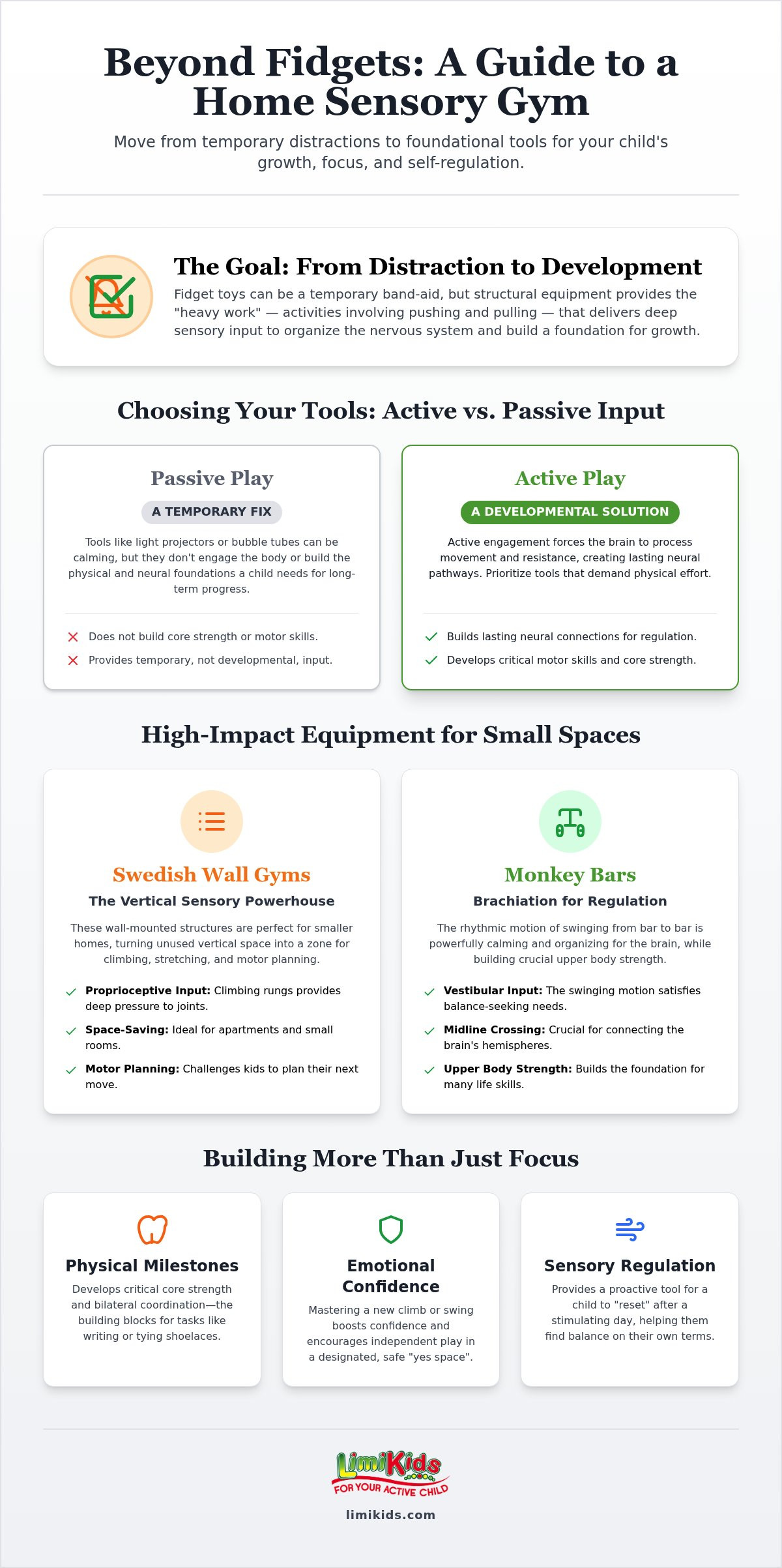
Heavy work refers to any activity that pushes or pulls against the body. It’s the gold standard for sensory regulation. While small fidgets have their place, structural sensory room equipment for home provides superior deep pressure that handheld toys simply can't match. When a child climbs a ladder or hangs from monkey bars, their joints and muscles send powerful signals to the brain that help organize the nervous system.
This deep pressure acts as a natural anchor. It helps ground a child, which leads to improved focus and a noticeable decrease in anxiety. Consistent access to heavy work allows a child to "reset" after a long school day or a high-stimulation event. It’s a proactive tool that builds peace of mind for the whole family.
Building More Than Just Focus: Physical Milestones
A well-equipped sensory zone does more than just calm a child; it builds a stronger, more capable body. Activities like climbing and swinging develop critical core strength and bilateral coordination. These are the vital building blocks for daily tasks like sitting upright at a desk or tying shoelaces. You aren't just buying equipment; you are investing in their physical independence.
The emotional impact is just as vital. When children master a new climbing challenge independently, their confidence sky-rockets. You are creating a designated "yes space." This is a zone where high-energy children can jump, hang, and explore without restriction. In a world full of "don't touch that" and "sit still," this safe haven allows their physical development to take center stage.
Essential Equipment for Proprioceptive and Vestibular Input
Passive tools like bubble tubes or light projectors have their place, but they don't build the physical foundations your child needs. True sensory integration happens when the body is active. Active engagement forces the brain to process movement and resistance simultaneously, creating lasting neural pathways. When you choose sensory room equipment for home, prioritize tools that demand effort. Passive input is a temporary fix; active play is a developmental solution.
Proprioceptive input is all about deep joint awareness. It’s the sense that tells your child where their limbs are in space. By pushing and pulling against structural equipment, children receive the resistance their muscles crave. Vestibular input, on the other hand, deals with balance and spatial orientation. While many parents think of swings first, climbing frames offer a much more complete sensory profile. They combine the movement of a swing with the intense resistance of a climb, satisfying both systems at once.
Swedish Wall Gyms: The Vertical Sensory Powerhouse
Vertical space is often ignored in home design, but it’s a gold mine for sensory input. Swedish wall gyms for kids provide essential climbing opportunities that challenge every muscle group. The rungs of a ladder and the texture of a climbing rope force a child to use motor planning. They must decide where to put their hands and feet next, which sharpens their focus. These wall-mounted therapy structures are incredibly space-saving. They are perfect for modern Canadian homes where floor space is at a premium but the need for movement is high.
Monkey Bars and Brachiation Tools for Regulation
Monkey bars are more than just playground fun. They are powerful tools for brachiation, the act of moving by swinging from one hold to another. This motion helps children master upper body strength and cross the midline, which is vital for brain development. The rhythmic reach and pull motion has a profound calming effect on the brain. It helps organize thoughts and reduce sensory overload.
Integrating monkey bars into a sensory motor equipment for home setup gives your child a reliable way to burn off steam and find their center. It builds confidence through physical achievement. If you want to see how these tools fit into your space, check out our collection of indoor climbing equipment. You can transform a hallway or a bedroom corner into a high-performance regulation zone in no time.
Designing a Functional Sensory Gym in Small Spaces
Forget the idea that you need a massive basement or a dedicated wing of the house to support your child's needs. Many Canadian families live in urban condos or homes where every square metre counts. You don't need a spare room to install high-impact sensory room equipment for home. You just need to change your perspective. By shifting from horizontal floor play to vertical exploration, you can build a professional-grade therapy zone in the corner of a bedroom or a shared living area.
The key to a successful small-space gym is defining the "yes space" with safety flooring. High-density foam mats or rubber tiles do more than just absorb impact. They create a visual boundary that tells your child exactly where high-energy play happens. This psychological cue helps keep the rest of your home organized while giving your child the freedom they crave. Modular designs are your best friend here. They allow you to swap accessories like rings or ropes, keeping the environment fresh without requiring more floor space.
Vertical Solutions for Modern Canadian Living
Wall-mounted gym systems are the ultimate space-savers for national families. Swedish ladders hug the wall, extending only a few inches into the room while providing a full circuit of movement. You can transform a single empty wall into a powerhouse of proprioceptive input. When mounting, structural integrity is everything. Most Canadian homes feature studs spaced 16 inches apart. Always secure your equipment directly into these studs rather than relying on drywall anchors. This ensures the frame can handle the intense "heavy work" required for regulation.
Balancing Active and Calming Zones
A functional sensory gym should handle both high-energy bursts and quiet resets. Use lighting and varied textures to offset your climbing area. A simple dimmable lamp or a textured rug near the base of the ladder helps a child transition from active climbing to a state of calm. Visual boundaries are vital. They help a child’s brain categorize the space, making it easier to switch from "play mode" to "focus mode."
Rotating your accessories is a pro move to prevent sensory habituation. If a child uses the same climbing rope every day, their brain eventually stops working as hard to process the movement. By swapping a rope for gymnastic rings or a trapeze bar every few weeks, you keep the neural challenge high. This ensures your investment in sensory room equipment for home continues to deliver developmental ROI for years to come.
Safety and Durability Standards for Home Therapy Gear
Safety is the heartbeat of your home sensory setup. It isn't a secondary concern; it's the foundation of every successful session. When your child is hanging, swinging, or climbing, you need absolute confidence in the structural integrity of your gear. High-impact play demands high-grade materials that can withstand the intense forces of "heavy work." Professional engineering is non-negotiable here. DIY or uncertified solutions often lack the stress-testing required to keep your child safe during vigorous movement.
Your investment should grow with your family. Check weight limits carefully to ensure the equipment handles a toddler today and a growing child tomorrow. Stability is about more than just weight capacity. It's about how the unit handles lateral forces during active play. Non-toxic, eco-friendly finishes are also essential. Children have close contact with their equipment, so every surface must be safe for skin and free from harmful chemicals. Prioritizing these standards ensures your sensory room equipment for home remains a safe haven for years.
Material Comparison: Metal vs. Wood
Choosing between wooden vs metal indoor jungle gyms often depends on your home’s aesthetic and your child’s specific sensory needs. Metal frames are the workhorses of the sensory world. They typically offer higher weight capacities and require zero maintenance over time. Wooden options provide a natural look that blends seamlessly into modern Canadian home designs while offering a warmer, organic tactile experience. Both materials are excellent choices as long as they are built to professional standards rather than as simple toys.
Reputable Safety Certifications and Testing
Look for a manufacturer’s safety profile that includes rigorous load testing and quality control. Every piece of equipment should feature rounded edges to prevent scrapes during high-energy play. Hardware must be recessed or covered to avoid snagging clothing or skin. Routine maintenance is your part of the safety pact. Spend five minutes once a month checking bolts to ensure everything remains tight and secure. This simple habit protects your child and extends the life of your equipment. Ready to build a safe, durable haven? Explore our collection of safety-tested indoor gyms and start your journey today.
Why Premium Indoor Gyms are the Ultimate Sensory Tool
Stop spending money on disposable plastic toys that lose their appeal in a week. When you invest in high-quality sensory room equipment for home, you are choosing a tool that serves your child for a decade. A structural indoor gym provides a massive developmental return on investment. It evolves as your child grows, shifting from a simple climbing frame for a toddler to a complex fitness station for a teenager. This longevity is what separates professional-grade gear from the clutter of the toy aisle.
The real magic happens when your child begins to lead their own regulation. Premium gyms empower independent play. They give your child a safe, predictable outlet to test their limits without needing your constant intervention. This alignment with Montessori play equipment principles encourages active discovery and self-correction. Your child learns to listen to their body, find their balance, and reset their own nervous system. It’s a gift of confidence that lasts a lifetime.
The LIMIKIDS Difference: Quality for National Families
LIMIKIDS has been serving Canadian families since 2008. We understand the specific challenges of our climate and our homes. Our space-saving Swedish wall gyms are built with safety-tested materials that handle the most intense heavy work sessions. We don't just sell equipment; we provide a foundation for your child's success. With fast shipping across Canada, you can start seeing a developmental impact almost immediately. Our support team knows the unique needs of sensory families and is ready to help you find the perfect fit for your floor plan.
Your 3-Step Plan to a Home Sensory Gym
Building your haven doesn't have to be overwhelming. Follow this simple path to get started:
- Step 1: Assess primary sensory needs. Determine if your child is a "sensory seeker" who needs high-impact movement or a "sensory avoider" who requires a steady, calming resistance.
- Step 2: Measure your space and select a foundational gym. Choose a wall-mounted Swedish ladder or a freestanding frame that serves as the anchor of your sensory zone.
- Step 3: Customize with modular accessories. Add rings, ropes, or monkey bars to tailor the experience to your child’s current physical milestones.
You have the power to transform your home into a space of growth and activity. By choosing the right sensory room equipment for home, you are taking a proactive step toward your child's focus, strength, and emotional peace. The journey to a more regulated household starts with a single, structural change. Let's get moving.
Empower Your Child’s Developmental Journey Today
Your home has the potential to be a powerhouse of growth. By choosing structural heavy work over small distractions, you provide the deep sensory input your child needs to thrive. Remember that vertical space is your secret weapon. A single wall can transform into a life-changing regulation zone. High-quality safety standards ensure this investment grows with your family for years. Investing in premium sensory room equipment for home is more than a purchase; it's a commitment to your child's daily focus and physical confidence.
LIMIKIDS has supported Canadian families with expert advice since 2008. We provide premium safety-tested materials designed for the rigors of active play. With fast shipping across Canada, your new sensory haven is closer than you think. Take the proactive step toward a more regulated household today. You have the tools and the plan. It's time to watch your child reach new heights!
Shop Premium Sensory Integration Equipment at LIMIKIDS
Frequently Asked Questions
What is the best sensory equipment for a child with autism?
Structural heavy work tools like climbing gyms or Swedish walls are often the most effective for children with autism. These provide deep proprioceptive input that helps organize the nervous system. Unlike small toys, structural sensory room equipment for home offers the resistance needed for calming and regulation. Focus on equipment that encourages active movement and weight-bearing activities to help with body awareness and focus during the day.
How much space do I need for an indoor sensory gym?
You can create a high-impact sensory zone in as little as 10 to 15 square feet by utilizing vertical space. Wall-mounted Swedish ladders are perfect for modern Canadian homes because they extend only a few inches from the wall. If you have more room, a footprint of 4x6 feet allows for a more comprehensive setup with swings and monkey bars. Always prioritize a clear "yes space" for safe exploration.
Can sensory integration equipment be used for children without special needs?
Yes, every child benefits from movement that builds core strength, coordination, and confidence. Active play is the foundation of healthy physical development for all kids. Structural equipment like climbing frames and monkey bars helps burn off excess energy and improves focus for schoolwork. It turns any room into a proactive environment for growth, regardless of a child's specific sensory processing profile or developmental milestones.
Is home sensory equipment safe for toddlers?
Home sensory equipment is safe for toddlers when it is professionally engineered and used under adult supervision. Look for features like rounded edges, recessed hardware, and non-toxic finishes. Start with foundational pieces like low climbing rungs or soft mats. As your child develops better motor skills, you can gradually introduce more complex challenges. Always ensure the equipment is securely mounted to wall studs for maximum stability during play.
How does climbing help with sensory processing disorder (SPD)?
Climbing provides intense proprioceptive and vestibular input that helps "reset" a child's nervous system. It forces the brain to engage in motor planning, as the child must decide where to place each hand and foot. This rhythmic, heavy work calms the fight-or-flight response often associated with SPD. By pushing against gravity, children develop better joint awareness and a stronger sense of where their body is in space.
What is the difference between a regular indoor playground and a sensory gym?
A regular indoor playground focuses on entertainment, while a sensory gym is designed for specific developmental outcomes. Sensory gyms use structural equipment to provide targeted "heavy work" that supports self-regulation. While a playground might be chaotic, a home sensory zone is a controlled environment. It allows for a customized sensory diet that addresses a child's unique needs for vestibular input or deep muscle resistance.
How do I choose between a wooden or metal sensory gym?
Choose metal for maximum weight capacity and zero maintenance, or wood for a natural look that fits your home decor. Metal frames are often more modular, allowing you to easily swap accessories like rings or ropes. Wooden gyms provide a warmer tactile experience but may require occasional checks for wear. Both materials are excellent for sensory room equipment for home as long as they meet professional safety standards.
Do I need a professional to install a Swedish wall gym at home?
Most parents can install a Swedish wall gym themselves if they are comfortable locating wall studs and using a drill. These units are designed for straightforward home assembly with standard tools. If you are unsure about your home’s structural integrity or mounting to specific surfaces, consulting a local handyman is a smart move. Always ensure the unit is bolted directly into studs to handle the forces of active play.