






Sensory Seeking Toys: Parent's Guide to Active Regulation
Your child isn't trying to wreck the living room. They're just following a biological drive to move, climb, and push their limits. It's called "heavy work," and it's the key to selecting the most effective sensory seeking toys for home to help your child feel grounded. You're likely exhausted from acting as a human safety net while they scale the bookshelves or leap off the sofa. We understand the struggle of trying to keep a high-energy child safe and regulated in a small indoor space.
The right equipment does more than just distract; it empowers. Instead of cheap plastic gadgets that break in a week, you need durable tools that challenge their muscles and calm their minds. In this guide, we'll show you how to transform your house into a powerhouse of growth and focus. You'll discover how specific indoor climbing frames and sensory equipment can lead to a more peaceful home and a child who can self-regulate through active play. Let's build a space where "big energy" becomes a massive developmental advantage.
Key Takeaways
- Learn why your child's "big energy" is actually a neurological drive for regulation and how to meet that need safely at home.
- Understand the science of "Heavy Work" and why climbing provides the deep proprioceptive input required for lasting focus.
- Discover why large-scale sensory seeking toys for home offer significantly more regulation "bandwidth" than small handheld fidgets.
- Master the art of the "Sensory Sanctuary" using space-saving vertical designs that transform small rooms into high-impact growth zones.
- Identify the critical safety and durability standards necessary for choosing indoor equipment that grows with your child for years to come.
Understanding Sensory Seeking: Why Your Home Needs a Play Revolution
Stop viewing the climbed bookshelf or the jumped-on sofa as a behavioral problem. It's actually a physiological signal. Your child isn't trying to be difficult; they're hunting for the neurological input their brain needs to feel calm and organized. This drive is called sensory seeking. For many children, especially those navigating Sensory Processing Disorder (SPD), movement is a form of medicine. It's how they regulate their emotions and sharpen their focus.
Modern indoor environments are often "sensory deserts." We've traded wide-open spaces for screen time and structured seating. This creates a massive gap between what a child's body needs and what their environment provides. When you introduce high-quality sensory seeking toys for home, you aren't just buying playthings. You're installing a regulation station. You're giving them a safe, designated outlet for that "big" energy that currently overflows onto your furniture. Let's flip the script. Transform those "problem behaviors" into vital developmental milestones by providing the right tools for the job.
The Three Systems: More Than Just Five Senses
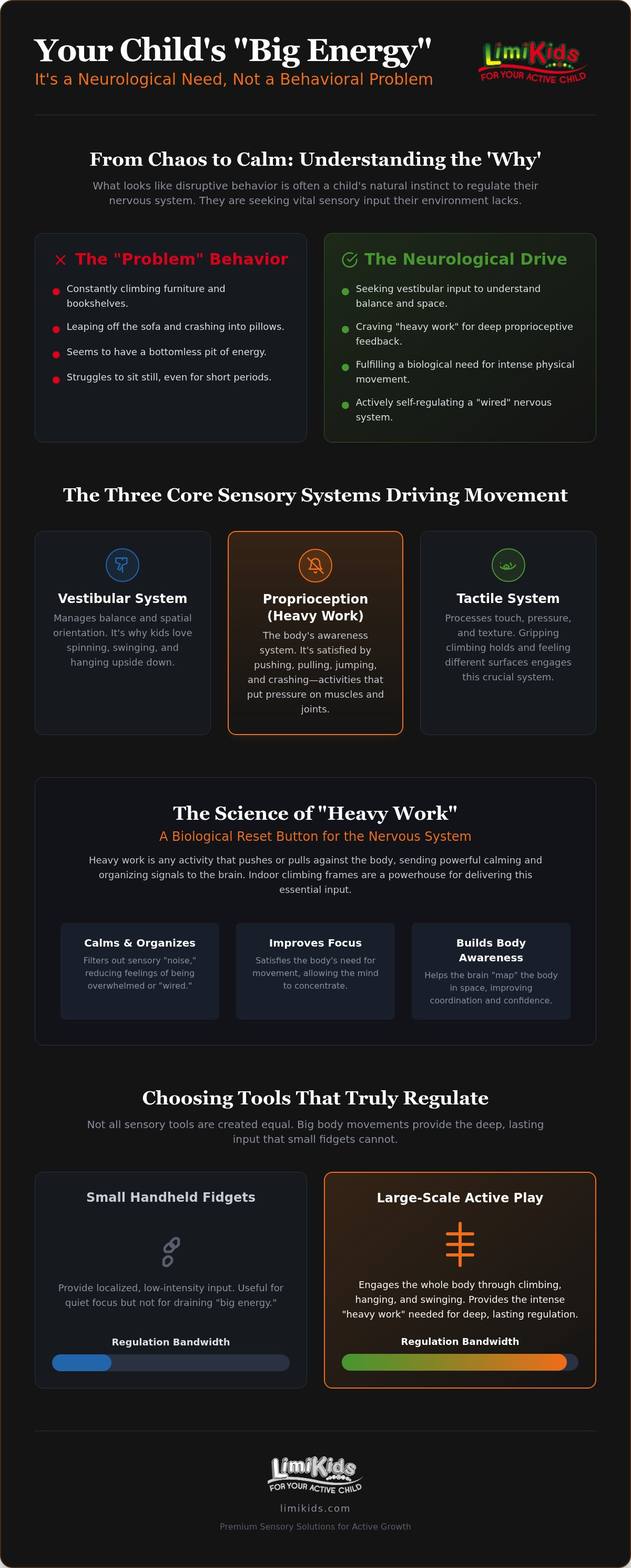
To support your child, you must look beyond sight and sound. Three hidden systems drive most sensory seeking behaviors. First, the Vestibular system manages balance and spatial orientation. It's located in the inner ear and craves spinning, swinging, and tilting. Second, Proprioception is the "heavy work" system. It tells the brain where the body is in space through muscle and joint pressure. This is why kids love to crash, jump, and hang. Finally, the Tactile system processes touch. In an active play environment, this involves feeling different textures and temperatures while climbing or gripping. Balancing these three systems is the secret to a regulated child.
Signs Your Child is a Sensory Seeker
Do you have a "crasher" who hurls themselves into the sofa? Perhaps you have a "climber" who treats your kitchen cabinets like a mountain range. These are classic signs of a seeker. These children often seem to have a bottomless pit of energy. They don't get dizzy easily and they might struggle to sit still for even five minutes.
There's a direct link between this physical movement and emotional stability. When a seeker doesn't get enough input, they often become irritable, anxious, or "wired." You might find that "quiet time" is impossible because their body is still buzzing. The solution is counterintuitive: you must provide "active time" first. By using effective sensory seeking toys for home, you allow them to "drain the tank" and fulfill their neurological needs. Once the body is satisfied, the mind can finally rest.
The Science of Heavy Work: Proprioception and Vestibular Input
Heavy work refers to any task or activity that pulls or pushes against the body. It's the gold standard for neurological regulation. When a child engages in these intense physical movements, they provide their brain with the critical data it needs to "map" the body in space. This process filters out background noise, improves focus, and creates a calmer, more organized nervous system. Think of it as a biological reset button for a child who feels "wired" or out of sync.
Indoor climbing frames are powerhouses for this kind of input. Every step up a ladder or pull on a bar sends deep pressure signals through the muscles and joints. Understanding the difference between sensory seeking and sensory avoiding behaviors is vital here. Seekers specifically crave this high-intensity feedback to feel grounded. By providing dedicated sensory seeking toys for home, you give them a safe way to meet these needs without sacrificing your furniture.
Why Hanging and Climbing Matter
Brachiation, or the act of swinging by the arms, is a developmental miracle. It builds massive upper body strength and core stability while challenging the vestibular system. This system, located in the inner ear, manages balance and movement. Hanging and swinging help the brain process changes in speed and direction, which is essential for physical safety and coordination. Vertical climbing also builds complex neural pathways as children learn to move their limbs in opposition. This bilateral coordination is a foundational skill for everything from riding a bike to writing with a pencil.
Joint compression is the secret sauce of active play. When a child hangs from monkey bars or pushes their weight against a climbing wall, their joints receive "heavy" calming signals. This type of sensory seeking toys for home is often more effective than quiet activities because it meets the body’s demand for high-bandwidth input. It’s the difference between a snack and a full meal for the nervous system.
From Chaos to Coordination
Moving from random jumping on the couch to purposeful climbing on a structured frame changes the neurological outcome. Structured sensory play reduces the frequency and intensity of meltdowns. It replaces frantic energy with intentional, goal-oriented movement. As children master new physical challenges, their anxiety levels often drop. They move from a state of "chaos" to one of "coordination."
Each conquered rung on a ladder builds tangible confidence. Your child learns that their body is capable, strong, and under their control. This sense of mastery is a powerful tool for emotional regulation. You can see how indoor climbing equipment turns a restless afternoon into a productive session of growth and discovery. This transition isn't just about burning off steam; it’s about building a more resilient child.
Small Fidgets vs. Big Movement: Choosing Toys That Actually Regulate
Think of sensory input like data bandwidth. A small fidget spinner or a squishy ball provides a tiny, narrow stream of information to the brain. For a child who is constantly on the move, this is often just a "snack" when their body is starving for a full meal. Handheld toys are frequently used as band-aids for deeper sensory needs. While they might help a child stay still for a few minutes at the dinner table, they don't solve the underlying drive for intense physical feedback. To achieve true regulation, you need to provide high-bandwidth "heavy work" that engages the entire body.
We advocate for a "Play Gym First" approach to home design. Before you fill another bin with small plastic trinkets, look at your vertical space. Large-scale equipment provides the massive neurological "nutrients" that seekers crave. If you want to understand how to balance these tools effectively, read our comprehensive Sensory motor equipment for home: Parent’s Guide. By prioritizing big movement, you address the root of the seeking behavior rather than just managing the symptoms. This strategy transforms your living space into a functional environment where your child can thrive.
When to Use Small Sensory Tools
Small tools have a specific, valuable niche. Fidgets are the perfect solution for car rides, doctor’s waiting rooms, or maintaining focus during a school lesson. They are "focus filters" rather than "energy burners." Similarly, weighted blankets and calming lamps play a vital role in the "cool down" phase of a child's day. These tools help signal to the nervous system that it's time to transition from high-intensity play to rest. However, for a true seeker, these items have clear limitations. They cannot provide the deep joint compression or the complex vestibular challenge required for successful Sensory Integration.
The Power of Indoor Climbing Frames
An indoor climbing frame is a powerhouse of regulation. A Swedish wall gym, for example, offers more sensory engagement in a single square meter than a box full of handheld toys. These frames allow for hanging, swinging, and inverted play, which are the most potent forms of heavy work. When selecting sensory seeking toys for home, focus on investment-grade durability. Cheap plastic toys often flex or tip, which can cause anxiety for a child seeking stability. High-quality steel or wood equipment provides the rock-solid reliability they need to push their physical limits safely. Versatile additions like monkey bars and rope ladders ensure the equipment grows with your child, providing varied input for years of active growth.
Setting Up Your Sensory Sanctuary: A Room-by-Room Guide
Don't let a small floor plan limit your child's developmental growth. Most parents believe they need a dedicated playroom to house effective sensory seeking toys for home. This is a myth. The secret lies in verticality. By utilizing wall-mounted systems, you reclaim your floor space while providing a high-impact regulation zone. You can transform a narrow hallway or a corner of a bedroom into a powerhouse of physical activity without cluttering your living environment.
Safety remains the top priority in any home setup. You must invest in high-density safety mats that provide adequate cushioning for jumps and accidental slips. Ensure every piece of equipment has a clear "fall zone" free of sharp furniture or hard corners. If you are unsure which setup fits your specific layout, check out The Ultimate Guide to Choosing an Indoor Home Gym for Kids in 2026 for detailed dimensions and installation tips. Proper planning ensures that active play stays safe and stress-free for everyone.
The Bedroom Gym: Sleep Through Regulation
Sleep is often the greatest challenge for a sensory seeker. Their bodies often feel "buzzing" or restless long after the lights go out. A targeted 15-minute session of heavy work before bed can be a game-changer. Engaging in deep muscle work on space-saving Swedish ladders helps "drain the tank" of excess energy. This physical exertion triggers the release of calming neurotransmitters, making the transition to sleep much smoother.
Try creating a dual-zone environment in the bedroom. Place your climbing equipment on one wall and a "calm-down corner" with soft pillows and low lighting directly adjacent. This allows your child to move from high-intensity input to a state of relaxation within the same safe space. This rhythm teaches them to recognize their own needs and manage their energy levels independently.
Living Room Integration: Active Play for the Whole Family
Movement shouldn't be hidden away in a basement. Making physical activity a visible, normal part of your family's daily life encourages a culture of health and regulation. You can choose equipment that complements your home decor. Wooden frames offer a warm, Montessori-inspired aesthetic that blends perfectly with modern furniture. Alternatively, metal systems provide a sleek, industrial look that denotes strength and durability.
Setting clear boundaries is essential for communal spaces. Establish "gym rules" just like you would for any other shared area. This might include "mats out before climbing" or "one person on the rope at a time." When movement is integrated into the heart of the home, it becomes a tool for the whole family. You'll find that having indoor climbing equipment readily available reduces the urge for children to climb on unsafe furniture, creating a more peaceful environment for everyone.
LIMIKIDS: Premium Sensory Solutions for Active Growth
Finding the right tools shouldn't be a guessing game. You've seen how heavy work transforms a child's focus and mood. Now, you need equipment that matches that intensity. LIMIKIDS stands as the Canadian leader in high-performance indoor climbing equipment. We don't just sell toys; we provide the structural foundation for your child's physical and neurological development. Our gear is engineered to withstand the most enthusiastic "crashers" and "climbers" while keeping your home environment organized and safe.
Structural integrity is our baseline. Every indoor home gym we provide is built from premium materials designed for long-term durability. We understand that sensory seeking toys for home are a serious investment in your child's well-being. That's why our designs prioritize permanence over the flimsy, disposable nature of typical plastic playsets. Our equipment meets rigorous safety standards, giving you the peace of mind to let your child explore their physical limits without hesitation. You get the serious voice of an expert combined with the infectious joy of active play.
Why Canadian Families Choose LIMIKIDS
Experience matters when it involves pediatric wellness. Since 2008, we've helped thousands of Canadian families reclaim their living spaces from chaos. We are a national company that understands the specific needs of our climate. When the winter months keep everyone indoors, our equipment turns your home into a sanctuary of movement. We offer fast shipping across Canada, ensuring your solution arrives exactly when you need it most. Our team isn't just a group of retailers. We are a knowledgeable resource dedicated to helping you choose the perfect setup for your child's unique sensory profile.
Take the Leap to Better Play
Your child's needs will change as they grow. Our modular philosophy ensures your equipment evolves alongside them. You can start with a basic Swedish wall and add monkey bars or rope ladders as their strength increases. This "Grow-with-Me" approach makes our sensory seeking toys for home a lasting part of your family's story. It's time to stop managing "problem behaviors" and start celebrating physical achievements. Empower your child with the gift of movement. Reclaim your furniture and transform your house into a space of active growth. Explore our full range of sensory play equipment today and build the regulated, joyful home your family deserves.
Build a Home Where Every Jump Counts
Transforming your house into a sensory sanctuary is about more than just clearing floor space. It's about recognizing that your child's need for movement is a biological necessity for regulation and focus. By prioritizing high-impact heavy work over small gadgets, you provide the neurological nutrients they crave. You've learned how vertical climbing frames and purposeful play can replace the chaos of furniture climbing with safe, developmental milestones. It's time to stop acting as a temporary safety net and start acting as an empowering guide.
Choosing the right sensory seeking toys for home ensures your child has a dedicated outlet for their big energy every single day. At LIMIKIDS, we've been trusted by Canadian parents since 2008 to provide equipment with expert-approved structural integrity. Our modular systems grow with your child, offering a permanent solution for active regulation. With fast shipping across Canada, your family's play revolution is just a few clicks away. Take the first step toward a more peaceful, focused home environment today.
Shop Premium Sensory Play Equipment at LIMIKIDS and empower your child to reach new heights of confidence and calm.
Frequently Asked Questions
What are the best sensory seeking toys for toddlers at home?
The best tools for toddlers focus on gross motor development and tactile exploration. Indoor jungle gyms and Montessori play equipment are top choices because they encourage natural movement. These systems allow toddlers to pull, push, and climb in a safe environment. Unlike small plastic gadgets, these larger structures provide the intense proprioceptive input that young children need to develop body awareness and coordination during their most active years.
Can indoor climbing equipment help children with autism or ADHD?
Yes, these tools are highly effective for children with neurodivergent needs. Climbing provides "heavy work" that helps organize the nervous system. For a child with autism or ADHD, the rhythmic and intense nature of climbing can reduce anxiety and improve focus. It gives them a designated outlet for energy that might otherwise lead to meltdowns. This physical feedback is essential for successful sensory integration at home.
How much space do I need for an indoor sensory gym?
You don't need a dedicated playroom to install effective sensory seeking toys for home. Space-saving Swedish wall designs are specifically engineered for modern Canadian homes. These units mount directly to the wall and extend only a few inches into the room. You simply need enough floor space for a safety mat and a clear fall zone. This vertical approach turns any corner into a high-impact regulation station.
Are indoor monkey bars safe for low ceilings?
Indoor monkey bars are often designed with adjustable heights to accommodate standard residential ceilings. Many models are compact enough to fit in basements or bedrooms with lower clearances. You should always measure your ceiling height and check the product specifications before installation. When paired with high-density safety mats, these bars provide a safe way for children to swing and hang, even in smaller indoor spaces.
What is "heavy work" and how does it help sensory seekers?
Heavy work refers to any physical activity that pulls or pushes against the muscles and joints. It provides deep proprioceptive input that tells the brain where the body is in space. For sensory seekers, this input acts as a "reset button" for the nervous system. It helps them feel grounded, calm, and organized. Activities like climbing, hanging, and pushing are the most effective forms of heavy work available indoors.
How do I choose between a wooden or metal indoor gym?
Your choice depends on your aesthetic preference and specific durability needs. Wooden gyms offer a warm, natural look that blends seamlessly with Montessori-inspired decor. Metal gyms often provide higher weight capacities and more modular attachments, such as rope ladders or monkey bars. Both options from LIMIKIDS feature expert-approved structural integrity. Consider your child's age and the intensity of their play when selecting the best material for your home.
Will a sensory gym help my child sleep better at night?
Regular use of a sensory gym can significantly improve sleep quality. Engaging in 15 to 20 minutes of heavy work before the bedtime routine helps "drain the tank" of excess energy. This physical exertion triggers the release of calming neurotransmitters, making the transition to sleep much smoother. It's a proactive way to help a "wired" child settle their body and mind for a restful night.
How do I know if my child is a sensory seeker or just active?
While all children are active, seekers have a biological drive for intense input that goes beyond typical play. They might constantly crash into furniture, jump off high surfaces, or crave tight squeezes. A seeker often seems "wired" or irritable if they don't get enough movement. If your child uses high-intensity physical activity to calm down or focus, they are likely seeking sensory seeking toys for home to regulate.