






Safe Indoor Climbing Toys for Toddlers: The Parent’s Guide to Active Play in 2026
Your toddler's urge to scale the bookshelf isn't a defiance tactic. It's a biological demand for physical growth. When the Canadian frost hits and the local park is out of reach, your home must become the ultimate training ground. Finding safe indoor climbing toys for toddlers shouldn't feel like a gamble with their safety. You need equipment that stands firm when they reach for the top.
It's frustrating to watch your child's energy peak while you're stuck indoors with flimsy gear that feels like an accident waiting to happen. You deserve peace of mind, and your child deserves a space where they can safely test their limits. This guide reveals how to choose high-quality, growth-oriented climbing equipment that keeps your toddler active and safe indoors year-round. We will explore the latest 2026 safety specifications, compare the durability of wood versus metal, and show you how to maximize a small floor plan for big movement. Let's turn your home into a sanctuary of active play.
Key Takeaways
- Unlock the secret of brachiation and see how upper body movement directly impacts your child's cognitive growth and focus.
- Identify the critical 2026 safety specs to ensure you only invest in safe indoor climbing toys for toddlers that offer maximum structural stability.
- Transform any room into an active zone by choosing between Montessori discovery tools and high-performance Swedish wall gyms.
- Avoid common installation mistakes by learning the precise measurements needed for safe fall zones and ceiling clearances.
- Learn how to transition from temporary toys to permanent growth solutions with equipment engineered to evolve alongside your toddler’s physical milestones.
Why Safe Indoor Climbing Toys for Toddlers are Essential for Development
Every toddler is a natural-born explorer. They view your living room as a mountain range and your bookshelf as a summit to be conquered. This drive isn't just play; it's a biological necessity. Safe indoor climbing toys for toddlers are specialized equipment designed to channel this energy into productive growth. By providing a secure environment for discovery, you're supporting physical and mental play that is essential for development. These tools turn a child's natural urge to climb into a structured opportunity for achievement.
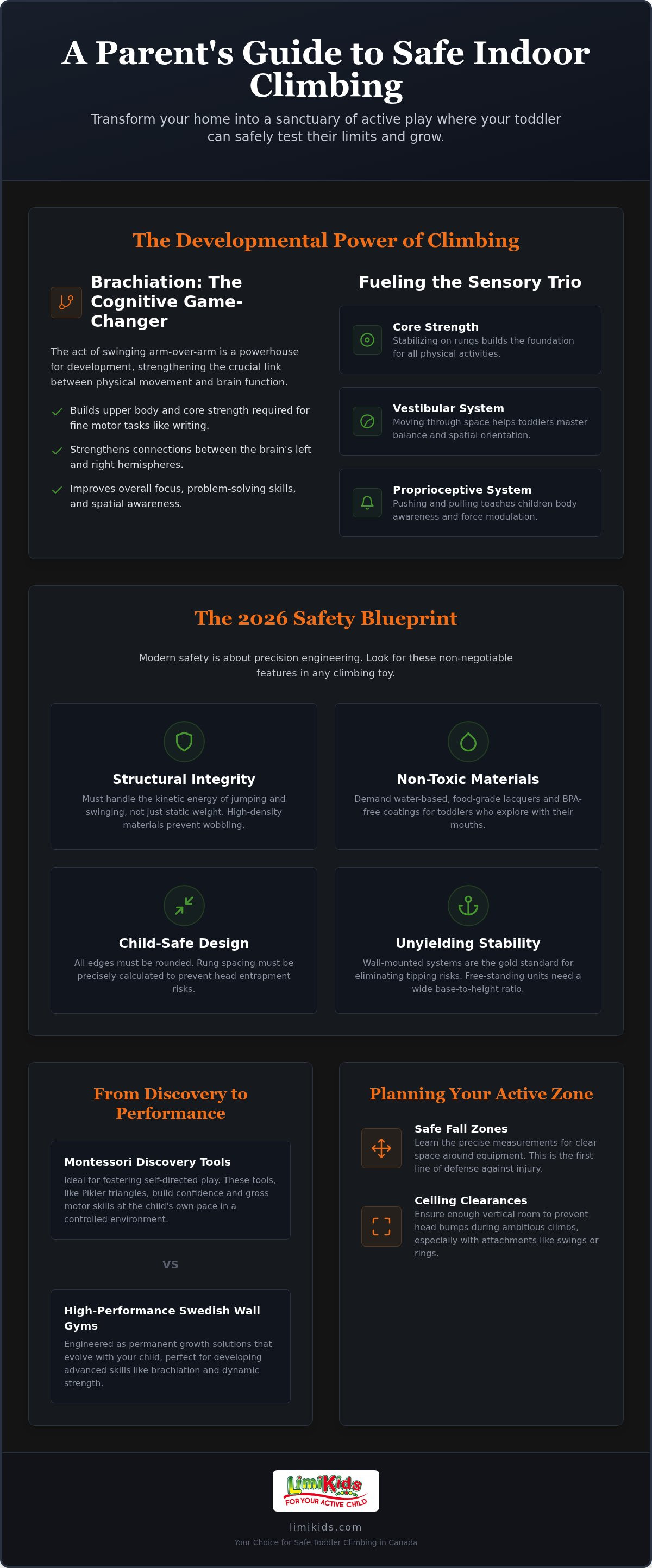
One of the most profound benefits of indoor climbing is brachiation. This is the act of moving by swinging the arms from one hold to another, similar to how primates move. Brachiation is a game changer for cognitive health. When a child engages their core and upper body on monkey bars, they're building the physical stability required for fine motor tasks like writing. This cross-lateral movement also strengthens the connection between the brain's left and right hemispheres, which improves overall focus and spatial awareness.
Climbing equipment also serves as a hub for sensory integration. It targets three critical developmental areas:
- Core Strength: Stabilizing the body on uneven rungs builds a powerful foundation for all other physical activities.
- Vestibular System: Moving through different planes of space helps toddlers master balance and head position.
- Proprioceptive System: Pushing and pulling against resistance teaches children exactly where their body is in space.
The Science of Active Play
Research into child development highlights the vital role of "risky play" in a controlled, secure environment. It's not about danger; it's about challenge. When a toddler decides to climb one rung higher, they're learning to assess their own abilities and manage fear. This builds a resilient, "can-do" attitude that lasts a lifetime. There is also a direct link between physical exertion and better sleep patterns. An active toddler who has spent an hour on a climbing frame is a child who settles faster and sleeps deeper, allowing their brain to process the day's learning efficiently.
Year-Round Activity in the Canadian Climate
Canadian winters are relentless, and when local playgrounds are buried under snow, your child’s need for movement doesn't simply pause. Safe indoor climbing toys for toddlers ensure that consistent daily movement remains a priority for children ages 1 to 5, regardless of the temperature outside. Instead of viewing indoor gear as a temporary winter bridge, see it as a permanent health investment. Consistent access to physical challenges indoors prevents the "cooped up" energy that leads to frustration and ensures your child hits their gross motor milestones on schedule, every single month of the year.
Decoding Safety: What Makes a Climbing Toy "Safe" in 2026?
Safety in 2026 isn't just about soft edges. It's about precision engineering. When you invest in safe indoor climbing toys for toddlers, you're looking for equipment that can handle the kinetic energy of a growing child. It's not just about their static weight. It's about the force they generate when they jump, swing, and pull. Structural integrity is the foundation of every safe play session. High-density materials ensure that the rungs don't flex and the frame doesn't wobble during a child's most ambitious climbs.
Curious toddlers explore with more than just their hands. They often use their mouths to investigate new textures. This makes non-toxic finishes a non-negotiable requirement. Look for water-based, food-grade lacquers and BPA-free coatings. Beyond chemical safety, physical design matters. Every edge must be rounded. Rung spacing must be calculated to prevent head entrapment, adhering to strict gap standards. According to the U.S. Consumer Product Safety Commission (CPSC), proper equipment design is the first line of defense against common play injuries.
Stability is the final pillar. While free-standing units offer flexibility, wall-mounted systems provide a level of permanence that eliminates tipping risks entirely. If you choose a free-standing model, ensure it has a wide base-to-height ratio. For high-energy toddlers, securing equipment directly to wall studs is the gold standard for reliability. Check out the structural integrity of premium indoor playground gear to see how different mounting styles impact daily safety.
Material Matters: Wood vs. Metal
Premium wood is a favorite for Montessori-inspired spaces because of its natural grip and warm aesthetic. It feels great in a child's hands and offers just enough friction for safe climbing. However, high-quality metal is often superior for longevity. Metal frames support higher weight capacities, making them ideal for families with multiple children or those looking for a gym that lasts into the school years. Both materials are excellent choices as long as they meet industrial-grade density standards.
Safety Standards and Certifications
Always verify ASTM and local Canadian safety compliance before purchasing. These certifications guarantee that the equipment has undergone rigorous stress testing. Don't forget what goes underneath. A high-impact safety mat is essential. It absorbs the shock of a tumble and gives your child the confidence to try new movements. Maintenance is your ongoing responsibility. Set a monthly reminder to tighten bolts and inspect surfaces for wear. This proactive approach ensures your indoor climbing equipment remains a secure sanctuary for years to come.
Top Types of Indoor Climbing Equipment for Growing Toddlers
Choosing the right gear means looking past the next six months. You want a setup that challenges your child today and remains relevant as they head toward kindergarten. While many generic retail options focus on small, temporary foam blocks, high-quality safe indoor climbing toys for toddlers provide a modular foundation for years of active play. From simple rungs to complex aerial systems, the right choice depends on your space and your child's developmental stage. Investing in structural durability now prevents the frustration of outgrowing equipment by age three.
For households with multiple children, a full indoor jungle gym offers a comprehensive play system. These setups often include sensory play additions like rings, swings, and climbing ropes. This variety keeps the environment fresh and engaging. It ensures that every child, regardless of their current skill level, finds a physical challenge that pushes them toward their next gross motor milestone. Variety is the key to maintaining interest and building a diverse range of physical skills.
Montessori Systems for Independent Play
Montessori-inspired climbers, such as Pikler triangles and rocker arches, are the perfect entry point for early discovery. These tools allow toddlers to self-assess risk at their own pace. By using Montessori play equipment, you empower your child to decide how high to climb without external pressure. It transforms a simple nursery into a dedicated "Movement Zone." For the best safety results, ensure these units follow the height and rung spacing recommendations found in the CPSC Public Playground Safety Handbook. This ensures that independent play remains secure play.
The Swedish Wall Gym: A Long-Term Investment
If you are dealing with limited square footage, the Swedish wall gym is your secret weapon. These vertical systems are the ultimate climbing gear for small spaces because they utilize wall height rather than floor area. Unlike standalone toys that toddlers quickly master and discard, a Swedish wall evolves. You can start with basic climbing rungs for a two-year-old and add monkey bars or a slide as they gain confidence. It's a permanent fixture that transitions seamlessly from toddler exploration to school-age gymnastics. This adaptability makes it one of the most cost-effective ways to bring the playground home.
Planning Your Indoor Play Space: Safety and Layout
Planning your home gym is about more than just finding a corner for a new toy. It is about engineering a safe environment for high-energy play. To integrate safe indoor climbing toys for toddlers effectively, you must first calculate the "fall zone." This is the clear area around the equipment that must remain free of furniture, sharp corners, or hard objects. A standard rule is to maintain at least 6 feet of clearance in every direction from the equipment's perimeter. This buffer ensures that even an uncoordinated tumble doesn't result in a collision with a coffee table or a bookshelf.
Zoning your home is equally important for maintaining a sense of order. Create a clear physical distinction between the active movement area and quiet zones used for sleep or reading. This helps toddlers understand exactly where high-intensity activity is appropriate. Surface safety is your next priority. Choose high-impact gym mats with a thickness of at least 2 inches to absorb the shock of landings. Don't settle for thin rugs or standard carpet; specialized foam is required to protect growing joints and provide the necessary grip for bare feet.
Optimizing for Small Spaces and Apartments
Living in an apartment doesn't mean you have to skip the gym. Vertical play is the ultimate solution for compact floor plans. By using wall-mounted ladders, you reclaim floor space while providing a massive outlet for energy. If you have standard or low ceilings, look for specific configurations like indoor monkey bars with low ceilings that maximize every inch of height. Some innovative designs even double as desks or storage when not in use, turning a play area into a multi-functional hub. Remember to measure your room height from the floor to the lowest obstruction, such as light fixtures or ceiling fans, before finalizing your layout.
Installation Best Practices
Maximum safety starts with a rock-solid installation. For wall-mounted systems, you must identify and secure the equipment directly into wall studs. Drywall anchors are simply not enough for equipment intended for climbing. Once installed, perform the mandatory "Shake Test." Grasp the frame and apply firm pressure to ensure there is zero movement or rattling. While pressure-mounted systems are convenient for renters, bolt-mounted systems offer the highest level of permanence and reliability for active toddlers. Secure your child's future today by exploring our full range of indoor playground equipment designed specifically for Canadian residential spaces.
Why LIMIKIDS is Canada’s Choice for Safe Toddler Climbing
Since 2008, we've helped Canadian families transform their living spaces into hubs of physical discovery. We understand the unique challenges of our climate. When the local playground is out of commission for months, your home must provide the outlet your child needs. We provide safe indoor climbing toys for toddlers that don't just occupy time; they build futures. Our equipment is engineered for the reality of residential living. It is compact, sturdy, and built to withstand the high-energy demands of growing kids.
Choosing the right equipment is a commitment to your child's long-term wellness. We don't believe in "disposable" toys that end up in a landfill by the next birthday. Instead, we focus on permanence. Our designs prioritize structural integrity and material density. Whether it is premium wood or high-grade metal, every component is selected for its reliability. You deserve the peace of mind that comes from knowing your home gym is a secure sanctuary for every jump, swing, and climb.
The LIMIKIDS Difference: Growth-Oriented Design
Most climbing gear is quickly outgrown. We reject that cycle. Our Swedish walls and modular systems are designed to evolve alongside your child's abilities. What starts as a Montessori gym for toddlers eventually becomes a full-scale fitness station for school-aged children. We apply Red Dot-level attention to detail in every safety feature, from rounded edges to precision-spaced rungs. We help parents build home gyms that last a decade, not just a season.
- Precision Engineering: Every bolt and rung is tested for maximum weight capacity and stability.
- Adaptive Play: Easy-to-add accessories like rings and monkey bars keep the challenge fresh as skills improve.
- Space-Saving Focus: Our equipment utilizes vertical wall space, making it perfect for apartments and low ceilings.
National Reach and Reliable Service
We are a Canadian company through and through. This means you get fast, reliable shipping to every province and local support that understands your specific needs. You aren't just buying a product; you're joining a movement of active parenting. Our mission is to empower you to create a healthy, active home environment where physical milestones are celebrated every day. Getting started is simple. Choose a setup that fits your space, and we'll handle the rest. Explore our full range of indoor playground equipment today and take the first step toward a more active home.
Empower Your Child’s Physical Future Today
Active play is a fundamental right for every growing child. By prioritizing structural stability and choosing equipment that evolves with your toddler, you're investing in more than just a toy. You're building a foundation for cognitive growth, core strength, and sensory mastery. Remember to measure your fall zones carefully and prioritize high-density materials that stand the test of time. Selecting safe indoor climbing toys for toddlers ensures that the urge to explore is met with reliability rather than risk.
Don't let the Canadian winter or a small floor plan limit your child's potential. Our expertly engineered systems utilize vertical space to bring the playground experience into any residential setting. With premium materials designed for longevity and fast shipping across Canada, we make it easy to start your journey today. Shop Safe Indoor Climbing Equipment for Toddlers at LIMIKIDS and watch your child reach new heights with confidence. Your home is ready to become a sanctuary of growth and achievement!
Frequently Asked Questions
At what age can a toddler start using an indoor climbing toy?
Toddlers can begin their climbing journey as early as 12 months with low-profile equipment like Montessori arches or Pikler triangles. These tools allow them to practice pulling themselves up and finding their footing. By age two, most children have the coordination to transition to more advanced safe indoor climbing toys for toddlers, such as Swedish walls. Always ensure the equipment matches your child's current gross motor skill level and provide active supervision during play.
Are indoor climbing frames safe for apartments with limited space?
Vertical designs are specifically engineered for compact living. Unlike bulky plastic playsets, a Swedish wall gym utilizes wall height rather than floor area, making it a perfect fit for urban apartments. Many systems protrude less than two feet from the wall, leaving your floor space open for other activities. This space-saving approach allows you to create a high-energy movement zone without cluttering your home or sacrificing your living room's functionality.
How do I know if my wall is strong enough for a Swedish wall gym?
Your wall is suitable if you can secure the mounting brackets directly into wood or metal studs. Use a high-quality stud finder to locate these structural supports before installation. Standard drywall alone cannot support the weight of an active child. If you have concrete or brick walls, specialized anchors are required for a secure fit. Always verify that your wall is in good repair and free from moisture damage to ensure maximum stability.
What is the best type of safety mat to use under a toddler climber?
The gold standard for safety is a high-impact folding mat with a thickness of at least 2 inches. These mats are designed to absorb shock and protect growing joints during landings. Look for a mat with a durable, easy-to-clean cover like PU leather. Ensure the mat covers the entire "fall zone" around the equipment. This provides a consistent, non-slip surface that gives your child the confidence to test their physical limits safely indoors.
Can indoor climbing equipment help children with sensory processing needs?
Physical challenges are incredibly beneficial for children with sensory processing needs. Climbing provides deep pressure input to the muscles and joints, known as proprioceptive input, which helps toddlers feel grounded and regulated. Moving through different planes of space also stimulates the vestibular system, improving balance and spatial awareness. Many parents find that regular sessions on safe indoor climbing toys for toddlers lead to improved focus and a calmer demeanor during quiet activities.
How do I prevent my toddler from climbing too high on a jungle gym?
Active supervision is the most effective way to manage height risks. You can also use "blocking" techniques, such as removing lower rungs or using a ladder cover when the gym is not in use. Start by teaching your child the "feet first" rule for descending. Encourage them to master lower levels before attempting the top rungs. Setting clear boundaries and staying within arm's reach during the early stages of discovery builds a culture of safety.
What is the weight limit for LIMIKIDS indoor home gyms?
Our systems are built for serious durability and often support multiple children at once. While limits vary by model, many of our metal-frame gyms are tested to support up to 220 lbs (100 kg). This high capacity ensures the equipment remains stable even during vigorous play. This structural integrity allows the gym to grow with your child from the toddler years well into their school-age gymnastics phase, providing a permanent solution for home fitness.
Do I need professional help to install a wall-mounted climbing frame?
Professional installation is not required, as our systems are designed for straightforward DIY assembly. If you're comfortable using a drill and a stud finder, you can successfully mount the frame yourself. Each kit includes detailed instructions to guide you through the process. However, if you're unsure about your wall type or lack the necessary tools, hiring a local handyman can provide extra peace of mind. Stability is the priority for safe play.