






Developing Vestibular Sense in Children: Playful Ways to Build Balance and Body Awareness
Supporting balance doesn’t require a special exercise. It can begin with movements children enjoy every day. Developing vestibular sense in children involves the inner ear sending the brain information about head movement and position, helping children stay oriented as they move.
If you’re unsure which activities are suitable, you’re not alone. Movement can be part of ordinary play, but children have different preferences and comfort levels. The goal isn’t to push through discomfort or follow a rigid routine. It’s to offer safe, child-led opportunities to move and notice what feels manageable.
This guide explains the vestibular system in plain language and shares adaptable ways to explore movement at home, from everyday play to optional indoor climbing or sensory play equipment. You’ll also learn when to pause and when to discuss concerns with a qualified professional. There’s no single magic activity. Varied, enjoyable movement is a practical place to start.
Key Takeaways
- Learn how the vestibular system helps children sense head movement and position, supporting balance and coordinated movement.
- Understand how developing vestibular sense in children involves varied movement and exploration, alongside the separate role of proprioception.
- Use a simple invite, observe, adapt approach to make movement play fit your child’s comfort and confidence.
- Keep play child-led with close supervision, a clear space, stable equipment, and attention to the manufacturer’s instructions.
- Build movement into familiar routines, balance active play with rest, and know when a concern may call for guidance from a qualified professional.
What Is the Vestibular Sense, and Why Does It Matter in Children?
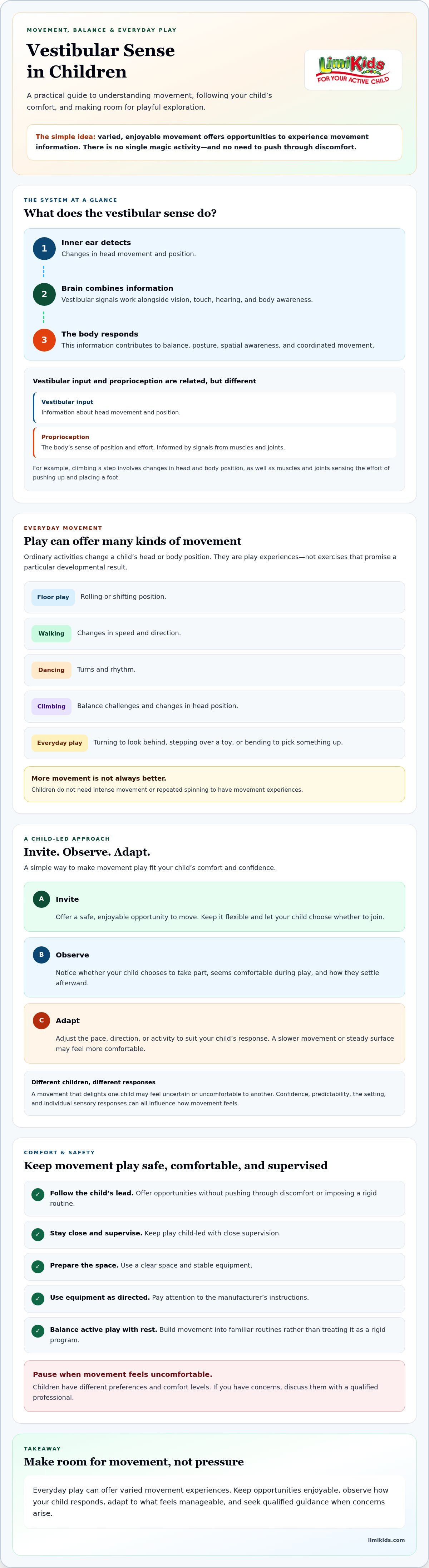
The vestibular system helps the brain interpret head movement and position. This information contributes to balance, posture, spatial awareness, and coordinating movement. In everyday terms, it helps a child sense how their head and body are moving in relation to the space around them.
Developing vestibular sense in children is part of a broader process of learning through movement. It isn’t a skill that develops in isolation, and no single movement experience guarantees a particular outcome. The brain combines vestibular information with vision, touch, hearing, and body awareness to help guide responses. For example, stepping over a toy involves seeing where the toy is, moving the body, and sensing changes in position.
Where Is the Vestibular System, and What Information Does It Process?
Vestibular structures sit in the inner ear. They detect changes in head movement and position, then send information to the brain. The brain uses those signals alongside other sensory information to help the body respond to movement and gravity. For a foundational overview of the vestibular system and its role in balance and spatial orientation, see this reference.
This system is one part of a larger picture. It doesn’t, by itself, explain a child’s coordination, attention, or behaviour. Children’s responses reflect multiple influences, including sensory information and the demands of the activity around them.
How Does Vestibular Input Show Up During Everyday Play?
Notice how ordinary play changes a child’s position. Turning to look behind them, climbing onto a low step, stepping across a cushion, or bending down to pick up a toy all involve shifts in head and body position. As children explore, their brains receive information that can help them judge movement and orientation. These are everyday play experiences, not exercises that promise a specific developmental result.
Similar movement can feel different from one child to another. One child may happily turn or climb, while another prefers slower movement or a steady surface. Pay attention to the child’s comfort and response rather than assuming that more movement is always better. This is a useful starting point when choosing playful opportunities that fit the child.
How Vestibular Skills Develop Through Movement and Everyday Experience
Vestibular skills develop gradually as children encounter movement in different settings and at a pace that feels manageable to them. There’s no single exercise to master. Ordinary experiences, from floor play to walking across a room, give the brain chances to receive and make sense of movement information alongside what the child sees and feels.
Vestibular input and proprioception are related, but they aren’t the same. Vestibular input provides information about head movement and position. Proprioception is the body’s sense of position and effort, informed by signals from muscles and joints. A child climbing a step uses both: head and body position change, while muscles and joints provide information about pushing up and placing a foot.
Varied, comfortable movement gives the brain opportunities to experience vestibular input as children explore their surroundings. That’s an opportunity for experience, not a promise of a particular result. Developing vestibular sense in children is an individual process shaped by many everyday factors.
Which Movements Give Children Vestibular Input?
Everyday play offers plenty of movement variety. Floor play can involve rolling or shifting position; walking brings changes in speed and direction; dancing adds turns and rhythm. Climbing and playground movement can introduce balance challenges and changes in head position. Children don’t need intense movement or repeated spinning to have movement experiences. Follow their interest and choose options that feel comfortable and suit their abilities.
Why Do Children Respond Differently to Movement?
A movement that delights one child may feel uncertain or uncomfortable to another. Preferences can reflect confidence, the setting, how predictable the movement feels, and individual sensory responses. A child who often seeks movement or tends to avoid it is showing you something about their response, but that behaviour alone doesn’t establish a problem or diagnosis. The Boys Town National Research Hospital overview of pediatric vestibular disorders offers further context about vestibular concerns.
Notice the whole experience. Does your child choose to join in? Do they seem comfortable during play, and how do they settle afterward? These observations can help you adjust the pace, direction, or activity without pressure. If you’re exploring ways to make movement play available at home, indoor climbing and sensory play equipment are optional resources. Everyday play can offer movement opportunities without specialist equipment.
How to Encourage Vestibular Development With Playful Activities
Keep the goal simple: offer a movement idea, then let your child show you whether it feels right. Use this four-step approach when developing vestibular sense in children through play:
- Invite: Offer a choice, such as dancing or stepping over cushions.
- Observe: Notice whether your child joins in, hesitates, or seems uncomfortable.
- Adapt: Slow the activity down, simplify it, or try a seated version.
- Stop: End the activity if your child signals discomfort or wants to stop.
Simple Vestibular Play Ideas for Home
Everyday play can offer movement without specialist equipment. Before starting, clear the space, choose an activity you can supervise, and adapt it to your child’s abilities.
- Slow dancing: Move gently to music, or sway together while seated. Let your child choose the pace and whether to turn.
- Cushion path: Invite your child to step over cushions placed flat on the floor. Start with one, or make the route easier by walking around it instead.
- Simple obstacle course: Combine walking around a chair with stepping over a soft cushion. Show the path first and keep it predictable.
- Supervised climbing: If appropriate for your child and the equipment, offer a low, manageable climbing opportunity. Stay close and follow the equipment’s instructions.
Children who prefer less movement can try turning their head to follow a toy while sitting, reaching for an object during floor play, or watching you demonstrate an activity before deciding whether to join. No equipment is necessary. For additional optional ideas, explore this guide to sensory motor equipment for home.
How to Adapt Activities to Your Child’s Comfort
Let your child choose whether to participate and, when possible, which movement to try. A gentle invitation gives them room to watch first, have a turn, or say no. Keep turns brief and offer pauses. There’s no fixed duration to aim for; comfort and willingness matter more than completing a set amount of play.
If your child seems unsure, make the movement slower, simpler, or more predictable. Avoid forced spinning, rough handling, or activities you can’t supervise closely. Stop if your child signals discomfort, then switch to a calmer option or take a break. Play should feel like an invitation to explore, not a task your child has to finish.
How to Keep Movement Play Comfortable, Safe, and Child-Led
More intense movement doesn’t automatically mean better development. Developing vestibular sense in children isn’t about pushing them to spin faster, climb higher, or keep going when they’ve had enough. Playful movement can offer experiences to explore, but a child’s comfort and safety come first.
Before play, choose an activity that suits your child’s abilities and the available space. Clear the area of furniture, toys, and other obstacles. If you’re using equipment, check that it’s stable and follow the manufacturer’s instructions, including guidance about appropriate use and supervision. Stay close enough to respond, and don’t encourage a child to try movements beyond what you can safely supervise.
What Are Signs a Movement Activity Is Too Much?
Pause if your child appears distressed, overwhelmed, or unusually unsteady, or asks to stop. Watch how they respond during the activity and afterward. They may need a rest, a slower pace, a simpler option, or a different kind of play. These observations can guide your next choice, but one response on its own doesn’t diagnose a sensory or developmental concern.
Stopping is a valid choice. So is slowing down or switching activities. Let your child know they can take a break without finishing a turn or proving they’re comfortable.
When Should Caregivers Ask a Health Professional?
If concerns about balance, movement, or taking part in everyday activities persist, discuss them with your child’s healthcare provider. They can help you decide whether further guidance is appropriate and direct you to a qualified professional. Share what you’ve noticed, including the situations where your child seems comfortable or has difficulty.
This article offers general information. It can’t assess your child, identify the reason for a particular response, or replace individualized professional advice. Home movement play is not a treatment plan, and equipment doesn’t diagnose or resolve developmental concerns. Keep play enjoyable and adaptable while seeking professional input if you need help understanding your child’s needs.
If you’re considering optional movement opportunities at home, explore indoor climbing and sensory play equipment from LIMIKIDS. Consider your available space and your child’s interests, and keep supervision and the manufacturer’s instructions central to play.
Build a Flexible Movement Routine and Choose Home Play Resources
A supportive movement routine doesn’t need a chart, a timer, or a list of exercises to complete. The aim is to make room for enjoyable movement within the day you already have. For families thinking about developing vestibular sense in children, ordinary moments can offer options to move, pause, and explore without turning play into therapy.
A Simple Way to Add Movement to an Ordinary Day
Look for natural openings. A child might dance during a favourite song, walk a little farther on an outing, or try a simple movement game during play. If outdoor time is available, walking over different surfaces or using age-appropriate playground equipment can add variety. Keep the invitation brief, and let your child decide whether to join.
Rotate activities based on interest and comfort, rather than following a fixed schedule. Notice which movements your child willingly repeats, which they avoid, and when they seem ready for a rest. Repeating a favourite is fine; there’s no need to make every day different. Balance active play with quieter activities, and let your child’s cues guide the pace.
Choosing Play Equipment Without Treating It as Therapy
Equipment isn’t required for movement play. If you’re considering a home resource, start with practical questions: How much space can you set aside? Does the equipment suit your child’s interests and abilities? Can you supervise its use as directed? Review the manufacturer’s instructions and confirm that the equipment suits your home and your child. LIMIKIDS offers indoor climbing structures, including Swedish wall gyms and Montessori-inspired play systems, as well as sensory play equipment. These are optional ways to make movement opportunities available at home, not treatment or a guarantee of developmental outcomes.
When comparing options, consider whether your child is more drawn to climbing, hanging, or sensory play, and how the equipment will fit into your family’s play space. Read the sensory play equipment guide and the indoor home gym guide for ideas to consider. A resource is useful only if it works for your space, supervision needs, and the way your child likes to play.
Start with the play your child already enjoys. Add options gradually, keep room for rest, and adjust as their interests change. Explore LIMIKIDS indoor play equipment as one possible resource for home movement play.
Make Room for Movement, One Playful Moment at a Time
Developing vestibular sense in children doesn’t call for one perfect activity or a strict daily plan. Everyday movement can offer chances to explore balance and body position, while children’s comfort and interests help guide what comes next.
Keep play flexible. Offer a simple movement choice, observe how your child responds, and adapt or pause when they need a break. Climbing or sensory equipment can be an optional play resource, not a requirement or treatment.
LIMIKIDS is a Canadian company that has supported families since 2008, offering indoor climbing structures and sensory play equipment for home movement opportunities. Explore LIMIKIDS indoor play equipment to see options for your family.
Start with what your child enjoys. Small, comfortable invitations to move can make everyday play an engaging chance to explore.
Frequently Asked Questions
What is the vestibular sense in children?
The vestibular sense helps a child’s brain interpret head movement and position. Inner-ear structures send information that the brain combines with vision, touch, hearing, and body awareness. Together, these senses help children respond to movement and support balance, posture, spatial awareness, and coordination. The vestibular system is one part of development, not a stand-alone explanation for a child’s behaviour or movement skills.
How can I develop my child’s vestibular sense at home?
Offer everyday movement play, then follow your child’s cues. Try slow dancing, walking, stepping over a cushion, or changing positions during floor play. Let your child watch first, choose an activity, or decline. Developing vestibular sense in children doesn’t require a special exercise or equipment. Keep the play comfortable, supervise closely, and pause or adapt if your child seems uneasy or asks to stop.
Is spinning good for developing a child’s vestibular sense?
Spinning isn’t necessary, and more intense movement doesn’t automatically support better development. Children can explore movement through ordinary activities that change direction, speed, or body position, such as dancing or walking around an obstacle. Don’t force spinning or keep going if your child shows discomfort. Offer a choice and stop when they want to stop. If movement responses concern you, ask your child’s healthcare provider for guidance.
What activities help children practise balance and movement?
Simple play can invite children to shift position and adjust their balance. Depending on your child’s abilities and the space, try walking along a clear path, stepping over a cushion placed flat on the floor, gentle dancing, or a simple obstacle course. Floor-based play and reaching for a toy offer quieter options. Keep activities supervised and adaptable, and let your child’s interest and comfort guide the pace.
Can climbing help a child’s vestibular development?
Climbing can involve changes in head and body position, balance, and movement, so it may be one way to explore movement through play. It doesn’t guarantee vestibular development or replace individualized professional advice. Choose an age-appropriate activity and equipment, provide close supervision, keep the surrounding area clear, and follow the manufacturer’s instructions. If your child is uncomfortable, stop or offer a simpler activity instead.
How can I tell if my child is uncomfortable with movement play?
Notice what your child communicates and how they respond during and after play. They may ask to stop, appear distressed or overwhelmed, or seem unsteady during an activity. Pause, slow down, offer a break, or switch to calmer play. Responses vary, and any one behaviour isn’t a diagnosis or a universal sign of a problem. Your child doesn’t need to finish a turn or continue to please an adult.
When should I ask a professional about my child’s balance or movement?
Talk with your child’s healthcare provider if you have persistent concerns about balance, movement, or participation in everyday activities. Describe what you’ve noticed and the situations in which it happens; the provider can help guide next steps and whether a qualified professional, such as an occupational therapist, may be appropriate. An online article can’t assess your child or determine the cause of a concern, so seek individualized advice when needed.