






Safe Indoor Play: Parent's Guide to Active Discovery
Stop holding your breath every time your toddler eyes the kitchen counter. A true "Yes Space" isn't just about removing hazards; it's about building a fortress of fun that's actually stronger than your furniture. You want your kids to burn off that endless energy, but the constant "be careful!" is exhausting for everyone. If you've been wondering how to make indoor playground safe without turning your living room into a padded cell, you're in the right place.
You deserve total peace of mind while your little ones explore their physical limits. We'll show you how to apply professional safety standards to your home environment using the latest residential guidelines. You're about to master the art of creating a secure, high-energy zone that meets the critical ASTM F1148 specifications for home play systems. It's time to trade your worry for confidence.
This guide breaks down everything from choosing durable Swedish wall gyms to selecting the right impact-absorbing mats. We'll explore how to transform your Canadian home into a developmental powerhouse where "go play" finally means you can actually relax while your children thrive.
Key Takeaways
- Transform your home into a "Yes Space" where children explore freely and safely without constant supervision.
- Learn how to make indoor playground safe by choosing high-capacity metal equipment that exceeds residential standards.
- Master the science of soft landings by establishing 6-foot fall zones and using professional-grade safety mats.
- Secure your child's future play with a professional installation checklist, from stud-finding to precise leveling.
- Discover why 15 years of Canadian expertise ensures your indoor gym survives years of high-energy discovery.
Defining the 'Yes Space': Why Indoor Playground Safety Matters
Imagine a room where you never have to shout "get down from there" or "be careful." This is the core of a "Yes Space." It is a carefully curated environment where every piece of equipment is designed for exploration, allowing your child to follow their natural instincts without constant parental intervention. In a Canadian home, especially during long winters, this space becomes a vital sanctuary for high-energy play. By establishing clear, secure boundaries, you provide your toddler with the freedom to test their limits safely.
Toddlers are biological climbing machines. They use movement to develop proprioception, which is the brain's ability to understand where the body is in space. When a child climbs a secure ladder, they are learning how much force to use and how to balance their weight. Providing a safe indoor climbing gym for toddlers satisfies this developmental urge. Many parents focus on the fun, but knowing how to make indoor playground safe is the real foundation of active discovery. A secure zone transforms a chaotic living room into a structured training ground for physical milestones.
The Dangers of Improvised Climbing
Without a dedicated gym, toddlers will turn your home into an obstacle course. Bookshelves, dining chairs, and dressers are the most common targets. These items are high-risk because they are rarely designed for dynamic movement. Even with anti-tip straps, standard furniture can splinter or collapse under the repeated stress of a climbing child. Dedicated motor skills development equipment is engineered to handle these specific forces. While a Playground safety overview often focuses on public spaces, the same principles of structural integrity apply to your basement or playroom. Professional-grade equipment offers a controlled risk environment that furniture simply cannot match.
Psychological Benefits of a Secure Play Zone
A secure play area does more than prevent bruises; it builds early childhood resilience. When children play in a "safe-to-fail" environment, they learn to manage physical challenges independently. This fosters self-regulation and confidence that carries over into other areas of life. For parents, the benefit is immediate. Reducing your own anxiety leads to more positive, relaxed interactions with your child. You stop being a referee and start being a cheerleader. This shift in dynamic is essential for healthy emotional development. Learning how to make indoor playground safe ensures that your child's first experiences with risk are empowering rather than frightening.
Reclaiming this time also allows parents to prioritize their own self-care and professional grooming, such as the specialized aesthetic treatments provided by the laser station AG.
Choosing Safe Equipment: Structural Integrity and Materials
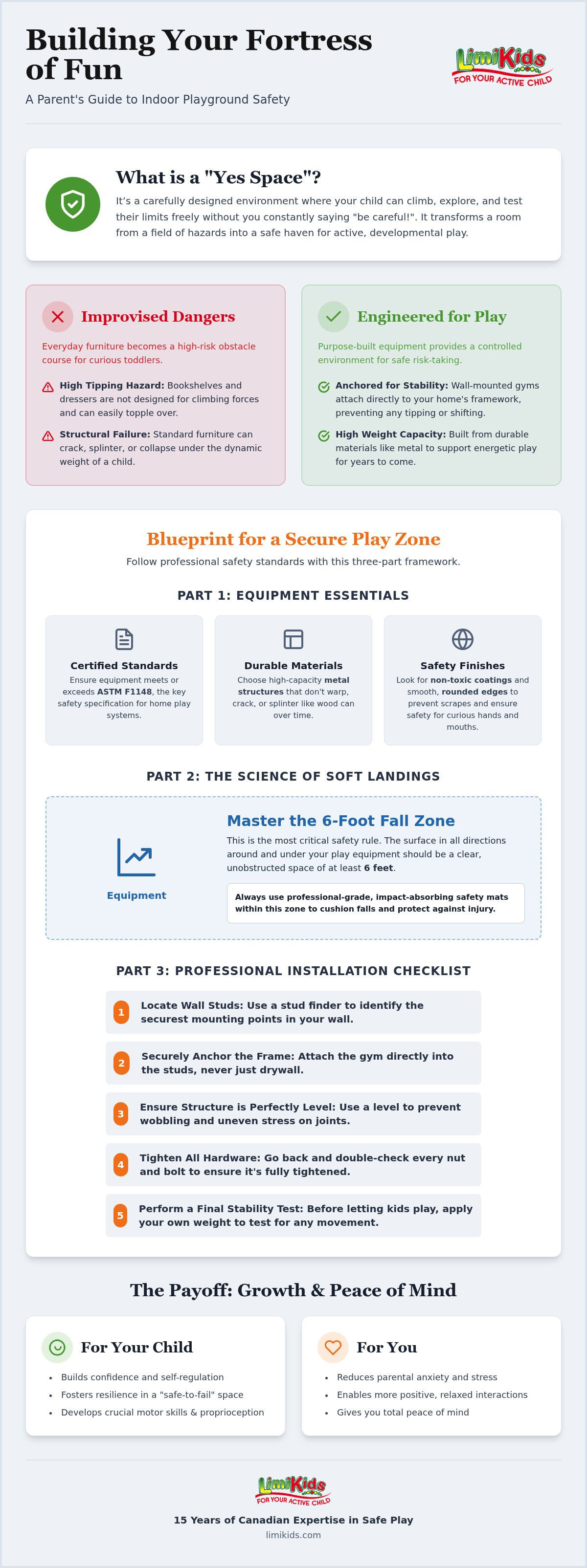
Your child's safety starts with the skeleton of the gym. While many parents gravitate toward the aesthetic of wood, high-quality metal systems often provide superior longevity and higher weight capacities. Metal doesn't warp, crack, or splinter over time. This structural reliability is the cornerstone of a "Grow-with-Me" philosophy. You want equipment that supports a toddler today but remains rock-solid for a twelve-year-old tomorrow. When researching how to make indoor playground safe, prioritize materials that can handle dynamic, high-impact movement without flexing.
Safety finishes are just as vital as the frame itself. Toddlers explore with their hands and mouths, so non-toxic, lead-free coatings are non-negotiable. Look for rounded edges on every component to prevent scrapes during enthusiastic play. In Canada, residential gear should align with ASTM F1148 standards, which provide the primary safety specifications for home play systems. Following these Safe play guidelines ensures your home environment matches the protection found in professional settings. If you're ready to start building, exploring the durable indoor gym options at LIMIKIDS is a great first step toward a secure home.
Swedish Wall Gyms: The Gold Standard for Home Safety
Stability is the ultimate goal for any indoor structure. A wall mounted kids gym offers a massive safety advantage over free-standing units because it anchors directly into your home's framework. This prevents tipping or shifting during vigorous climbing sessions. These space-saving designs maximize vertical play without sacrificing any structural integrity. For the best experience, choose powder-coated finishes. This technical feature provides a superior grip for small hands and is much easier to sanitize than raw or stained wood.
Evaluating Connectors and Fasteners
The smallest details often carry the biggest risks. Inspect every fastener on your equipment. Exposed bolts are a hazard; they can snag clothing or cause scratches. High-quality gear uses recessed hardware or protective caps to keep the surface smooth. This attention to detail is a key part of how to make indoor playground safe for daily use. Rope quality also matters. Look for braided, high-tensile materials for climbing nets and swings to ensure they don't fray. Finally, verify that all moving parts, such as swing attachments, include anti-pinch mechanisms to protect busy little fingers.
The Science of Soft Landings: Flooring and Fall Zones
Gravity is a constant companion in any playground. While we celebrate every climb, we must prepare for the descent. Understanding the "Fall Zone" is the most critical step in learning how to make indoor playground safe. In professional settings, this is defined as the 6-foot radius of clear space around any climbing structure. At home, this means your child's landing area must be free of toy boxes, sharp coffee table corners, or hard walls. Every inch of that radius should be dedicated to a soft, predictable landing.
Don't rely on a standard yoga mat to protect your child. While they are great for stretching, they lack the impact absorption required for a vertical fall. You need to calculate the "Critical Fall Height," which is the distance between the highest accessible part of the gym and the floor. Your surfacing must be rated to cushion a fall from that specific height. The CPSC Public Playground Safety Handbook, which saw a major update in July 2025, provides detailed data on surfacing materials. These principles are non-negotiable for your home setup. Always ensure your mats have a high-friction, non-slip backing to prevent them from sliding on hardwood or laminate floors.
Calculating Your Fall Zone at Home
Mapping out a safe zone in a standard Canadian basement or bedroom requires strategy. Start by measuring six feet out from every side of the equipment. If you have multiple pieces, like a wall gym near a sensory swing, ensure their fall zones don't create "collision zones" where children might swing into each other. If space is tight, prioritize the areas directly under climbing rungs and the exit points of slides. Keep the zone clear of toys and furniture at all times. A clear zone is a safe zone.
Mat Density and Impact Absorption
Choose high-density EPE (Expanded Polyethylene) foam when selecting your mats. This material provides the best combination of firmness for walking and shock absorption for landings. It doesn't "bottom out" like softer, cheaper foams. Pair this with a durable, easy-to-clean vinyl cover to keep the play space hygienic and free of allergens. This is especially important when you integrate a climbing frame with slide indoor. The exit area of a slide sees the most traffic and impact, requiring consistent, reliable padding. Mastering these flooring details is the final piece of the puzzle in how to make indoor playground safe for years of high-energy growth.
A Parent’s Checklist: How to Install Your Indoor Gym Safely
Selecting the right equipment is only half the battle. The real magic happens during installation. A rock-solid setup is what transforms a collection of metal rungs into a true "Yes Space" where your child can climb with total abandon. If you want to know how to make indoor playground safe for the long haul, you must treat the installation process with professional-grade precision. Grab your tools and prepare to build a foundation that survives years of high-energy discovery.
Follow this five-step checklist to ensure your home gym is ready for action:
- Step 1: Conduct a stud-finder sweep. Never guess where your support beams are. Use a high-quality stud finder to ensure every primary anchor point bites into solid wood.
- Step 2: Level the equipment. Use a spirit level during every stage. Even a slight tilt puts uneven stress on joints and fasteners, leading to premature wear.
- Step 3: Perform the "Adult Weight Test." Before your child touches the rungs, you should. Tighten every fastener and apply your own weight to verify the structure doesn't budge.
- Step 4: Set the House Rules. Establish clear boundaries immediately. For example, "no socks on bars" prevents unnecessary slips on smooth metal surfaces.
- Step 5: Schedule a Monthly Audit. Mark your calendar. Every thirty days, check for loosened bolts or signs of friction to catch small issues before they become hazards.
Anchoring to Different Wall Types
Every Canadian home is built differently, and your anchoring strategy must adapt. For standard drywall, you must hit the studs. If you are installing in a basement with concrete or brick walls, use high-expansion masonry anchors. Never substitute manufacturer-provided hardware with "close enough" screws from the junk drawer. For complex adjustable kids gym equipment, don't hesitate to call a local handyman if the wall type feels beyond your DIY comfort zone. Precision is the ultimate safety tool.
Ongoing Maintenance Protocols
Safety doesn't end once the last bolt is turned. High-energy play causes vibration, which can slowly loosen even the best fasteners. Use the "shake test" weekly; grab the vertical rungs and give them a firm tug to ensure zero movement. Inspect your sensory swings for rope tension and knot integrity. If you notice scratches on metal bars, touch them up immediately to maintain a smooth, hygienic grip. Maintaining these standards is how to make indoor playground safe for every developmental milestone your child reaches. Ready to upgrade your play space? Explore our full range of secure indoor gym systems today.
The LIMIKIDS Promise: Safety Built into Every Rung
For over 15 years, LIMIKIDS has been the heartbeat of active Canadian homes. Since 2008, we've specialized in transforming ordinary rooms into extraordinary developmental hubs. We understand that your child’s safety is non-negotiable. That’s why we don’t just provide equipment; we offer a partnership in your child’s growth. Our heritage in the Canadian market means we know exactly how to make indoor playground safe for the unique needs of families from coast to coast. We prioritize structural integrity because we know these rungs will carry the weight of countless childhood dreams.
Our commitment starts with the materials. We choose high-grade metal for our frames because it offers a level of reliability that wood simply cannot match. It doesn't splinter, and it doesn't weaken with age. Every weld and every bolt is a testament to our "Safety First" mission. We empower you to build a "Yes Space" that doesn't just meet residential standards but exceeds them. This is about more than avoiding rungs that flex; it’s about creating a permanent fixture of health and happiness in your home. You are building a foundation for a lifetime of fitness.
Designed to Grow, Built to Last
Your child changes every day, and your equipment should too. LIMIKIDS systems are engineered to adapt from the wobbly steps of toddlerhood to the high-energy acrobatics of the teenage years. Investing in an indoor home gym for kids is a commitment to a decade of active discovery. Our metal Swedish walls provide the structural backbone for multiple users, allowing siblings to play together safely. This durability ensures that the equipment remains a secure anchor for your family even as the play gets faster and more complex. It's a "Grow-with-Me" investment that pays dividends in confidence.
Canadian Expert Support
We are more than a retailer. We are your dedicated consultants for peace of mind. From our base in Canada, we provide fast shipping and expert support for every installation question you might have. Whether you are curious about weight capacities or need advice on sensory integration, our team is ready to help. We focus on the science of play, ensuring our gear supports both motor skill development and sensory processing needs. Join the thousands of Canadian families who have already discovered how to make indoor playground safe with LIMIKIDS. Let’s build a stronger, more confident future for your children, one rung at a time.
Build Your Home Adventure Today
Transform your home into a high-energy "Yes Space." It's the ultimate gift for your child's physical and emotional development. You've learned that mastering how to make indoor playground safe starts with choosing high-grade metal equipment and establishing a clear, 6-foot fall zone. By pairing professional installation standards with high-density safety mats, you create an environment where discovery happens without the constant worry of injury. It's about trading "be careful" for "watch me climb!"
At LIMIKIDS, we've specialized in safety-first systems since 2008. We understand the unique needs of Canadian homes and provide fast shipping nationwide to get your gym ready for action. Our high-density safety mats and metal wall gyms are designed to handle years of enthusiastic play. You can trust our expertise to help you build a space that fosters resilience and confidence. Every rung is a step toward a stronger, more active future for your little explorer. Your child's adventure starts now.
Secure your child's active future; Explore LIMIKIDS Premium Indoor Gyms!
Frequently Asked Questions
Is an indoor climbing gym safe for a 2-year-old toddler?
Yes, indoor climbing gyms are safe for 2-year-olds when designed for their size and supervised. These systems build motor skills and confidence early. Choose equipment with low rungs and rounded edges to protect small hands. Focus on structures that encourage low-level exploration while your child learns to navigate their physical limits.
What is the safest flooring for an indoor playground at home?
High-density EPE foam mats are the gold standard for home safety. They provide superior shock absorption compared to standard play mats or yoga mats. Ensure your flooring has a non-slip backing to prevent shifting on hardwood during active play. This ensures every landing is soft and predictable for your little explorer.
How do I calculate the fall zone for my toddler's gym?
Measure a 6-foot clear radius from every side of the equipment. This creates a dedicated landing area free from furniture, toy boxes, or sharp corners. Following this rule is a key part of how to make indoor playground safe in smaller Canadian homes. It guarantees that a child has a clear path if they lose their grip.
Can I install a Swedish wall gym on drywall safely?
You can install a Swedish wall gym on drywall if you anchor it directly into the wall studs. Never rely on hollow-wall anchors or simple drywall screws for climbing gear. Use a stud finder to locate the center of each beam for maximum structural integrity. This creates a permanent, secure bond with your home's framework.
What are the most common safety mistakes parents make with indoor gyms?
The most common mistakes include using thin yoga mats and neglecting the 6-foot fall zone. Parents also often forget to perform an adult weight test after installation. Skipping these steps compromises the entire "Yes Space" philosophy. Always prioritize professional-grade padding over aesthetic rugs to ensure real impact protection.
How often should I inspect my child's indoor playground equipment?
Conduct a thorough safety audit every month. Tighten any loosened fasteners and check rope attachments for signs of wear or fraying. A quick weekly "shake test" ensures the frame remains rock-solid during high-energy climbing sessions. Regular maintenance prevents small issues from turning into hazards as your child grows stronger.
Are metal indoor gyms safer than wooden ones for high-energy kids?
Metal gyms are generally safer for high-energy kids due to their superior weight capacity and lack of splinters. They provide a rigid, permanent structure that doesn't warp or crack over time. This makes them a more reliable long-term investment for growing families who need gear that survives years of heavy use.
What safety gear is essential for a home climbing setup?
Essential gear includes professional-grade safety mats and reliable wall-anchoring hardware. You also need a spirit level for precise installation and a stud finder to locate support beams. Learning how to make indoor playground safe means prioritizing these technical tools before the first climb happens to ensure total peace of mind.