






Beat Cabin Fever: 10 High-Energy Indoor Solutions for Active Families
Cabin fever isn't just a bad mood. It's a physical need. This restlessness is a physiological response to sensory deprivation and restricted movement. When your kids are literally bouncing off the walls, they're seeking the proprioceptive input their growing bodies crave. You've felt the overwhelming noise and the physical exhaustion that comes from managing a house full of "bouncing" energy. Finding effective cabin fever solutions for families means looking past one-off crafts and addressing the biological need for movement. It's time to trade screen time guilt for active, developmental play.
You deserve a calm, regulated household. Stop managing the chaos. Start leading the play. We'll show you how to transform your indoor space into a high-energy growth zone using research-backed strategies. Replace passive entertainment with "heavy work" setups that ground the nervous system and build gross motor skills. Explore ten solutions, from modular Swedish gyms to sensory circuits, that turn restless energy into developmental progress and lasting peace of mind.
Key Takeaways
- Understand why cabin fever is a biological response to sensory deprivation and how to break the cycle of restlessness.
- Learn how "heavy work" activities like climbing and hanging provide the proprioceptive input needed to calm the nervous system.
- Discover why active play is a superior alternative to screen time for preventing behavioral outbursts and "post-screen meltdowns."
- Implement ten practical cabin fever solutions for families that range from simple floor games to modular indoor climbing systems.
- Build a permanent space for growth with durable, space-saving equipment designed to support your child's physical development for years.
Understanding the Cabin Fever Crisis: Why Your Family Feels 'Stuck'
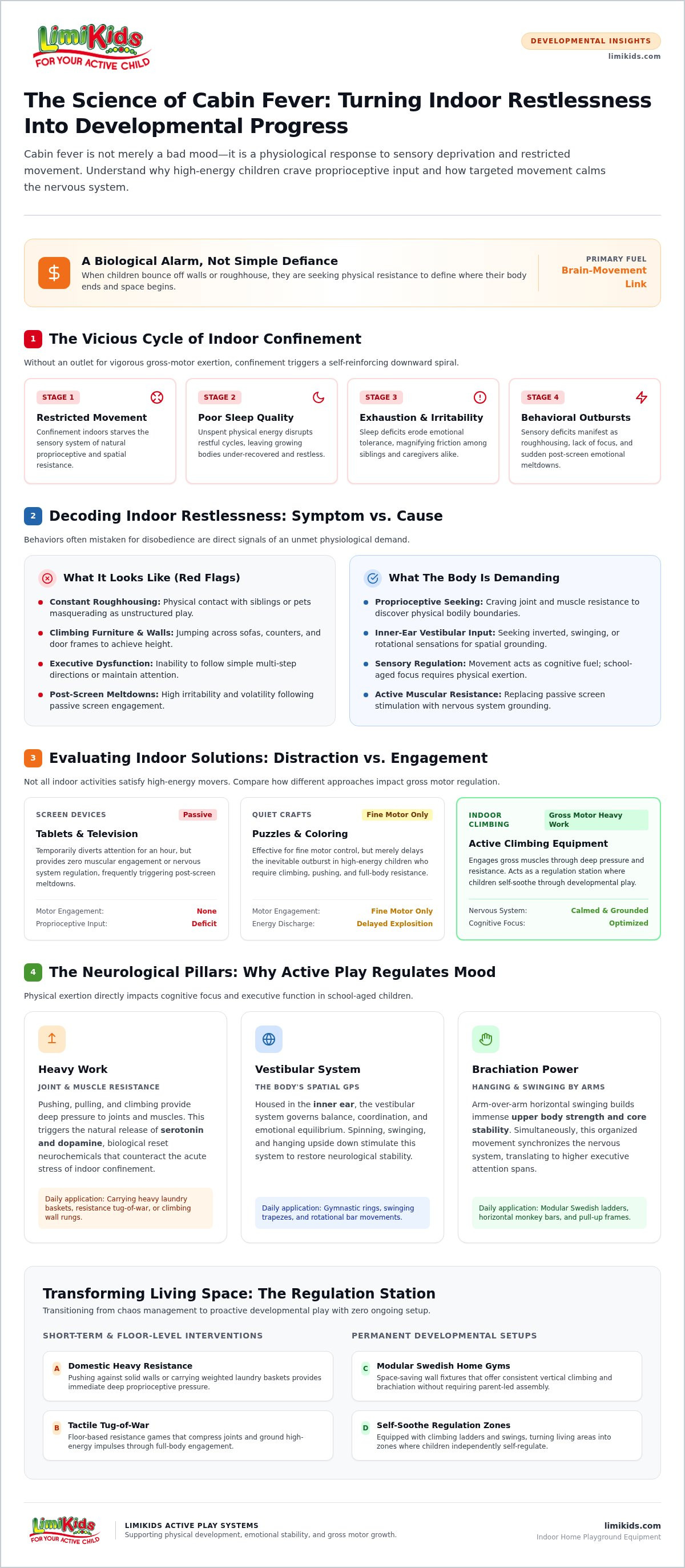
Cabin fever isn't a mood. It's a biological alarm. When your kids are trapped indoors, their bodies react to the physical confinement. This leads to the psychological effects of cabin fever, including irritability and extreme restlessness. You aren't just dealing with boredom. You are managing a physiological crisis. Finding effective cabin fever solutions for families starts with understanding that your children need to move to feel safe. Without movement, the "vicious cycle" begins. A lack of physical activity leads to poor sleep. Exhaustion breeds irritability. Irritability fuels outbursts. It's a loop that leaves everyone drained.
It's okay to feel overwhelmed. Your house feels small because your children's energy is big. You aren't failing as a parent. You're simply navigating a space that wasn't designed for the high-intensity needs of a growing child. Validating your own stress is the first step toward transforming your home into a functional environment. When the walls feel like they're closing in, it's a sign that the current "quiet time" strategy has reached its limit. High-energy kids don't need more silence; they need more sensory input.
The Red Flags of Indoor Restlessness
The signs of confinement are everywhere. You see them in the increased sibling rivalry and the constant "roughhousing" that feels more like a search for physical contact than a game. Your kids struggle to focus on simple tasks. They can't follow instructions. This isn't defiance; it's a sensory deficit. Proprioceptive seeking is a child's way of finding their physical boundaries. When they don't have a safe outlet, they use the furniture, the walls, and each other to find that resistance. They are literally trying to "feel" where their body ends and the room begins.
Why Traditional 'Quiet Play' Isn't the Answer
Stop trying to fix energy with puzzles. Coloring and crafts are great for fine motor skills, but they do nothing for a child who needs to climb. For high-energy "movers," sedentary activities are just a way to delay the inevitable. Pent-up energy always explodes later in the day. There's a massive difference between distraction and engagement. A tablet might distract them for an hour, but it doesn't engage their muscles or regulate their nervous system. Engagement requires resistance, height, and movement. To beat the cabin fever solutions for families trap, you must pivot from passive entertainment to active participation.
The Science of Movement: How Proprioception Battles Boredom
Movement is the brain's primary fuel. When kids are cooped up, their sensory systems starve. This isn't just about "burning off energy." It's about providing the proprioceptive and vestibular input required for emotional stability. Finding these cabin fever solutions for families is about more than just surviving the winter; it's about optimizing development. Physical exertion directly impacts cognitive focus. Research shows that school-aged children who engage in vigorous movement exhibit better attention spans and executive function. Brachiation, or hanging and swinging by the arms, is a powerhouse for this development. It builds massive upper body strength and core stability while organizing the nervous system for better learning. When the body works, the mind follows.
Heavy Work: The Secret to a Calmer Household
Heavy work refers to any activity that pushes or pulls against the body. Think of it as a "reset button" for a frantic child. Pushing against a wall, pulling up a ladder, or climbing a frame provides deep pressure to the joints and muscles. This input triggers the release of serotonin and dopamine. These neurochemicals naturally counteract the stress of confinement and help regulate mood. You can integrate this into your day easily. Have your child carry "heavy" laundry baskets or engage in a resistance-based tug-of-war. For a more permanent solution, indoor playground equipment provides consistent, high-impact heavy work that requires zero parent-led setup. It turns your living room into a regulation station where kids can self-soothe through play.
Vestibular Input and Emotional Regulation
The vestibular system, located in the inner ear, is the body's spatial GPS. It manages balance, coordination, and emotional stability. When kids spin, swing, or hang upside down, they're stimulating this system to regulate their mood. Confinement starves this "GPS." This starvation leads to the "climbing the walls" behavior you see every afternoon. They aren't being naughty. They're seeking neurological stability. Structured indoor climbing offers a safe way to get this vital stimulation. It allows children to explore height and gravity without the risks of jumping off the sofa. By meeting these sensory needs through movement, you transform a chaotic afternoon into a session of purposeful growth. Your kids stay focused, and your home stays peaceful.
Evaluating Indoor Solutions: Screen Time vs. Active Play Systems
Consider the footprint of your play area. Pop-up tents and plastic tunnels take up massive amounts of floor space and require constant setup and teardown. In contrast, vertical climbing systems utilize the "dead space" of your walls and ceilings. This leaves your floor clear for daily life while providing a 24/7 outlet for energy. Durable equipment isn't just a toy; it's a structural upgrade to your home's functionality. It transforms a standard bedroom or basement into a high-performance development zone. For parents looking to complement these kids' zones with their own workout gear, Gym Pros offers professional-grade fitness equipment for the home.
The "post-screen meltdown" isn't a coincidence. It's a sensory crash. When a child stares at a tablet, their brain is overstimulated by rapid visual inputs while their body remains completely stagnant. This disconnect creates irritability. Physical movement is the only true reset for a bored, overstimulated brain. Passive screen time often displaces the critical hour of movement recommended by the CDC physical activity guidelines for children. Without that physical outlet, the nervous system stays "on high alert," leading to behavioral outbursts and poor sleep patterns. Movement isn't optional; it's a biological requirement for a regulated household.
Building a Movement-Rich Environment
Your home's design should encourage activity, not stifle it. This is the core of "Active Architecture." By making movement part of the room's design, you remove the barriers to play. Maximize your vertical space by installing climbing rungs or Swedish ladders that reach the ceiling. This approach is especially effective in smaller Canadian homes where floor space is a premium. Incorporating Montessori play equipment allows for independent exploration and self-directed physical challenges. When kids have safe, permanent tools for climbing and hanging, they stop using your furniture as a jungle gym. You gain peace of mind, and they gain a dedicated space for discovery.
The Ultimate Cabin Fever Roundup: 10 Solutions for Every Family
Stop managing boredom. Start providing outlets. Effective cabin fever solutions for families range from immediate hacks to structural home upgrades. Every option focuses on developing gross motor skills without requiring you to act as a 24/7 entertainer. These activities provide the sensory-heavy input needed for neurodivergent or high-needs children to feel grounded and safe. By converting restless energy into purposeful movement, you transform your home from a place of confinement into a space of discovery. You don't need a massive backyard to give your kids the playground experience they crave.
Quick-Fix Activities for Immediate Relief
Build an indoor 'Lava' course today. Use sofa cushions, blankets, and sensory mats to create a navigation challenge across the living room. This simple setup forces kids to use balance and coordination while burning off excess energy. It's a zero-cost way to get them moving right now. Introduce animal walks for heavy work. Bear crawls, crab walks, and frog jumps provide intense resistance to the joints and muscles. These movements are perfect for grounding a child who feels "bouncy" or dysregulated. They engage the whole body and require zero equipment.
For instant regulation, try the 'Wall Push' challenge. This isometric exercise requires the child to push against a solid wall with all their strength for ten seconds. It provides immediate proprioceptive feedback. It's a quiet, high-intensity tool that works in any room of the house. Pair these with a sensory Lycra swing or a simple indoor trampoline for a complete sensory circuit. These quick fixes bridge the gap between outdoor play sessions and keep the household calm.
Permanent Solutions for Long-Term Activity
Transform your home's architecture into a space for growth. Installing a climbing frame with slide indoor offers multi-sensory play that never gets old. It provides the height and speed kids crave safely within your sight. Add monkey bars to master upper body strength and brachiation. These are essential for physical confidence and core stability. Permanent equipment removes the "setup barrier" and allows for spontaneous, active play whenever the need arises.
Swedish wall gyms are the ultimate space-saving vertical playground for Canadian homes. They utilize wall space rather than floor space, keeping your living areas clear. These systems support up to 220 lbs, making them a durable investment that lasts through adolescence. Unlike plastic toys, these steel-framed systems offer the structural integrity required for high-energy play. They empower your children to challenge themselves independently every single day. If you're ready to provide a permanent outlet for energy, consider the benefits of sensory play equipment for your home.
Investing in Sanity: The LIMIKIDS Indoor Home Gym Advantage
Your search for effective cabin fever solutions for families ends with a commitment to quality. LIMIKIDS serves as the premier provider of indoor home gyms for kids, acting as an empowering guide for parents who refuse to let winter win. We don't just sell equipment; we provide a roadmap for your child's physical development. Our systems are designed to grow with your child, moving from simple ladder climbs to complex monkey bar traversals. In modern Canadian homes, floor space is a premium asset. Our "small footprint" design philosophy prioritizes vertical play, allowing you to install a full-scale playground in a bedroom or basement without sacrificing your living area.
Structural integrity is our baseline. Every build utilizes high-quality, powder-coated steel and anti-slip rungs to ensure a grip that lasts. We focus on permanence and reliability because your child's safety is non-negotiable. By bringing the playground inside, you provide a 24/7 outlet for energy that isn't dependent on the weather. This is how you transform a home from a place of confinement into a space of limitless discovery.
Why Quality and Structural Integrity Matter
Cheap plastic alternatives are a safety risk. They tip, crack, and fail under the pressure of high-energy play. LIMIKIDS systems are built for the long haul. Our Swedish ladders and main frames are rated for a maximum weight capacity of 220 lbs. This high-load-bearing capacity ensures that the equipment remains stable even during the most vigorous "heavy work" sessions. A permanent gym setup encourages daily, spontaneous exercise. When the tools for movement are always available, kids naturally choose climbing over screens. You won't need to prompt them to be active; the equipment does the work for you. For parents who want to model this active lifestyle, SUZANA SHOP provides expert advice on selecting the best barbell sets for your own home fitness routine.
Creating a "Yes Space" is the ultimate gift for a busy parent. This is a dedicated area where kids can climb, hang, and swing safely without constant, hovering supervision. It fosters independence and builds physical confidence. Since 2008, we've helped families across the country reclaim their peace of mind with fast national shipping across Canada. The logistics are simple, and the impact is immediate. Stop managing the "bouncing" energy and start leading a household that thrives on movement. Explore our full range of indoor jungle gyms and start your family's transformation today!
Reclaim Your Space and Fuel Their Growth
Don't let confinement dictate your family's mood. You now understand that "bouncing off the walls" is a biological search for sensory input. By choosing active play over passive screens, you provide the proprioceptive "heavy work" your children need to stay regulated. Implementing these cabin fever solutions for families turns a chaotic living room into a purposeful gym. It's about moving from managing a crisis to leading a lifestyle of activity and discovery.
Since 2008, LIMIKIDS has helped Canadian families reclaim their peace of mind with high-quality, space-saving designs. We make it easy to prioritize physical development with fast national shipping across the country. You can create a "Yes Space" that grows with your child and protects your sanity. Your home is ready for a transformation. Let's start climbing!
Turn Your Home Into a Playground—Shop LIMIKIDS Now!
Frequently Asked Questions
What are the first signs of cabin fever in toddlers?
Toddlers show cabin fever through increased irritability, disrupted sleep patterns, and physical outbursts. They often engage in "crashing" behavior, where they throw themselves against furniture to find physical boundaries. This is a clear sign they need high-intensity movement. If your toddler is suddenly more clingy or refuses to settle for quiet play, they're likely seeking the sensory input that indoor confinement has taken away. Movement is their primary way to regulate.
How much space do I really need for an indoor home gym?
You don't need a dedicated gym room to provide a physical outlet. Compact models require a footprint of only 41.7 inches wide. These systems utilize vertical wall space rather than sprawling across your floor. For safety, ensure you have enough room for a crash mat that extends around the equipment perimeter. This space-saving design is ideal for modern Canadian homes where every square foot of floor space counts for daily living.
Are indoor monkey bars safe for low ceilings?
Yes, specific models are designed for shorter spaces like basements. These versions fit ceiling heights between 6 feet 9 inches and 8 feet 9 inches. The tension-mounted mechanism allows for a secure fit without drilling into your floors. This makes indoor monkey bars a viable option for lower rooms, provided you maintain a safe fall zone with proper energy-absorbent surfacing beneath the equipment to protect against impacts.
How do I choose between a wooden vs metal indoor jungle gym?
Metal systems made from high-grade steel offer superior structural integrity and a higher weight capacity of 220 lbs. Unlike wood, steel doesn't warp, crack, or splinter over time. This makes metal a more reliable choice for high-energy families who need equipment that stays permanent and safe. Steel frames also allow for modular upgrades like spider nets and rings, providing more long-term value as your child grows and develops.
Can indoor climbing equipment help children with sensory processing issues?
Indoor climbing equipment is a vital tool for children with sensory processing needs. It provides both proprioceptive input through muscle resistance and vestibular stimulation through movement. These activities help regulate the nervous system, which reduces anxiety and improves focus. By engaging in "heavy work" like climbing and hanging, children can self-soothe and organize their sensory systems in a safe, controlled environment right in their own home.
What age is appropriate to start using a Swedish wall gym?
Children can begin using a Swedish wall gym as early as toddlerhood with close parental supervision. These systems are designed to grow with your child. Younger kids use the lower rungs to develop balance and coordination, while older children and even teens use the monkey bars and rings for advanced strength training. The 220-lb weight capacity ensures the equipment remains a functional and safe part of their fitness routine for years.
How do I keep my kids active indoors without constant screen time?
Creating a permanent "Yes Space" is the most effective way to reduce screen time. When kids have a dedicated climbing area, they naturally choose movement over passive entertainment. These cabin fever solutions for families focus on making activity the easiest choice. By providing high-energy tools like rope ladders and gymnastic rings, you satisfy their biological need for stimulation. This effectively prevents the "post-screen meltdown" and keeps them engaged independently.
Does LIMIKIDS ship nationally across Canada?
LIMIKIDS provides fast national shipping across all provinces in Canada. Since 2008, we've focused on helping families nationwide transform their homes into active growth zones. Your order is processed efficiently to ensure your new indoor playground equipment arrives ready for setup. Whether you live in a suburban house or an urban apartment, we deliver high-quality climbing systems directly to your door to help your family beat the indoor slump.