






Home Climbing Walls for Kids: A Parent's Guide
What if the biggest challenge isn’t choosing climbing holds, but making sure there’s enough clear space to climb and land? For a kids climbing wall home project, fit comes first: measure the wall and floor space, consider how the structure will be mounted, and plan a suitable landing zone. A setup that works beautifully in one room may crowd another.
It’s natural to want a fun challenge that helps your child move, explore, and build confidence. It’s just as important to check whether the equipment suits your child’s abilities and how you’ll supervise play. A climbing wall needs thoughtful planning, not just a free patch of wall.
This guide will help you assess your room, compare a DIY build with purpose-designed indoor climbing equipment, and make a practical checklist for installation, fall space, and age-appropriate play. You’ll also consider how the setup might remain useful as your child grows and fit into your family’s routine, so play feels exciting for your child and reassuring for you.
Key Takeaways
- Map the full play zone before choosing a kids climbing wall home setup, including approach space and any clearances specified by the manufacturer.
- Compare DIY and ready-made options by fit, mounting requirements, adaptability, and the work you’ll need to manage.
- Plan for safer play by checking installation and use instructions, keeping the climbing area clear, and supervising your child.
- Choose equipment that suits your child’s interests and abilities now, then check which configurations are documented for continued use as they grow.
Kids Climbing Wall Home: What It Is and Who It Suits
A home climbing setup gives children a place to move, explore, and take on manageable challenges indoors. It might be a single wall feature or part of a larger play space. Either way, choosing one takes more than finding an empty stretch of wall. Your child, the room, the wall construction, and the intended use all matter.
A kids’ home climbing wall is a wall-mounted feature or purpose-designed indoor structure with holds or grips that children use to climb, move across, and practise age-appropriate challenges at home. It may stand alone or form one activity within a complete play system.
What counts as a kids’ climbing wall at home?
Some setups use climbing holds attached to a wall surface. Others are purpose-designed indoor climbing equipment or part of a broader system that combines climbing with other movement activities. The Climbing wall overview describes the wider range of wall types and their features. At home, the structure, mounting method, play area, and manufacturer’s instructions must all suit the specific room.
A climbing wall doesn’t have to take over a room. It can be one defined activity within a larger play zone. But not every wall surface or layout is suitable for mounting equipment or supporting active use. Treat the room and its construction as part of the plan, not as a blank backdrop.
Which children and families might consider one?
A kids climbing wall home setup may appeal to a child who enjoys climbing, moving, and working through physical challenges. Interest isn’t the only consideration. Think about your child’s current abilities, confidence, comfort with climbing, and the adult supervision they need during active play.
There’s no universal starting age for every child or product. Read the manufacturer’s guidance to determine age and use suitability, and match the equipment to the child who’ll use it. A child who is still gaining confidence may need a different setup and closer support than a more experienced climber. Choose for the child in front of you, not an assumed milestone.
Family routines matter, too. Consider whether an adult can be present when the wall is in use and whether the equipment fits the space you can dedicate to play. A well-matched setup should invite movement while leaving room for everyday family life. Assess the room and play zone before comparing specific options.
Plan a Home Climbing Wall Around Your Room and Child
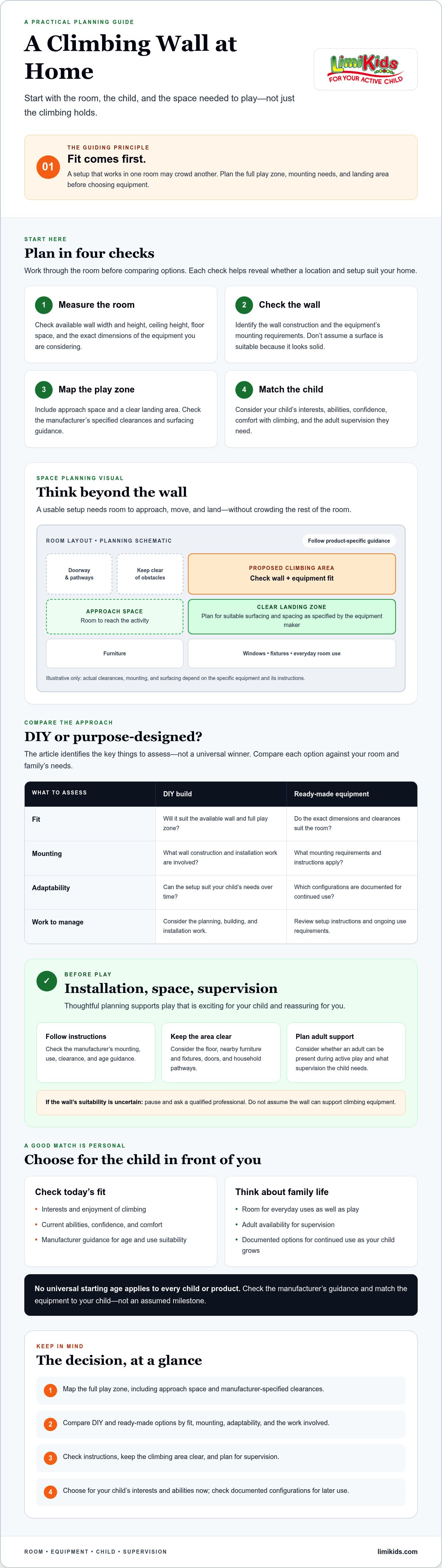
A few careful checks can help rule out poor-fit options before you buy materials or equipment. Plan in this order: measure the room, inspect the proposed wall, define the full play zone, then compare climbing options. For a kids climbing wall home setup, usable space includes more than the wall itself. Your child needs room to approach it, move safely, and land within the area described by the equipment maker.
What should parents measure before choosing a wall?
Start with the available wall width and height. Compare those measurements with the exact dimensions of the equipment you’re considering. Check ceiling height and any product-specific clearances in the manufacturer’s instructions. Requirements vary, so don’t rely on generic measurements.
Look beyond the wall. Note nearby doors and windows, heating fixtures, furniture, and the routes people use to move through the room. A wall that fits on paper may still obstruct a doorway, crowd a shared space, or sit too close to furniture. Consider household routines, too. The play zone should remain usable when the room serves its other everyday purposes.
How do you assess the wall and play area?
Find out what the proposed wall is made of and how the equipment is designed to attach. If you’re unsure whether the surface or structure is suitable, pause and ask a qualified professional. Don’t assume a wall can support climbing equipment simply because it looks solid. Follow the manufacturer’s instructions for mounting and required clearances.
Next, define a clear landing area around the climbing zone. Check the equipment maker’s guidance for suitable surfacing and spacing, and account for the floor beneath as well as nearby obstacles. Ceiling height, flooring, furniture, and traffic through the room all affect whether children can use the setup as intended. If those conditions don’t work together, reconsider the location or compare another type of equipment.
Planning checklist: measure the wall and ceiling, verify the product dimensions and clearances, identify the wall construction, and map a clear play and landing zone around doors, fixtures, furniture, and household pathways.
For broader questions about selecting equipment for your room and family, see this indoor home gym buying guide. If you’re comparing a wall feature with a larger setup, explore indoor climbing equipment as one option to assess against your space, child, and intended use.
DIY or Ready-Made Kids Climbing Wall: How to Compare
Choosing a kids climbing wall home setup means weighing more than appearance. A DIY build can be tailored to a particular room, while ready-made indoor climbing equipment comes with product-specific dimensions and instructions to review. Neither option removes the need to check the wall, play area, intended users, and supervision plan. Compare the practical demands before deciding.
| What to compare | DIY wall | Ready-made equipment |
|---|---|---|
| Fit | Flexible layout, but you determine dimensions and clearances. | Compare published dimensions and clearances with your room. |
| Mounting | You plan the attachment method and confirm the wall can support it. | Review the manufacturer’s mounting and assembly instructions. |
| Adaptability | You can plan the layout around your goals, subject to sound construction. | Check which configurations or adjustments are documented. |
| Parent workload | Includes researching materials, planning, building, and inspecting. | Still requires careful selection, assembly, installation, and ongoing checks. |
When might a DIY climbing wall be worth exploring?
DIY may appeal if you want to shape the layout around an unusual room or a specific play area. That flexibility comes with responsibility: you’ll need to choose appropriate materials, plan secure attachment, consider the finish, and inspect the structure over time. If you’re uncertain about the wall’s construction or how to install the system safely, seek qualified professional advice before proceeding. Custom doesn’t mean simpler.
What should parents compare in ready-made equipment?
Use the manufacturer’s published specifications to compare exact dimensions, stated age guidance, assembly steps, and any documented load limits. Check the instructions for mounting and use, too. Compare material and construction details rather than assuming a product is suitable because it looks sturdy or is marketed for children.
Material choice can affect the feel and practical fit of a play setup. For a broader look at trade-offs, read this wood-versus-metal jungle gym guide. Apply the same careful approach to a climbing wall: rely on documented product information, not assumptions about durability or future adjustments.
Families in Canada can compare purpose-designed options with a DIY plan. LIMIKIDS offers indoor climbing equipment for home play. Whichever route you consider, include active adult supervision in your plan. A ready-made product’s instructions guide setup and use; they don’t replace a parent’s judgement about the child and play environment.
Kids Climbing Wall Safety: Mounting, Surfacing, and Supervision
A safer kids climbing wall home setup depends on several things working together: equipment suited to its intended use, correct installation, a clear play area, and attentive adult supervision. No anchor, wall type, or landing surface is right for every home or product. Start with the manufacturer’s instructions, and don’t guess when a structural or installation detail is unclear.
What should parents check before installation?
Before assembling or mounting anything, confirm that the wall construction and attachment method meet the equipment’s instructions. If you can’t determine whether the surface or structure is suitable, ask a qualified professional to assess it. Move or account for furniture, windows, doors, heating fixtures, and other obstacles that could intrude into the planned play area. Follow the product maker’s directions for required spacing and landing surface; don’t assume a particular mat or floor is suitable without checking the guidance.
How can families make everyday use more mindful?
Use the product’s stated age guidance, use instructions, and load limits rather than applying generic rules. Inspect the equipment and attachments as directed by the manufacturer. If you notice damage, looseness, or movement, stop use until the concern has been assessed and addressed according to the instructions.
Set simple household rules your child can understand, such as taking turns and using the equipment only as directed. Supervise according to your child’s abilities and needs. A child’s confidence or climbing experience doesn’t replace the need to follow product guidance and stay attentive during play.
Pre-use checklist:
- Confirm the wall construction and mounting method against the equipment instructions.
- Resolve uncertain structural or installation questions with a qualified professional before use.
- Check that the surrounding play area is clear and that any specified spacing and surface guidance is followed.
- Review the product’s age, use, and load limits with every caregiver.
- Inspect the equipment and attachments as directed, and stop use if damage or movement appears.
- Set clear play rules and provide supervision suited to the child.
Before relying on claims about a product, verify them against its current manufacturer documentation. This includes any stated age or load limits, mounting requirements, inspection directions, and claims about safety standards or certifications. Don’t infer certification from a product’s appearance or category.
Looking for indoor climbing equipment to compare with your room and installation requirements? Explore indoor climbing equipment and review the product-specific instructions before making a choice.
Choose a Home Climbing Wall That Can Grow with Your Family
A useful setup fits more than a child’s current interests. It needs to work in your available space, suit the way your child likes to play, and fit your family’s everyday routine. Before choosing, picture a typical play session: who can supervise, when the room is available, and whether the climbing area can stay clear when play is over.
How can you judge whether a wall will stay useful?
Start with the manufacturer’s description of intended users and permitted use. Check whether the equipment has documented configurations or adjustments that may suit changing needs. Don’t assume holds can be rearranged, accessories added, or the structure used in new ways unless the manufacturer says so.
Think about the room as well as the equipment. A play area that works today may need to share space with new furniture or different family activities later. Ask whether the climbing zone can remain accessible and clear as your child’s interests and abilities change. The goal isn’t to predict exactly how long a wall will be used. It’s to choose based on reliable product guidance and a realistic view of your home.
Also consider whether climbing is the activity your child will return to, or one part of a broader mix of active play. Indoor climbing equipment can sit alongside other forms of movement and play, but every addition should fit the space and routine. A more complex setup isn’t automatically a better match.
Where can parents explore indoor climbing options?
Use a short decision check before you settle on a direction:
- Space: Can the play area remain usable without disrupting everyday room activities?
- Interests: Does the equipment reflect the kind of movement and challenge your child enjoys?
- Routine: Can your family make time for supervised play and keep the area ready for use?
- Future use: Are any adjustments or configurations documented by the manufacturer?
LIMIKIDS is a Canadian retailer of indoor climbing and play equipment for homes, and has helped families create active play spaces since 2008. If you’re comparing options, explore LIMIKIDS indoor play equipment and review each product’s specifications and manufacturer guidance before choosing. Let fit guide you: the right kids climbing wall home setup suits your child, your room, and the way your family lives.
Make Room for Confident, Active Play
A successful kids climbing wall home plan starts with a good fit: match the equipment to your child’s interests and abilities, measure the full play zone, and check that the wall and installation meet the manufacturer’s instructions. Whether you choose DIY or ready-made equipment, include clear space and active supervision in the plan.
Think beyond the first climb, too. Review documented configurations and intended use, then consider how the equipment will fit your room and family routine as they change. The right choice is one that feels engaging for your child and practical for your household.
LIMIKIDS is a Canadian retailer of indoor climbing and play equipment for home use. The company has helped families create active play spaces since 2008, with dedicated customer support and shipping across Canada. Explore LIMIKIDS indoor climbing and play equipment and review the product details as you compare options.
With thoughtful planning, you can create a space that invites your child to move, explore, and take on new challenges with your support.
Frequently Asked Questions
Is a climbing wall safe for kids at home?
A home climbing wall can support active play when the equipment suits the child and is correctly installed and used. Follow the manufacturer’s instructions for mounting, age guidance, load limits, inspection, and required clearances. Keep the play area free of obstacles and provide active adult supervision suited to your child’s needs. If you’re unsure whether the wall or installation is suitable, stop and seek qualified advice before use.
What age can a child use a home climbing wall?
There isn’t one starting age that suits every child or climbing wall. Check the manufacturer’s stated age guidance and intended use for the specific equipment, then consider your child’s abilities, confidence, and need for supervision. A child’s interest in climbing doesn’t automatically mean a particular product is appropriate. If the manufacturer’s guidance doesn’t clearly address your child’s situation, contact the maker for clarification before choosing or using the equipment.
Can you install a kids climbing wall on any wall?
No. A wall that looks sturdy may not be appropriate for climbing equipment, and mounting requirements differ by product. Check the manufacturer’s instructions for the wall construction, attachment method, and installation details. Don’t guess about anchors or assume a particular surface can support the equipment. If you can’t confirm that the proposed wall meets the instructions, ask a qualified professional to assess the structure before installation.
How much space do you need for a kids climbing wall at home?
There’s no single room measurement that works for every setup. Measure the available wall width and height, then compare them with the equipment’s exact dimensions and stated ceiling and clearance requirements. Include space for a child to approach and use the wall, plus the designated landing area. Check nearby doors, windows, heating fixtures, furniture, and household pathways so the play zone won’t be obstructed.
Do kids need a mat under an indoor climbing wall?
Use the manufacturer’s guidance to determine what surface is appropriate beneath and around the wall. Don’t assume any mat, floor covering, or landing surface will suit every product or installation. Check the instructions for recommended surfacing and spacing, and make sure the area is clear of furniture and other obstacles. If the product documentation doesn’t explain landing-surface needs, ask the manufacturer before children use the equipment.
Is a DIY climbing wall better than a ready-made one?
Neither option is automatically better. A DIY wall can be tailored to a room, but you’re responsible for assessing materials, attachment design, finish, and ongoing inspection. Ready-made equipment offers product-specific dimensions and instructions to review, but still requires careful fit and installation checks. Compare documented specifications, mounting needs, adaptability, and the work you can manage. Seek qualified advice if structural or installation questions exceed your expertise.
Can a home climbing wall work in a small room?
It may, if the equipment and its required play zone fit without blocking everyday movement or crowding the room. Measure the wall and ceiling, check the product’s dimensions and specified clearances, and include approach and landing space in your plan. Consider doors, furniture, and household pathways. Some options take less floor space than others, but don’t choose by wall size alone; follow the manufacturer’s layout and use guidance.