






Ultimate Montessori Gym for Toddlers at Home (2026)
It's a rainy Tuesday afternoon, and your toddler is currently treating your sofa as a launching pad and your coffee table as a mountain peak. You want them to burn that boundless energy, but the constant "be careful!" is exhausting for both of you. You're likely worried about safety or how a massive setup might swallow your living room. Investing in a Montessori gym for toddlers isn't just about buying a toy; it's about building a foundation for physical confidence. You need a solution that balances high-energy play with structural integrity and expert-backed safety.
We agree that your home should be a sanctuary for growth, not a source of anxiety. You can master the art of designing a safe, high-energy indoor play space that fuels your child's cognitive and physical milestones. This guide shows you exactly how to choose equipment that supports coordination while fitting perfectly into your modern lifestyle. We'll explore the latest 2026 safety certifications like ASTM and CPSIA, space-saving Swedish walls, and modular designs that grow alongside your child. Get ready to turn that living room chaos into a streamlined zone of discovery and movement.
Key Takeaways
- Unlock your child's physical potential by understanding how a Montessori gym for toddlers fosters independent gross motor development and confidence.
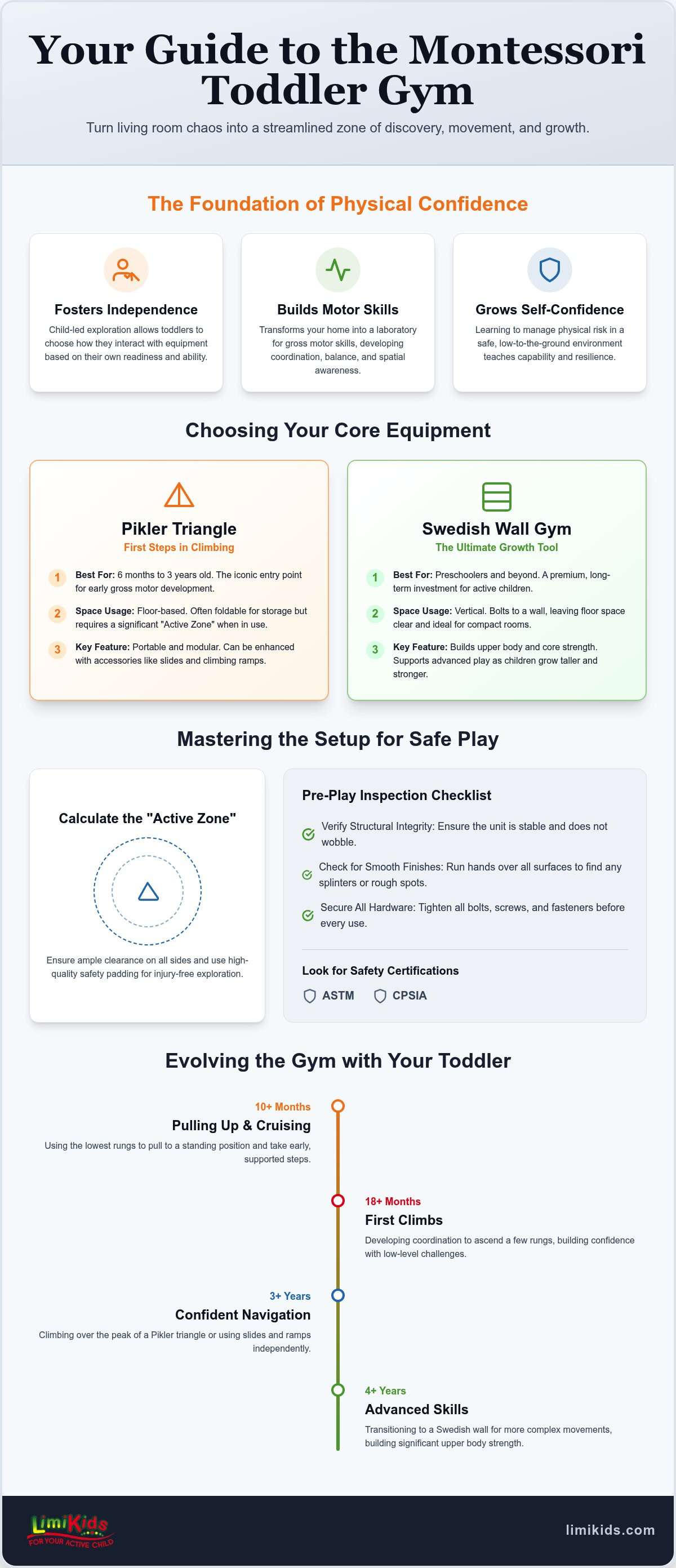
- Choose the right equipment for your home by comparing the classic Pikler triangle with the premium, space-saving vertical Swedish wall gym.
- Master the "Active Zone" calculation to ensure your indoor play area has the necessary clearance and high-quality safety padding for injury-free exploration.
- Learn the professional unboxing and inspection steps to verify structural integrity, smooth finishes, and hardware security before play begins.
- Discover how to evolve your gym setup through specific developmental phases, from early cruising at 10 months to advanced, confident climbing.
What is a Montessori Gym for Toddlers?
A Montessori gym for toddlers is more than just a piece of furniture. It is a carefully curated environment designed to meet a child's innate need for movement. Unlike traditional playrooms filled with flashing lights and plastic noise-makers, this setup focuses on the child's physical autonomy. It follows the core principle of freedom of movement. This means your child chooses how to interact with the equipment based on their own readiness. They lead. You observe. This approach was heavily influenced by the work of Dr. Emmi Pikler, who believed that children develop best when allowed to move at their own pace without adult interference.
Traditional toys often entertain toddlers passively. They do the work for the child. In contrast, a Montessori gym for toddlers demands active participation. It transforms your living room into a laboratory for gross motor skills. The core goal is simple but profound: building self-confidence through managed physical risk. We know the fear of a fall is real. However, providing a low-to-the-ground, stable environment allows your child to test their limits safely. When a toddler successfully navigates a rung or balances on a beam, they aren't just moving. They are learning that they are capable and resilient.
The Science of Gross Motor Development
Climbing isn't just about burning energy. It's about proprioception. This is the body's ability to sense its own position in space. Every time your toddler reaches for a bar, their brain processes complex data about distance, grip strength, and gravity. This physical coordination is directly linked to cognitive focus. A child who masters their body often finds it easier to concentrate on mental tasks later. Active discovery beats passive entertainment every time. It builds neural pathways that sit-and-watch toys simply can't touch. It develops spatial awareness that serves them for a lifetime.
Key Features of a Montessori-Inspired Setup
Why wood and metal? These natural materials provide honest sensory feedback. Plastic is often too smooth or too light. Wood has a unique texture that helps a tiny hand grip securely. It feels sturdy because it is. This structural integrity is vital for active play. Minimalist design is also crucial. By reducing visual clutter, you encourage deep play and prevent overstimulation. A single piece of high-quality equipment offers infinite scenarios. One day it's a mountain. The next, it's a tunnel or a secret fort. This open-ended functionality ensures the gym remains relevant as your child grows, providing years of value from a single investment.
Comparing Core Equipment: Pikler Triangles vs. Swedish Wall Gyms
Choosing the right Montessori gym for toddlers often comes down to two heavy hitters: the classic Pikler Triangle and the versatile Swedish Wall Gym. Both offer incredible developmental value, but they serve different needs in terms of space and longevity. While one is a portable starter piece, the other is a permanent fixture designed to grow with your child. Understanding the structural differences helps you invest in a setup that won't be outgrown by next year's birthday.
The Pikler Triangle: First Steps in Climbing
The Pikler Triangle is the iconic entry point for tiny adventurers. It's specifically designed for the earliest stages of gross motor development, typically serving children from 6 months to 3 years old. These triangles encourage toddlers to pull themselves up and eventually navigate the peak, building confidence with every rung. Many parents love the foldable designs because they can be tucked away after playtime. However, keep in mind that even foldable models require a significant "Active Zone" on your floor when they're in use.
To keep the challenge fresh, you can add accessories such as slides, climbing ramps, or even rope nets. These additions transform a simple frame into a multi-functional Montessori gym for toddlers. Just remember that as your child gets taller and heavier, the physical limits of a small wooden triangle may eventually be reached. If you want a piece that lasts through the elementary school years, you might need to look higher up the wall.
The Swedish Wall Gym: The Ultimate Growth Tool
If you're dealing with a compact living room or a high-energy preschooler, a Swedish Wall Gym is the premium solution. Unlike floor-based sets, these systems utilize vertical space. They bolt securely to your wall or ceiling, leaving your floor clear for other activities. This vertical orientation is essential for building upper body strength and core stability as children reach higher. The developmental benefits of climbing on a vertical plane include improved grip strength and advanced spatial reasoning.
Swedish walls are built for the long haul. While a basic triangle might support a toddler, a high-quality wall gym often features a weight capacity that accommodates older children and even multiple siblings at once. These systems adapt as your child grows, allowing you to move monkey bars or rings to higher positions. It's a "one and done" investment that transitions from a toddler's cruising station to a school-ager's fitness hub. If you're ready to maximize your vertical space, explore high-quality indoor climbing equipment that fits your home's layout.
When comparing footprints, the Swedish wall wins for small apartments. It sits flush against the wall, whereas a triangle set with a ramp can easily take up six to eight feet of floor space. For modern families, the choice usually hinges on whether you prefer a portable, early-years tool or a permanent, space-saving powerhouse.
Assessing Your Home for a Montessori Gym Setup
You've chosen your equipment. Now, you need to prepare the stage. Setting up a Montessori gym for toddlers requires more than just clearing a corner. You're creating a dedicated zone for movement, discovery, and calculated risk. Think of your space in terms of the "Active Zone." This is the total area your child needs to climb, jump, and swing without hitting an obstacle. A gym that looks compact on paper can feel much larger once a toddler starts using a slide or swinging from rings. Your goal is to maximize activity while minimizing anxiety.
Start with a tape measure. Don't just measure the footprint of the gear itself. Measure the reach. If your toddler is hanging from monkey bars, where do their feet land if they drop? If they're zooming down a ramp, where is the run-out? Accessibility is key. Ensure the play corner is inviting and well-lit. Natural light is excellent, but bright, warm overhead lighting ensures they can see every rung clearly during evening play. A cramped, dark corner discourages the very movement you're trying to inspire.
Safety Zones and Clearance Guidelines
Follow the 6-foot rule. Maintain a clear buffer of at least six feet from hard furniture, sharp corners, or glass windows. This prevents accidental collisions during high-energy play. If you're installing a wall-mounted system, identifying studs is non-negotiable. You need that structural integrity to support active weight and dynamic movement. Reliability starts behind the drywall. Also, consider the flow of your home. Avoid high-traffic areas where a swinging toddler might collide with a sibling walking by. A dedicated, low-traffic nook is always the best choice for a Montessori gym for toddlers.
Choosing the Right Play Flooring
Floor surfaces are your primary safety net. Soft landings are non-negotiable. EVA foam tiles are a popular starting point because they're affordable and easy to clean. However, if your child is using higher climbing frames or wall ladders, consider thick sensory crash pads. These provide superior impact absorption for those inevitable tumbles. Ensure the surface is non-slip. A sliding mat is a hazard, not a help. You can integrate these mats with your home's style by choosing neutral, earthy tones that align with the Montessori aesthetic. This keeps the environment calm and focused. High-quality kids gym equipment deserves a foundation that's as stable as the gear itself.
Don't forget to look up. Ceiling height dictates what accessories you can use. Monkey bars and wall ladders require adequate head clearance at the highest point. If your ceilings are low, prioritize horizontal elements. By planning for the "Active Zone" now, you ensure the gym remains a space of growth rather than a source of clutter.
How to Set Up Your Montessori Gym: A Step-by-Step Guide
Your new Montessori gym for toddlers has arrived, and the excitement is real! Before the first climb begins, you need a solid plan for assembly and safety. Start by unboxing every piece in a well-lit area. Inspect the wood for smooth, sanded finishes and ensure the hardware feels heavy and industrial. Structural integrity is your top priority. If a rung feels light or a bolt looks flimsy, stop there. High-quality gear should feel permanent and reliable from the moment you touch it. You're building a foundation for years of active play, so don't rush the inspection process.
Strategic placement is your next move. Align the gym with your child's natural flow of play. Don't shove it into a dark corner where they'll feel trapped. Instead, position it where they have a clear view of the room. This encourages them to move between the gym and other activities seamlessly. Once the gym is assembled, it's time for the "Stress Test." Apply significant weight yourself. Shake the frame. If there's any wobble or creak, tighten the fasteners immediately. You want a rock-solid foundation before your toddler ever touches a rung. When you're ready to introduce the space, step back. Facilitate play without over-intervening. Let them discover the rungs at their own pace. Your role is a silent observer, ready to cheer for their success but allowing them the freedom of movement they deserve.
Installation Best Practices
A secure wall-mounted gym requires the right tools. Grab a high-quality stud finder, a level, and a power drill. Never guess where the support is. Bolting directly into wall studs ensures the equipment can handle the dynamic forces of a jumping toddler. Check fastener tension every few weeks. Joints can loosen with heavy use, so a quick turn of the wrench keeps everything tight. You can also customize your setup by adding Montessori climbing toys as modular pieces. These add-ons keep the environment fresh and challenging as your child’s skills evolve. Ready to build your dream setup? Explore our full range of indoor jungle gyms today.
Safety Verification Checklist
Consistency is key to a safe play environment. Perform a daily visual check before play begins. Look for loose bolts, hair-line cracks in the wood, or mats that have shifted out of place. Adhere strictly to weight limits. Structural fatigue is invisible until it's too late, so don't let older kids exceed the rated capacity. Finally, keep the configuration age-appropriate. If your toddler is just starting to cruise, remove higher monkey bars until they show the core strength to hang safely. This proactive approach ensures your indoor gym remains a sanctuary of growth and energy.
Progressive Play: Evolving the Gym with Your Toddler
A Montessori gym for toddlers is a living environment. It should never feel like a static toy that gathers dust after a few months. As your child's strength and curiosity grow, their gym must adapt to meet them. This progression ensures that the equipment remains a "prepared environment" that offers just the right amount of challenge. By understanding the developmental phases of early childhood, you can transform a single setup into a multi-year investment in your child’s physical literacy.
During Phase 1 (10 to 14 months), your toddler is likely cruising and pulling up. At this stage, the gym serves as a sturdy support system. They'll use the lowest rungs to find their footing and test their balance. It's about vertical exploration at a safe, low level. Move into Phase 2 (18 to 24 months), and you'll see the confident climber emerge. They'll start to navigate the peak of a triangle or reach for higher rungs on a wall. This is the perfect time to introduce ramps or slides to add variety. By Phase 3 (3+ years), your child is ready for mastery. They'll begin mastering monkey bars, swinging from rings, and executing complex coordination tasks. The gym becomes a site for imaginative play and serious athletic development.
Adding Challenges with Accessories
To keep the sense of discovery alive, treat your Swedish wall gym for kids as a versatile base. You can build elaborate obstacle courses by connecting different components or changing the height of the bars. Integrating ropes and rings adds a new dimension of sensory play, challenging their grip and core stability in ways a fixed bar cannot. Using high-quality Montessori play equipment allows for independent exploration that evolves with their interests. If the setup feels too familiar, swap a climbing net for a gymnastic mat or move the monkey bars up six inches. Small changes spark big engagement. Keep the environment fresh, and the play will never stop.
The Role of the 'Observant Parent'
Your role changes as the Montessori gym for toddlers evolves. Be an empowering guide, not a helicopter. Learn when to offer a steadying hand and when to step back completely. If your child is struggling with a new height, give them the space to figure it out. Narrating their play is a powerful tool. Say things like, "You're reaching high with your right hand!" This builds their vocabulary while they're in the middle of a physical action. Set clear boundaries for safe, independent discovery. Once they know the rules of the gym, they can explore with total confidence. You've provided the tools. Now, watch them fly.
Transform Your Living Space into a Hub of Discovery
You've learned that a Montessori gym for toddlers is far more than a simple play structure. It's a foundational tool for building physical literacy, core strength, and unshakeable self-confidence. By prioritizing structural integrity and mastering the "Active Zone" in your home, you've created a safe sanctuary where "be careful" is replaced by "I can do it." Whether you choose a classic climber or a vertical Swedish wall, you're giving your child the freedom of movement they need to thrive during these critical early years.
It's time to turn that vision into reality. LIMIKIDS has specialized in premium quality indoor play equipment since 2008. Our space-saving Swedish wall designs are engineered to grow with your child while respecting your modern living space. We offer fast shipping across Canada to ensure your home transformation begins as soon as possible. Your toddler's journey toward physical mastery starts with a single rung. Empower your child's discovery with a LIMIKIDS Indoor Gym!
Your child's potential is limitless. Give them the environment that matches their energy and fuels their growth. Let's start building that indoor adventure today!
Frequently Asked Questions
What is the best age to start a Montessori gym for a toddler?
You can introduce a Montessori gym for toddlers as early as 6 months for pulling up and cruising. Most children experience the greatest developmental gains between ages 1 and 3 as they master climbing and balance. High-quality equipment is a long-term investment that often supports active play until age 8. Always choose a model that matches your child's current physical milestones while offering room for future growth.
Is an indoor gym safe for an apartment with limited space?
Yes, vertical systems like Swedish wall gyms are the gold standard for space-saving indoor play. These units bolt directly to the wall and occupy almost zero floor space when not in use. You simply need to ensure a clear "Active Zone" of about six feet in front of the equipment during play sessions. It's a brilliant way to transform a small living area into a high-energy growth center.
How do Montessori gyms help with sensory processing disorders?
Climbing and hanging provide intense proprioceptive and vestibular input that helps children organize their sensory systems. This type of heavy work builds body awareness and can have a calming effect on toddlers who feel overstimulated. A Montessori gym for toddlers acts as a functional tool for sensory integration. It allows kids to test their physical boundaries in a predictable, safe, and controlled home environment.
What is the difference between a Pikler Triangle and a Swedish ladder?
A Pikler Triangle is a freestanding, portable A-frame designed for early climbers and low-to-the-ground play. A Swedish ladder is a wall-mounted vertical system that offers significantly more versatility and a higher weight capacity. While the triangle is great for the earliest years, the Swedish ladder saves more space and stays relevant as your child moves into advanced gymnastics and strength building.
Do I need professional installation for a wall-mounted kids gym?
You don't need a professional if you're comfortable using a stud finder and a power drill. The most critical step is anchoring the equipment directly into structural wall studs to ensure it handles dynamic weight. If you're unsure about your wall's integrity or don't own the right tools, hiring a local handyman is a smart move. Safety and peace of mind are always worth the extra step.
How do I clean and maintain wooden Montessori play equipment?
Clean your equipment regularly using a damp cloth and a mild, non-toxic soap solution. Avoid saturated cloths or harsh chemicals that could damage the natural wood grain or water-based finishes. Perform a monthly "hardware huddle" where you check every bolt and fastener for tightness. This simple routine prevents structural fatigue and keeps the gym in peak condition for years of rugged, daily use.
Can more than one child use the gym at the same time safely?
Multiple children can play together if you strictly adhere to the manufacturer's weight limits. Many premium indoor jungle gyms are built to support over 200 lbs, easily accommodating siblings or playdates. Always supervise group play to manage the flow of movement and prevent collisions in the landing zone. It's a fantastic way to build social skills like turn-taking and cooperative problem-solving through active movement.