






How to Build the Ultimate Indoor Obstacle Course for Kids: A Step-by-Step Guide
It’s 4:00 PM on a Tuesday in January, and the Canadian winter has kept your family trapped inside for the third day straight. Your living room looks like a disaster zone of couch cushions and blankets, yet your kids still have a mountain of restless energy to burn. What if you could turn that chaos into a structured, high-energy developmental playground? Building an indoor obstacle course for kids is the ultimate solution to sedentary afternoons and cluttered playrooms. It’s about more than just fun. It’s about creating a space where your children can challenge their limits and master new physical skills without leaving the warmth of your home.
We know the struggle of balancing safety with the need for active play. You want your kids to move, but you also need to know the equipment is rock-solid and reliable. This guide will transform your home into a powerhouse of growth. We promise to provide a clear, step-by-step plan to design a course that builds strength, coordination, and confidence. You will learn how to select the right anchor equipment, map out engaging challenges, and ensure every jump and climb meets the highest safety standards. Let’s get moving and turn your living space into a world of discovery.
Key Takeaways
- Beat the Canadian winter blues by learning how to design an indoor obstacle course for kids that turns restless energy into gross motor skill development.
- Maximize your home’s footprint by using space-saving Swedish walls as the central anchor for a safe and efficient course layout.
- Strengthen your child's upper body and grip by integrating brachiation challenges like professional-grade indoor monkey bars.
- Adapt challenges for every age group to ensure the course grows with your child while maintaining strict safety standards with high-quality landing mats.
- Invest in long-term reliability by choosing premium wood and metal equipment that outperforms temporary plastic alternatives for years of active play.
The Developmental Power of an Indoor Obstacle Course for Kids
An what is an obstacle course is much more than a collection of random hurdles. It is a strategically designed series of physical challenges that test a child’s balance, strength, and coordination. For Canadian families, this isn't just a luxury. It's a necessity during those long winter months when outdoor play isn't an option. You are doing more than just burning off steam. You are building a high-energy developmental playground that targets specific growth milestones right in your living room.
When you set up an indoor obstacle course for kids, you step into the role of an Empowering Guide. You are transforming your home into a proactive environment where movement is celebrated. This intentional play supports sensory integration and proprioception. Proprioception is the body's ability to sense its location and movements. When children master this, they become more graceful, confident, and aware of their physical boundaries. It turns a sedentary afternoon into a session of active discovery.
Building Gross Motor Skills Indoors
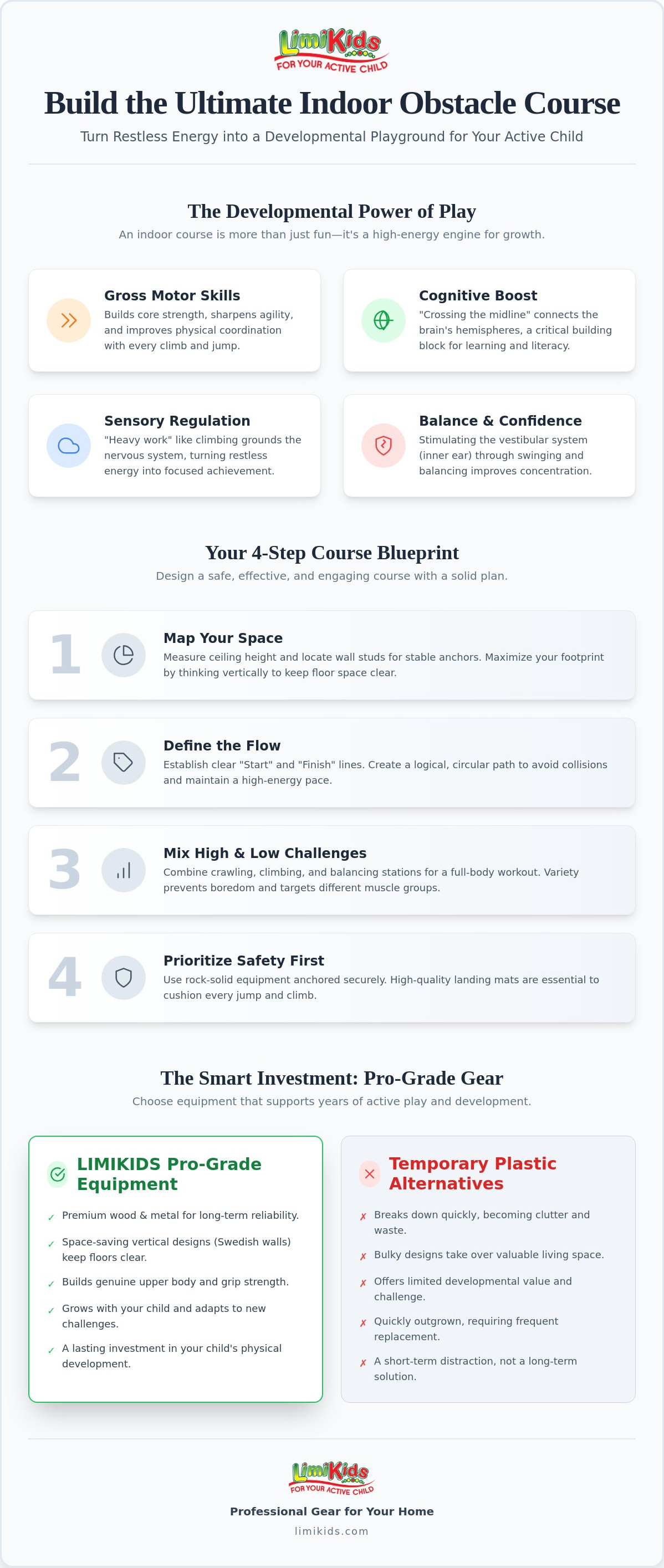
Every climb and crawl serves a specific purpose. These actions strengthen core muscle groups that are essential for everything from sitting still in class to running on the soccer field. A key part of this development is "crossing the midline." This occurs when a child reaches across their body, perhaps to grab a rung on a Swedish wall or a climbing frame. This movement encourages the left and right sides of the brain to work together. It is a critical building block for cognitive development and even future literacy. Varied movements within the course also sharpen agility. They force the brain to map out spatial awareness in real-time, making every jump more precise than the last.
Sensory Benefits and Emotional Regulation
Kids often become restless or "hyper" when they lack proper sensory input. An indoor obstacle course for kids provides "heavy work" through activities like climbing, hanging, or pushing. This type of resistance training helps children self-regulate their emotions by grounding their nervous system. It turns restless energy into focused achievement and helps them feel more settled in their own skin.
We also can't overlook vestibular input. Activities that involve swinging, spinning, or balancing stimulate the inner ear, which is directly linked to focus and attention spans. When a child successfully navigates a difficult balance beam, they aren't just having fun. They are training their brain to stay calm and concentrated under pressure. This is how you turn a simple living room into a world of discovery, grit, and success.
Planning Your Course: Space, Flow, and Safety Essentials
Success starts with a solid blueprint. Map out your territory before you move a single piece of furniture. An indoor obstacle course for kids doesn't require a massive basement or a dedicated playroom. Look at your floor and wall space with a fresh eye. Measure your ceiling height and identify your wall studs. This ensures your anchor stations are positioned for maximum stability. Every inch of your home has potential if you plan with purpose.
Establish a clear "Start" and "Finish" line. This simple step creates a sense of mission. It encourages goal-oriented play and gives children a measurable way to track their progress. Keep the flow logical and circular if possible. You don't want kids crossing paths or running into dead ends. Ensure there is a clear lane for you to supervise comfortably. You need to be close enough to cheer them on without obstructing the high-energy flow. To get started on your blueprint, explore our indoor playground equipment designed for versatile home layouts.
Aim for a full-body workout by mixing your stations. Include "low" challenges like crawling through tunnels or sliding under "laser" strings. Balance these with "high" stations like climbing frames or bars. This variety keeps the brain engaged and the muscles working. It prevents boredom and ensures that every part of the body is being challenged. A well-planned course is a strategic tool for physical development.
For organizations or schools looking to communicate the value of these developmental programs, visiolab.my provides strategic video services that transform complex messages into clear, high-impact visual content.
Maximizing Small Spaces and Apartments
Think vertical. Bulky plastic toys clutter a room and quickly become obstacles themselves. Vertical solutions like Swedish walls are superior because they utilize unused wall space. They stay flush against the wall, leaving the floor open for daily life. Many pieces of professional equipment are multi-functional. They provide a climbing ladder, pull-up bar, and rope station in one small footprint. Use your hallways to your advantage. They make perfect connectors to extend the course length without eating up the center of your living room.
Safety Protocols and Structural Integrity
Safety is your foundation. Always verify the weight limits on every piece of play equipment you introduce. For permanent indoor gyms, professional-grade hardware is essential. Don't settle for flimsy anchors. You need reliability that handles years of active play. Adhering to standards like ASTM F1148, the current consumer safety standard for home playground equipment, ensures your setup meets recognized benchmarks. Create a dedicated "safety zone" around every climbing station. Use high-quality, impact-absorbing landing mats to cushion every jump. Clear all sharp furniture corners from the vicinity. You're building a space for growth; make sure it's a secure one.
Essential Stations for Your Home Obstacle Course
An indoor obstacle course for kids is only as effective as the challenges it presents. Think of each station as a specific mission. You aren't just moving furniture. You're training. To create a high-performance environment, you need anchor points that offer both variety and structural integrity. These stations target different physical systems, from the muscles in their hands to the vestibular system in their ears. By mixing vertical and horizontal challenges, you ensure every session is a full-body workout.
Start with a clear vision for each zone. You want a circuit that flows naturally but keeps the brain guessing. Coordination is the glue that holds movement together. A balance beam or sensory balance board requires intense focus. It trains the brain to communicate with the feet in real-time. You can make this even more engaging by designing "don't touch the lava" scenarios. Use sensory mats with different textures to stimulate tactile awareness. Every step becomes a new discovery for their growing bodies.
Climbing and Vertical Play
Vertical movement is the heartbeat of any great course. Using a Swedish wall ladder or a climbing frame provides an immediate elevation challenge. It forces kids to think in three dimensions. They have to plan their route, grip firmly, and push their limits. This builds incredible confidence. When they reach the top, they feel a sense of mastery that floor-level play just can't match. Wall-mounted gyms are the gold standard here. They provide a rock-solid anchor for other course elements like ropes or swings. You are the architect of their success. By choosing professional-grade kids indoor climbing frames, you provide the stable foundation they need to soar.
Sensory and Balance Stations
Don't overlook the "Brachiation Challenge." Incorporating indoor monkey bars is about more than just swinging. It builds superior grip strength and shoulder stability. It prepares their bodies for more complex physical tasks. Combine this with vestibular development by adding rings or a trapeze. These tools help children understand how their body moves through space. Finally, include a crawl zone. Use tunnels or under-table paths to encourage low-profile movement. This targets the core and improves spatial awareness in tight spaces. It adds a layer of stealth and fun to the circuit. You are transforming your home into a powerhouse of growth, one station at a time.
Creative Challenges for Every Age Group
One size does not fit all in the world of active play. Your indoor obstacle course for kids must grow alongside them to remain effective and engaging. A three-year-old finds wonder in a simple tunnel, while an eight-year-old craves a vertical peak to conquer. Adapt the difficulty level to keep your child challenged but never frustrated. You are the coach providing the tools for their success. By tailoring each station to their current developmental stage, you ensure they stay motivated and continue to build new skills.
Encourage independent discovery through Montessori-inspired play. This approach allows children to explore the equipment at their own pace without constant instruction. It fosters a sense of ownership over their physical achievements. When a child decides how to navigate a hurdle, they aren't just moving. They are problem-solving. This builds a foundation of confidence that extends far beyond the playroom. Ready to upgrade your home environment? Shop our kids gym equipment to find the perfect match for your child's age and ability.
Toddler-Friendly Obstacles (Ages 2-4)
Focus on foundational movements and safety. Toddlers are still mastering their center of gravity, so soft landings are non-negotiable. Incorporating specialized soft play equipment from SoftplayToys4kids can help create these safe zones with durable, padded components designed for early explorers. Use low climbing steps and simple crawling tunnels that don't feel claustrophobic. You can teach basic directions and coordination by using color-coded paths. Tell them to "hop on the yellow circles" or "crawl under the blue bridge." Ensure all equipment is sized correctly for smaller hands and feet to prevent slips. At this age, repetition is your friend. Simple tasks performed over and over build the basic confidence they need for bigger challenges later.
Advanced Skills for School-Aged Children (Ages 5+)
Older children need more than just physical movement. They need a mission. Introduce monkey bar swing-throughs and rope climbing to test their endurance. Add logical obstacles that require multi-tasking, such as retrieving a specific object while balancing on a narrow beam. This forces the brain to manage physical stability and cognitive tasks simultaneously. You can also introduce time trials to spark a healthy sense of competition. Encourage your kids to design their own course layouts. This fosters creativity and gives them a sense of agency. When they become the architects of their own indoor obstacle course for kids, their engagement levels will skyrocket.
The LIMIKIDS Advantage: Professional Gear for Your Home
Building an indoor obstacle course for kids requires a foundation that matches their boundless energy. While temporary plastic toys might seem convenient, they often lack the structural integrity needed for serious developmental play. Premium materials like high-grade wood and reinforced metal offer a level of permanence that plastic simply cannot match. This is about creating a reliable environment where your children can push their physical limits safely. You aren't just buying a toy. You are investing in a dedicated space for growth that stands the test of time.
Space is a premium in many modern Canadian homes and apartments. That is why vertical solutions like Swedish walls are a game-changer. They provide a massive range of activity within a tiny footprint. This equipment is designed to be a long-term companion for your family. It grows with your child, transitioning from a simple toddler climbing frame to a challenging fitness station for pre-teens. By joining the LIMIKIDS community, you are aligning with thousands of active, healthy families who refuse to let the winter weather dictate their children's fitness.
Why Quality Matters in Indoor Play
There is a massive difference between retail-grade toys and professional-grade home gym equipment. Safety is the primary divider. Professional gear is built to handle higher weight limits and more intense movement patterns without wobbling or failing. We focus on structural reliability so you can focus on the fun. LIMIKIDS has provided over 15 years of expertise to the Canadian market, ensuring our products meet the unique needs of families from coast to coast. When you choose quality, you choose peace of mind.
Getting Started with Your Home Gym
You don't need to overcomplicate your first step. Choose a versatile anchor station, like a wall-mounted climbing frame, to serve as the heart of your indoor obstacle course for kids. From there, you can easily add accessories like ropes, rings, or mats as your child's skills evolve. The process is straightforward. We offer a seamless ordering experience and fast shipping across Canada to get your playground up and running quickly. Take the leap today and give your kids the tools they need to succeed.
Transform your home into an active play haven with LIMIKIDS.
Ignite Growth and Movement in Your Home
You have the plan. You have the vision. Now it's time to build. An indoor obstacle course for kids isn't just a temporary fix for a restless afternoon; it's a strategic investment in your child's physical and cognitive future. You've learned how to maximize small spaces and select stations that challenge every muscle group. By focusing on smart vertical layouts and high-quality anchor equipment, you turn your home into a hub of discovery and strength.
Don't settle for flimsy alternatives that won't survive a single season of play. Expertly crafted since 2008, our gear is designed for maximum safety and space-saving efficiency in Canadian homes. We provide fast shipping across Canada to ensure you can start building your high-energy playground immediately. Reliability is our standard; your family's growth is our mission.
Shop Premium Indoor Home Gyms & Obstacle Course Gear at LIMIKIDS
Your children are ready to climb, swing, and soar. Empower their journey and watch their confidence reach new heights. Let's get moving!
Frequently Asked Questions
What is the best age to start an indoor obstacle course for kids?
Children can begin navigating simple courses as soon as they are crawling or pulling themselves up, typically around 12 to 18 months. Start with soft floor obstacles and low tunnels to build early confidence. As your child develops better grip strength and balance, you can introduce more complex climbing frames and swinging elements.
How much space do I really need for an indoor home gym?
You don't need a massive basement to build a high-energy playground. A standard 4x4 foot floor area is often enough to accommodate a professional anchor station like a Swedish wall. Use your vertical space to keep the floor clear. You can then extend the indoor obstacle course for kids into hallways or around furniture to create a longer circuit.
Can I install monkey bars in a room with low ceilings?
Yes, many professional indoor monkey bars are designed to fit standard 8-foot ceilings. Choose equipment with adjustable heights to ensure your child has enough clearance to swing safely. Always measure your space from floor to ceiling before selecting your gear to ensure a perfect, secure fit.
Is indoor climbing equipment safe for toddlers?
Professional climbing equipment is very safe for toddlers when it is designed with their smaller hands and feet in mind. Look for rungs with a narrower diameter and ensure the height is appropriate for their age. Always place high-quality landing mats underneath every station and provide active supervision during play.
What are the best items to use for a DIY obstacle course?
Combine household staples with professional gear for the best results. Use painters tape for balance lines, couch cushions for soft jumps, and sturdy chairs to create tunnels. Use a wall-mounted gym as your main "power station." This mix of DIY creativity and professional durability keeps the indoor obstacle course for kids fresh and challenging.
How do I keep my child interested in the obstacle course over time?
Change the layout every week to keep the "mission" new and exciting. Introduce time trials or "logical" challenges, such as carrying a ball through the course without dropping it. Adding small accessories like a new rope or a set of rings can completely transform the experience and reignite their enthusiasm for daily movement.
Does an indoor gym help with sensory processing issues?
Climbing and swinging provide the essential "heavy work" needed for sensory regulation. These activities offer intense vestibular and proprioceptive input, which helps children feel more grounded and focused. It turns restless energy into a productive session of self-regulation and physical achievement.
How do I ensure the equipment is securely installed in my home?
Always identify your wall studs or ceiling joists before mounting any heavy equipment. Use the professional-grade hardware provided by the manufacturer and follow the instructions to the letter. Regularly check all bolts and connections to ensure they remain tight and reliable. A rock-solid installation is the first step toward a safe and empowering play environment.